At last... we have driver's licenses in the wonderful, complicated, beautiful and beloved Commonwealth of Massachusetts. It was hard to let go of our Arizona prizes: not only are the good until Jesus returns (literally, at 18 you don't have to renew your license until you are 65!) but they represented the good ole cowboy mentality of that fierce, wild place. And, truth be told, we HATE bureaucracy - and when we went to exchange our licenses about a year ago we not only had to deal with the shrew bureaucrat from Hell, but we didn't have the right forms to prove we lived in our house.
But today, we not only registered our new/old car without incident (a blessed miracle), but the dear people at the RMV were fun, friendly and very helpful - and in 10 minutes we had a car registered AND two new driver's licences! How did Etta James put it?
Folks at church breathed a sigh of relief when we finally got Massachusetts plates on the truck - and I get that. It was a clear sign that we were really casting out lot here and not carpetbaggers in reverse. But when we didn't have the right ID to get our licenses last winter - and it was going to cost us over a hundred dollars EACH - that old cowboy thing took over and we said: stick it, ok? We'll keep driving under the approval of the wide open skies of the Grand Canyon State. Eventually, it was just a matter of economics but... now all that is history.
We are really rooted in this sweet place: struggling along side our friends, hoping and praying for blessings as a part of the community - dare I say connected - or living into an incarnational spirituality? That is one of the insights of the Christian faith that I resonate with most deeply: the word becoming flesh. God within and among us. And you have to live it if you say you believe it. So, at last... we are a part of this blessed place on a deeper level.(How can you NOT love a place with a punk Celtic band called the Drop Kick Murphys?)
Ok so I am a music geek: confession is good for the soul, yes? There are three wonderful music resources that I can't get enough of and thought you might enjoy them, too.
+ First,Lastfm at: http://www.last.fm/ - totally wonderful collection of music that allows you to play everything under the sun AND build your own computer library.
+ Second,All Music at: http://www.allmusic.com/ - another smokin' site with in-depth articles on all types of music plus samples and great selections, too.
One of the realities I have experienced in this crazy business of growin' up is something Sam Keene once said: if a man hasn't wrestled with his demons - and spent time learning from the ashes of his life by the time he hits 50 - he's likely to end up a bitter old fool. If, however, you let the kicks and the shit teach you something, then there is the chance a little wisdom and generosity might slip in-between the cracks... and everyone is the better for it.
Think of Springsteen singing this rock and roll rebel theme song as an older guy...
When I first saw Springsteen, I was facing my first (or several) nasty midlife wrestling matches with my shadow... and man did he unlock something inside me that I had tried to keep bottled up for too long. I hardly realized that I was sobbing and dancing and... praying while the E Street Band pumped out "Trapped" in Joe Louis Auditorium in Detroit, MI. There was just something about his combination of music, spirituality, politics, heart, soul, humor and sexuality that spoke to me. As the Jungians among us might say: I saw a lot of what I had locked away projected on that rockabilly dude.
I'm glad I saw it: I'm glad I saw an adult man wrestle with his shadow - sometimes in public - and win some and lose others but get back up into the fight for integrity and learn to change and go deeper. 21st century men need heroes to help us learn how to be tender warriors - people who can use strength and rage to protect rather than wound - or as my Gaelic relatives used to say: a warrior has to learn how to dance before picking up a sword.
Richard Rohr's new book is about this exact idea: From Wild Man to Wise Man. He writes:
In our Western culture and even in our religious tradition we have few guides to lead us deeply into the full male journey and almost no mentors who have been there themselves and come back to guide us through We are longing for believable mentors on every stage of the male journey... one of my hopes is that some men might come to understand that their wildness can also be a way into wisdom.
The same truth was part of a recent community conversation with our Chief of Police along with some drug rehab counselors and the leader of Pittsfield's hunger center. And the core of the conversation was that there is a lot fear out there mixed with some ugly and mean-spirited understandings of what it means to be a man. This is an important time to be doing ministry - and I can't think of more important work than being with young boys and teens in an exploration of how we might be wild and wise together.
Springsteen's model in "Light of Day" says it better than most... as he blends humor, energy, humility, awe, power, sensuality together in his "ministry of rock and roll!" He's got Johnny Cash, James Brown, Elvis Presley, Jimi Hendrix, Jimmy Ray Vaughn, Van Morrison and the Young Rascals all wrapped-up in this shtick - and God does he deliver!
Back in Cleveland - which seems like about a hundred years ago - this middle class white boy found himself doing gang work with Puerto Rican kids starving for healthy men to love and guide them. At one point there were 30 young adolescents hanging with us instead of the gangs - even coming to church! Oooooh growin' up! Do I sense a reprise in the air here in this little Berkshire town?
NOTE: Here are this week's sermon notes and songs. This is actually part two in a series called: Learning the Unforced Rhythms of Grace. Last week, however, I shared two distinct versions of the first part of this message; I ended up using the second one - more tender - with music and poetry rather than the first more theologically/biblically didactic. At this stage in my ministry, I prefer the more gentle approach in most things. At any rate, this is the conclusion which we will share on Sunday, June 14th at 10:30 am. Texts for the day include: Ezekiel 17: 22-24, I Corinthians 1: 18-31 and Mark 4: 26-34. Join us if you can...
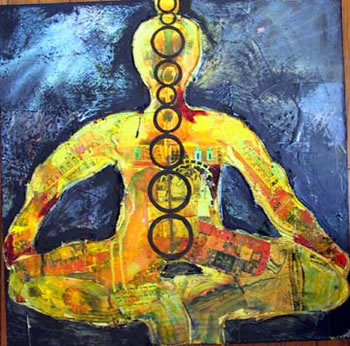
Every spiritual tradition – and I mean every spiritual tradition – has a set of time-tested practices and disciplines designed to help us listen to and experience the blessings of the Living God. You can call it prayer or yoga, meditation or contemplation…
• the Four Noble Truths of Buddhism • the Five Pillars of Islam • the daily prayers and annual cycle of feasting and fasting in Judaism • or the deep spirituality of Christianity’s journey from ashes to fire during Lent, Easter and Pentecost…
… the result is the same: communion with the heart of the sacred and intimacy with God’s grace. “Come with me,” Jesus told us, “… and learn the unforced rhythms of grace.”
Last week I spoke with you of a faith commitment we have been invited to embrace: the upside down wisdom of God’s kingdom. It not only engages our imagination alongside our heart, mind, body and soul, it also gives us a lens through which we can discover part of what God’s love looks like in our lives, habits and activities. Today’s gospel puts it like this:
What shall we say the kingdom of God is like or what parable shall we use to describe it? It is like a mustard seed, which is the smallest seed you plant in the ground. Yet when planted, it grows and becomes the largest of all garden plants, with such big branches that the birds of the air can perch in its shade.
Do you see how Jesus is subverting and upending the conventional wisdom of his era and our own? Let’s take a little time to lovingly play with these words and ideas because they are vital to discerning the wisdom of our wounds, ok?
Now there are two background insights required if we’re going to make this little parable our own – and the first has to do with the very words “the kingdom of God.” It sounds like a place, right? It really has to do with a relationship – not a destination – and certainly not that vague and lovely little word “heaven.” When Jesus talks about the kingdom of God, my friends, he is NOT speaking about where we go when we die. Rather, he is pointing to a way of living – a standard for living – in which God’s grace and presence is our deepest goal. Not money, not happiness, not health or love or the American dream: God’s grace. Is that clear? And be careful not to misunderstand for I am not saying there is anything wrong with money or happiness or even the American dream.
+ Although it should be noted that it would take 8 more planet earths to sustain the world population living like we do now – so maybe I should qualify that American dream stuff?
+ Still, you get my point, yes? The first insight about the kingdom of God has to do with embracing a way of living that puts God’s grace at the center of all we think, say and do.
And the second background insight is equally counter-cultural: more often than not when Jesus talks about the kingdom of God he does so with a real sense of humor. He is playful rather than pious – Zen-like instead of magisterial – more about the upside down jokes and riddles of God’s grace than the articulation of a systematic theology. In other words, Jesus asks us to look for – and even enter into – the kingdom like a child.
+ Do you know the story about the little girl who was sitting in church with her mother while the minister droned on and on and on about some abstract theological construct? After wiggling and fidgeting and doing all the drawing on the bulletin she could handle, she pulled on her mother’s skirt and whispered, “Momma, if we give him money now, will he let us go?
+ What about the little boy whose father gave him a $10 bill to put into the collection plate, but when the offering was taken he refused? On the way out of church, the child stopped to shake the pastor’s hand and when he did, he slipped him the money. “Um, why did you give me this ten dollar bill?” the ministered asked curiously. To which the child said clearly, “Because my daddy says you are truly the poorest preacher he’s ever met.”
That is the spirit of Christ’s teaching about the kingdom of God. It is almost as if he is saying to us: “O for God’s sake, quit being so serious!” That is what’s going on with our lessons this morning: Jesus is giving us a subversive, upside down, kingdom riddle that challenges the conventional wisdom about religion, God’s grace and where they meet in our ordinary lives. One of my favorite spiritual mentors, Thomas Keating, a Benedictine monk from Colorado, writes: For many in Jesus’ time there “was a tension between everyday reality… and the popular understanding of how God acted in the world.” (And I suspect this is true in every age with every faith tradition, yes?)
From the heyday of national power and prestige during the reigns of King David and King Solomon, Israel had been on a downhill slide for several centuries, its kingdom conquered and divided several times over. If one lives in occupied territories, as the Israelites of Jesus’ time did, the question naturally arises, “Is this ghastly oppression by the Romans a punishment from God, or is our suffering just a part of the human condition?” In particular…this tension was most clear in their first century understanding of the words: the kingdom of God… which had specific connotations of power, triumph, holiness and goodness… the cultural symbol for God’s kingdom was the great cedars of Lebanon. They were comparable to the huge redwood trees of California and grew straight up for two or three hundred feet or more so that every kind of bird could enjoy the shade of these great and majestic trees.The Kingdom of God Is Like… - Keating, p. 37
Do you see where this is going? Conventional wisdom and tradition had come to identify God’s kingdom with the cedars of Lebanon but what does Jesus call it? A mustard seed – and this, too, needs a little background work so that we can appreciate the joke. Because the key is not the size of the mustard seed, arguably the smallest seed of all, but what it does in your garden.
+ First, mustard is essentially a weed – a common and fast growing plant – that is considered unclean. It was not to be mixed in your garden with other vegetables because it would overwhelm and crowd out the other plants. There was no order to this crazy weed and “it was forbidden in your household garden.” (Keating, p. 38)
+ Second, when a mustard plant matures it is about as far as the cedars of Lebanon as the Atlantic Ocean is from the Pacific. It only grows to be about four feet high with a few gnarly branches that might provide shade for a few birds with a good imagination, but not much else.
And this is what the kingdom of God is like Jesus tells us: not a big and powerful force to be reckoned with at the end of time but… a bush – an ordinary shrub – a modest weed that is unclean right here and now. In a word, “Jesus’ parable implies that if we accept the God of everyday life, we can find God in everyday life. We do not have to wait for an apocalyptic deliverance at the end of time – we do not have to wait for an inflated and grandiose liberation – because the kingdom is available right now.” (Keating, p. 39)
St. Paul understood this upside down and subversive quality to God’s kingdom because it up-ended his life and called him to change directions in the most radical way. Once he was going to Damascus to attack the early church only to find himself becoming its first truly international missionary.
+ Once he was deeply rooted in a traditional way of interpreting Torah but came to embrace a more playful and fluid take on God’s law.
+ Once he was all about keeping insiders holy and pure only to find himself teaching the world that in Christ there are NO insiders or outsiders – no male nor female, Jew nor Greek, gay nor straight, rich nor poor, male nor female: we are one in the Lord.
Listen to how Paul spoke of this upside down kingdom of God: The Message that points to Christ on the Cross seems like sheer silliness to those hell-bent on destruction, but for those on the way of salvation it makes perfect sense. This is the way God works and most powerfully as it turns out. It's written, I’ll turn conventional wisdom on its head, I’ll expose so-called experts as crackpots. So where can you find someone truly wise, truly educated, truly intelligent in this day and age? Hasn't God exposed it all as pretentious nonsense? Since the world in all its fancy wisdom never had a clue when it came to knowing God, God in his wisdom took delight in using what the world considered dumb—foolish actually—to bring those who trust him into the way of salvation. (I Corinthians I: 18-21)
This foolishness – this upside down wisdom – is very important. Listen to another way of saying this same thing from the musical genius of Leonard Cohen who tells us: there is a crack in everything… that’s how the light gets in.
Now here’s where the rubber meets the road when it comes to applying the wisdom of our wounds. We’ve already established that everybody hurts, yes? I don’t have to convince you that our lives are a combination of blessings and curses, joys and sorrows, light and shadow to say nothing of beauty and pain. And some people just never want to discover what the blessing of God might be in their wounds.
+ They are angry about life’s pain – and become resentful. They are frustrated by the limitations of their reality – and get stuck in self-pity. They see the blessings of others but fail to find the joy that God has brought to every life.
+ But that’s not God’s plan – that’s not how the kingdom mystery works – there is a wisdom to our wounds that can change and heal our lives if we’re willing to embrace it.
Let me be clear: if you always do what you’ve always done, you’ll always get what you’ve always got. The truth of the upside down kingdom of God as Jesus teaches, however, is that you can experience joy amidst the sorrow – hope alongside of the pain – God’s presence in even your hardest experiences. And this is how it works: we must playfully do the opposite of what our wounds tell us.
+ If we have been wounded in the heart and have nourished a fear of intimacy, our wound will often tell us to run away when things get complicated. But the wisdom of that wound whispers: stay put and face the music, right?
+ If our anger call us to want to fight everything out so that we are always the winner, the wisdom of the wound suggests that the wiser course would be to keep our mouth shut and sometimes walk away.
And if you find your need for love has takes you into all the wrong places with all the wrong people like a moth drawn to the flame, before getting burned up the wisdom of the wound invites you to step back rather than jump off the cliff of self-destruction and make some quiet and alone time.
Do you sense how this works? By going in the opposite direction of your wounded feelings, they become a sacred teacher rather than a source of agony or shame. In fact, using the insights of Jesus about the kingdom of God helps give our wounds a holy wisdom.
Most people want a cure for their pain: they want a pill – or a bottle – or a distraction – or a pay check – or a lover or some magician to take away the anguish of real life. What’s more, most of us have been trained – or brain-washed – into believing that if we just work hard enough – or think profoundly enough – we ought to be able to solve all our own problems.
+ That’s not what the kingdom of God is all about; and if you go looking for distractions or glitter or addictions or magic you will get only as good as you gave.
+ But if you want to live more fully into Christ’s joy – if you want to make the promises of Jesus real within your flesh – then learning the wisdom of the wound and the unforced rhythms of grace is essential.
It begins modestly – like a mustard seed – playfully – like a child – in the everyday – rather than the great cathedrals, intuitions or cedars of Lebanon. And the good news here is that means God’s grace is available to us all right now.
“To what shall I liken the kingdom of God?” Jesus asked. The kingdom is made real in our ordinary daily life and how we live it. Can you accept the Lord in the everyday? Can you see God’s extraordinary grace in the ordinary? If you can then you can enjoy the kingdom here and now, without having to wait for an apocalypse or someone to deliver you from your wounds: so let those who have ears to hear, hear. (portions taken from Keating, p. 41)
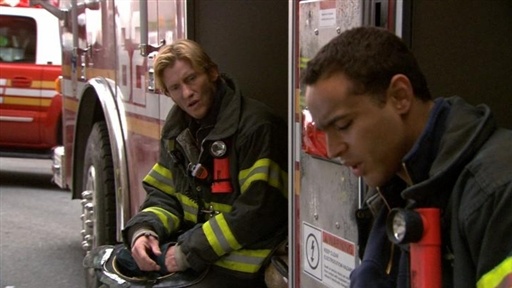
More than any other popular culture television program, "Rescue Me" explores the challenge of being a "real" man in these strange days. If you don't know this program about a bunch of post September 11th survivor firefighters in NYC, you are missing some of the best writing and acting available. It is rough, honest, often offensive but always engaging about the inner emotional, spiritual, socio-political realities of contemporary men in the workplace.
I wish I could find the clip of Dennis Leary asking an abusive lesbian to beat him instead of her girlfriend so that he could finally feel the grief of his young son's death. (I can't find it on youtube but the whole sequence is worth the price of admission.) But this recent clip with Michael Jay Fox playing an injured hockey player - who is currently romantically involved with Leary's ex-wife - gets close.
At the end of a recent show, Leary's AA sponsor, his cousin the ex-priest, falls off the wagon - and eventually Leary finds him in a church ranting about the hypocrisy of so many baptisms. After drinking even more and offending everyone including probably God, the two men go out to a part to talk it all out. They call up some of their wounds - and lies to each other - but then promise to get back on the wagon again. God really does welcome you back just like an AA meeting, they both agree, because that's what grace is really all about... it is some of the best male spirituality happening. Check it out.
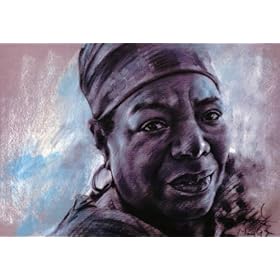
The poet, Maya Angelou, "writes like a song" someone once told me. I think that is true. Once, when we were trying to talk about the way we do church differently from our more conservative cousins, a member of the band came up with this.
When I say ... "I am a Christian," I'm not shouting "I'm clean livin'." I'm whispering "I was lost, Now I'm found and forgiven."
When I say ..."I am a Christian," I don't speak of this with pride. I'm confessing that I stumble, And need CHRIST to be my guide.
When I say ... "I am a Christian," I'm not trying to be strong. I'm professing that I'm weak, And need HIS strength to carry on.
When I say ... "I am a Christian," I'm not bragging of success. I'm admitting I have failed, And need God to clean my mess.
When I say ... "I am a Christian," I'm not claiming to be perfect. My flaws are far too visible, But God believes I am worth it.
When I say ... "I am a Christian," I still feel the sting of pain. I have my share of heartaches, So I call upon His name.
When I say ... "I am a Christian," I'm not holier than thou. I'm just a simple sinner Who received God's good grace somehow. We called this being a Johnny Cash believer - someone who remembers God's grace when they are down and counted out by most everyone else - not "holier than thou, just a simple sinner who has received God's good grace somehow." I still think that is just about perfect.
+
For some reason this poem took my mind to Olivier Messiaen's brilliant, troubling and powerful composition: Quartet for the End of Time. The composer writes:
Conceived and written in the course of my captivity, the Quartet for the End of Time was performed for the first time in Stalag 8-A on January 15, 1941... It is directly inspired by an excerpt from the Revelation of St. John - chapter 10. Its musical language is essentially transcendental, spiritual, catholic... This work - as well as many of his compositions - speaks to me of how the human soul aches and searches for beauty and hope in the midst of the worst evil and pain. It is, indeed, a faith commitment to enter such a search while imprisoned in a concentration camp, walking in the aftermath of abuse, locked the despair of addiction or foundering in chronic pain. I give thanks to those ordinary and heroic saints who point the way for me... Messiaen being one of the greats.
+
I found this poem in the recent New Yorker - Survivorman by Sherman Alexie - and it filled me with tears of hope and sadness at the same time.
Lying quietly last night in the cool country air, I couldn't help but reflect on my recent written attempts to explore the blessing of God's joy amidst the sorrows of real life. They are moving in the right direction - and subsequent writings will advance the cause (I trust) - but still my words for this Sunday seem to miss the mark...
So I eventually found myself playing an old James Taylor song, "You Can Close Your Eyes." I have loved this little tune since I first heard it in April of 1971 on Taylor's third album: Mudslide Slim and the Blue Horizon. At first it was just a gentle love song to me; later a tender prayer. And still later, during the death of my five year old nephew, Mikey, and later my sister, Linda, this beautiful, sweet song took on deeper layers, too. It seems that as Linda held Mikey during his periodic illnesses, she would sing this song to him. When he died, she asked if I would sing it at his funeral.
Five years later, still grieving from the loss of her dear boy, Linda began to succumb to cancer. She had been crazy with sorrow for two or three years and refused to follow up on her irregular pap smears. And when she finally found a little solid ground, she had advance cancer of the cervix. For about 10 months she was hospitalized for experimental treatments - some of which seemed to be working - but then the cancer was too strong.
To add insult to injury, given the alcoholism in our family - and a tragic history of other abuse - no one was able to tell my sister that she was dying. I know that sounds bizarre, but it is sadly true: not her husband, not my parents, not the medical staff or social workers.
So when I drove from Cleveland to Washington, DC to visit her after Maundy Thursday worship one night, I was clueless as to her real condition. When I entered her private room and found what looked like a female skeleton vomiting and weeping, I was certain the name on the door was a mistake - but it wasn't. The next day I had to tell my sister that she was dying.
She was furious and afraid - she shrieked and vomited and wept like banshee. But after a few hours of chaos and rage, we started to make hospice arrangements and funeral plans. She asked if I would sing, "You Can Close Your Eyes" at her service, too. As the military plane touched down in North Carolina carrying Linda back to her family late in the afternoon of Easter Sunday, she sat up on the stretcher, reached out to embrace her treasured child and said, "Mikey, I'm coming home." And then she died.
I buried my sister in the same military chapel at Fort Bragg that I buried her son five years before - and I sang that same damn, sweet and sorrow-filled song. And last night, as I was singing it again, the thought ran through my mind: maybe this is part of what Paul was trying to convey to us in his words about God working all things for good with those who love God. There is beauty and sadness in this song both at the same time; there is healing and lament right there, too.
We believe that there is no condemnation for those who are in Christ Jesus. And we know that in everything God works for good with those who love the Lord and are called according to God’s purpose. Therefore, we are sure that neither death nor life, angels nor principalities, things present nor things to come, powers, height, depth or anything else in all creation will be able to separate us from the love of God in Christ Jesus our Lord.
I think what dear St. Paul is trying to tell us is that this is how God's healing and blessed joy works in our lives: it doesn't take away the sting of our pain, it doesn't distract us or push us into illusions - or medicate us - or perform magic like fairy tales. The pain remains, but it can also be surrounded and maybe filled with love - even shared with others - so that our pain isn't without meaning. We meet God in the sorrow and wound and together bring meaning to the anguish and even a measure of healing - which is very different from a cure, right?
+ I think of Elie Wiesel walking with President Obama through Buchenwald saying, "This is a type of returning to my father's grave... but oh, if these beautiful trees could talk."
+ It is both/and - there is wisdom and a measure of healing right alongside the anguish and emptiness - not one but not just the other, too.
Now, to get to this place requires having the eyes and the heart to see into the upside down, counter cultural ways of God and the unforced rhythms of grace... The old monastics and spiritual masters in our tradition call it "the Paschal Mystery" where we come to experience in our lives what Jesus experienced as he traveled from Good Friday to Easter. Did you get that? The journey from the cross to the resurrection becomes ours by the grace of God. It is the totally counter-cultural, upside down claim of the kingdom that God will do in our lives exactly what happened to Jesus from Good Friday to Easter: the worst and most offensive evils and wounds will be used to bring blessing and healing.
Not that the wounds will go away – not that they still won’t hurt – and not that they won’t have consequences; but rather that they will not be the end of the story. That God will use even the worst to advance the best in our lives and in the world. The old gospel preachers used to say: God can work a something out of a nothing – so hold on, baby, it may be Friday but Sunday’s a’ coming! Dr. King was a little more philosophical when he said essentially the same thing: “The arch of the moral universe tilts ever so slightly towards the good, the noble and the true.”
Now, this is a faith claim because you have to have the counter-cultural eyes of God’s kingdom – and a true commitment to using your imagination creatively – to both see and trust the reality of this upside down kingdom. Which is why, of course, Jesus spent so much time talking to his disciples about the heart and soul of God’s kingdom. How did the gospel for today put it? Are you listening to this? Really listening? God's kingdom is like a treasure hidden in a field for years and then accidentally found by a trespasser. The finder is ecstatic—what a find!—and proceeds to sell everything he owns to raise money and buy that field. (Matthew 13: 44)
This person is energized – charged-up – and on-fire for the treasure, right? Owning the property is not the issue: getting to the treasure is what this story is all about. One scholar wrote: "The treasure is so valuable that it is worth doing new, joyful, risky, and costly things to posses it .... He sells all that he has and buys that field. This is a risky act which could threaten his life, but it is worth losing even his life… because the kingdom requires setting aside all other priorities in wholehearted commitment.” (Stoffregen, www.crossmarks.com/brian/matt13x31.htm)
And perhaps this is how the blessed healing of joy begins to come to us: when we want the treasure - the healing and the joy - so deeply that we will give up conventional wisdom and all the restand begin to trust and live like God's upside down kingdom is real. Isn't that what the Serenity Prayer teaches - kingdom living - in very ordinary language? God grant me the serenity to accept the things I cannot change; courage to change the things I can; and wisdom to know the difference.
This way of living and seeing and thinking doesn't make sense to most people: they want the blessings - we all do - but they aren't willing to follow God's upside down path. It is much like the story of the wise and learned rabbis of Eastern Europe who would gather from time to time to study and argue over Torah. As a rule, this learned consortium of scholars “boasted of their distinguished rabbinical genealogies – it was a given, you see, that gravitas came from deep roots.”
But Rabbi Yechiel of Ostrowce was an exception. He was the son of a simple baker and had inherited some of the forthright qualities of a man of the people. Once, when a number of rabbis had gathered at some festivity, each began to boast of his eminent rabbinical ancestors. When Rabbi Yechiel's turn came, he replied gravely, "In my family, I'm the first eminent ancestor."
His colleagues were shocked by this piece of impudence, but said nothing. Immediately after, the rabbis began to expound Torah. Each was asked to hold forth on a text culled from the sayings of one of his distinguished rabbinical ancestors. One after another the rabbis delivered their learned dissertations. At last it came time for Rabbi Yechiel to say something. He arose and said, "My masters, like my father, were bakers. They taught me that only fresh bread was appetizing and that I must avoid the stale. This can also apply to learning." And with that Rabbi Yechiel sat down. (A Treasury of Jewish Folklore: Stories, Traditions, Legends, Humor, Wisdom and Folk Songs of the Jewish People, ed. Nathan Ausubel, p. 51)
God is calling us: into fresh insights, into the unforced rhythms of grace, into serenity and joy - and now to the table, too. At this upside down table we confess that children can be rabbis, strangers are to be welcomed as the beloved, sins are forgiven, joy can be shared and our wounds can help us become people of wisdom and compassion. So please, come for all things are now ready.
Yesterday, as I was getting ready for my quiet time at the end of a full evening, I came across a note that marked the 25th anniversary of Bruce Springsteen's classic album: Born in the USA. How could that be? Yes, my children were tiny back then - that summer we went to see "Ghostbusters" over and over - and my life has deepened and changed personally and professionally in ways too numerous to count: but twenty five years ago? As Sandy Denny and Fairport Convention asked so sweetly 41 years ago, "who knows where the time goes?
I can remember like it was last week buying that Springsteen album on the cusp of summer in Michigan - I had already been grooving to the single, "Dancing in the Dark" for most of the spring - but everything changed with "Born in the USA." It was like the Beatles on Ed Sullivan back in February 1964: the heavens rattled and opened, the earth stood still and I felt part of my soul come alive. A few months later I saw his tour at Joe Louis Arena in Detroit - and my life continued to awaken -for it was part revival, part rock'n'roll Pentecost, part emotional catharsis and part wild man drum circle with 30,000 other brothers and sisters.
Discarded dreams and spiritual breakdown haunts this album. Springsteen had been mining this vein for a while. You saw it's beginning on "The River" and felt it throughout "Darkness on the Edge of Town."After reading Joe Klein's, Woody Guthrie: A Biography, Springsteen reworked "This Land Is Your Land" into a lament for the economic collapse wounding industrial America in the 80s. His writing continued to ripen with "Nebraska" - a sort of Phil Ochs meets Flannery O'Connor on acoustic guitar and harmonica - but all subtltety was put on the shelf for this new recording. (In fact, on the dance groove LP version of "Dancing in the Dark," Springsteen told the hired gun producer from the dance club world to "abandon ALL subtlety on this one: let's kick some ass!")
The opening cut, "Born in the USA" is all drums crashing, synthesizers and guitars wailing as his voice screamed a tortured testimonial that also opened every concert: "Born down in a dead man's town, the first step I took was when I hit the ground - end up like a dog that's been beat too much 'til you spend half your life just covering up: I was born in the USA..."This is what it sounds like in the middle of a collapsing economy to a young Vietnam vet in the heart of the Rust Belt.
It had originally been recorded during the "Nebraska" sessions - and tried out with the whole band for a while - but nobody thought it worked. Manager Jon Landau said about the demo: "on acoustic guitar, it didn't seem like a particularly good song. It was a real odd thing... unlike anything I'd ever heard from Bruce. It sounded alien." Springsteen had ripped the title off from the movie director, Paul Schrader, who was working on a rock and roll film about post-industrial Cleveland. "I owe you one," the Boss told him - and wrote "Light of Day" as a gift for stealing the title. And because nobody liked the new tune, Springsteen sat on it for three years - traveled with it through another round of live concerts - and kept it hidden during the making of another new album.
But one night, after trying to make another cluster of new songs come alive - and failing - the first thing Bruce called for was another shot at "Born in the USA." This shocked everyone and nobody in the band recalled ever practicing it: the producers couldn't find tape copies, Landau had forgotten that the song ever existed and the whole studio felt almost sick at giving this dog another shot. Writer Dave Marsh wrote in Glory Days:
"We just kinda did it off the cuff, said Springsteen. "I went in and said, 'Roy, get this riff.' And he just pulled out that sound, played the riff on the synthesizer. We played it two times and our second take is on the record. That's why the guys are really on the edge. You can hear Max (the drummer) who to me was right up there with the best of them on that song. There was no arrangement. I said, 'When I stop, keep the drums going.' That thing in the end with all the drums just kinda happened... They started to play this thing and I know for everybody there to this day that was the most exciting thing that ever happened in a recording studio."
It was the Holy Spirit at work bringing order out of chaos - it was creativity, shape and form coming to an unfocused rant - raw power and heart to a discarded, broken down blue collar blues - and it is freakin' genius.
There have been two other recorded versions: the original acoustic try on Tracks - which has it's own odd power - as well as the 12 string guitar version on Live in New York City. Both share another point of view - but Max Weinberg was right: the original magic of Springsteen's passionate improvisation in 1984 brings this song to life and remains the essence.
I love this song and everything it stands for. It keeps getting better and better - but nothing beats hearing it for the first time. Nothing...
NOTE: This is the first exploration of a set of spiritual practices for the 21st century church that I will be writing about - and sharing in worship - over the course of the summer. The series - Learning the Unforced Rhythms of Grace - is an experiment in both reforming some of the traditional and/or forgotten spiritual practices of Chrisitanity as well approaching them from a counter-intuitive perspective. If postmodernism has brought us anything it is clear that our discovery of the truth has to "bubble up from below." So, if you are in town at 10:30 am on Sunday, please stop by and join us. Please note that the second part of this message will be posted next week - and shared in worship - next week, too.
This morning, as we talk about the wisdom of our wounds, I would like you to open your hearts and minds to the living spirit of Jesus and his kingdom of grace. Specifically, let me invite you to playfully search for new insights: encountering an ancient truth in a fresh way, you see, is one of the ways to stay grounded in the unforced rhythms of grace. It is much like the story of the wise and learned rabbis of Eastern Europe who would gather from time to time to study and argue over Torah. As a rule, this learned consortium of scholars “boasted of their distinguished rabbinical genealogies – it was a given, you see, that gravitas came from deep roots.”
But Rabbi Yechiel of Ostrowce was an exception. He was the son of a simple baker and had inherited some of the forthright qualities of a man of the people. Once, when a number of rabbis had gathered at some festivity, each began to boast of his eminent rabbinical ancestors. When Rabbi Yechiel's turn came, he replied gravely, "In my family, I'm the first eminent ancestor."
His colleagues were shocked by this piece of impudence, but said nothing. Immediately after, the rabbis began to expound Torah. Each was asked to hold forth on a text culled from the sayings of one of his distinguished rabbinical ancestors. One after another the rabbis delivered their learned dissertations. At last it came time for Rabbi Yechiel to say something. He arose and said, "My masters, like my father, were bakers. They taught me that only fresh bread was appetizing and that I must avoid the stale. This can also apply to learning." And with that Rabbi Yechiel sat down. (A Treasury of Jewish Folklore: Stories, Traditions, Legends, Humor, Wisdom and Folk Songs of the Jewish People, ed. Nathan Ausubel, p. 51)
Fresh insights – ancient truths – and how they can either heal or hinder our real lives is what we’re after today. For we are talking about making the words and ideas of the kingdom flesh within and among us – living into the blessings of Christ’s unforced rhythms of grace – incarnating the wisdom that Reinhold Niebuhr expressed so well when he said:
God grant me the serenity to accept the things I cannot change; courage to change the things I can; and wisdom to know the difference.
This is kingdom wisdom, my friends, the practical application of the upside down and counter cultural mysteries of Jesus. Most of the time Sunday morning messages are not given over to the practical application of kingdom mysteries: preachers have been called to proclaim biblical truth, theological insights and doctrinal instruction to their congregations. We are the heirs of a 500 year old commitment to cracking open the scriptures in bold and declaratory ways on Sunday mornings.
Just a few miles down the road – in Northampton for a while and later Stockbridge – the father of New England congregational preaching, Jonathan Edwards, said: “I think I have found that no discourses have been more remarkedly blessed, than those in which the doctrine of God’s absolute sovereignty with regard to the salvation of sinners, and his just liberty, with regard to answering prayer and succeeding the plans, of natural men… have been insisted upon.”
Another Reformation preacher was more blunt: “It must be understood that the preacher does not share, he declares. It is for this very reason that small group Bible studies can never replace the preaching of the gospel. Preaching is not a little talk. It is not a fireside chat. To substitute sharing and discussion for preaching is to risk the integrity of the gospel itself.” (Arturo Azurdia, Spirit Empowered Preaching, p. 88).
+ But that assumes that contemporary people not only have time for small group Bible sharing and conversation – which I would suggest to you has become a lost treasure – but that we still value and benefit from an old, top-down style of religious communication.
+ And in our ever fast paced, postmodern, plugged-in and hard wired world of instant communication, pop culture and never ending consumer choices, let’s just say that even Dunkin’ Donuts has had to learn something from Starbucks, ok?
I’m talking about connecting to the real needs of real people – and that is true for coffee shops as well the 21st century church. Sunday morning teaching has to be different: we need to be more consumer-friendly and accessible – more “we’re all in this together” than “hear ye the word of the Lord” – and we have to be grounded in sharing and teaching the blessings of Christ because we’ve forgotten how to pass on his joy.
We have some work to do, yes? We have to learn again how to live into the blessings of Christ’s unforced rhythms of grace. We are being called by the Lord’s friend – the Holy Spirit – to take what time we have – Sunday mornings – and use it for healing and hope.
So, let me sketch out for you the first of five interrelated steps to what I call “the wisdom of our wounds” and then we can talk about how they work, ok? The first is what the old monastics and spiritual masters used to call the Paschal Mystery: God’s ironic and healing commitment to take even the worst sins or tragedies and work them towards good. St. Paul summarized the paschal mystery like this in Romans 8:
We believe that there is no condemnation for those who are in Christ Jesus. And we know that in everything God works for good with those who love the Lord and are called according to God’s purpose. Therefore, we are sure that neither death nor life, angels nor principalities, things present nor things to come, powers, height, depth or anything else in all creation will be able to separate us from the love of God in Christ Jesus our Lord.
Nothing – not addictions or sexual abuse, physical pain or psychological shame, wars, economic collapse, the death of our dearest loved ones – nothing will be able to separate us from the love of God in Christ Jesus our Lord. That is the promise of the paschal mystery – that what God worked in the life, death and resurrection of Jesus is what God will work in our lives, too – if we love the Lord.
Is that clear? It is the totally counter-cultural, upside down claim of the kingdom that God will do in our lives exactly what happened to Jesus from Good Friday to Easter: the worst and most offensive evils and wounds can be used to bring blessing and healing.
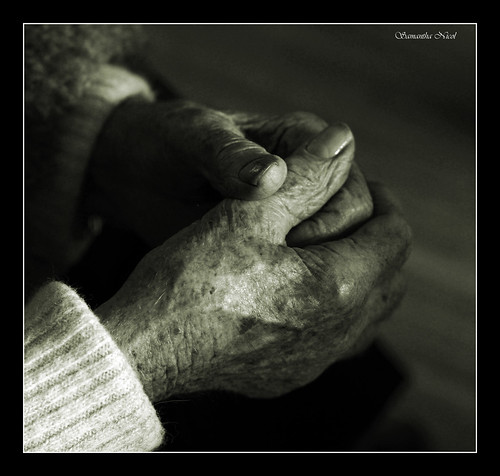
Not that the wounds will go away – not that they still won’t hurt – and not that they won’t have consequences; but rather that they will not be the end of the story. That God will use even the worst to advance the best in our lives and in the world. Makes me think of that great old song: "Grandma's Hands..." (and this is a killer version by Take 6)
The old gospel preachers used to say: God can work a something out of a nothing – so hold on, baby, it may be Friday but Sunday’s a’ coming! Dr. King was a little more philosophical when he said essentially the same thing: “The arch of the moral universe tilts ever so slightly towards the good, the noble and the true.”
Now, this is a faith claim because you have to have the counter-cultural eyes of God’s kingdom and a true commitment to using your imagination to both see and trust this as reality. If all we're looking at is what we can see... Lord, have mercy. Our vision is too limited - our sight too small. Which is why Jesus spent so much time helping his disciples see into the upside down reality of God’s kingdom. How did the gospel for today put it in Matthew 13: 44-45?
Are you listening to this? Really listening? God's kingdom is like a treasure hidden in a field for years and then accidentally found by a trespasser. The finder is ecstatic—what a find!—and proceeds to sell everything he owns to raise money and buy that field. The person is energized – charged-up – by the treasure, right?
This person is energized – charged-up – and on-fire for the treasure, right? Owning the property is not the issue: getting to the treasure is what this story is all about. One scholar wrote: "The treasure is so valuable that it is worth doing new, joyful, risky, and costly things to posses it .... He sells all that he has and buys that field. This is a risky act which could threaten his life, but it is worth losing even his life… because the kingdom requires setting aside all other priorities in wholehearted commitment.” (Stoffregen, www.crossmarks.com/brian/matt13x31.htm)
+ So what do we feel equally energized about?
+ What would we risk everything to possess?
I think the parable pushes us to ask: have we become “so comfortable in our congregations (and everyday commitments) that we no longer risk doing new, joyful and costly things because of the kingdom? At how many meetings has something like this been said, "We don't have the money to do that?” Or, “I don’t think our people would go for that?” In contrast, I recently heard of a family who was so committed to a mission project at their church that they took out a second mortgage on their house to pay for half of it."
The kingdom of God is not a treasure we possess. It is something that grasps us. Could we push the image even further and suggest that the pull of the treasure is corrupting? Can the power of the kingdom cause those caught in its grasp to associate with sinners and tax collectors and other unclean and unsavory types - to give away money and time – maybe even give up American materialism and consumerism in order to faithfully follow? (Stoffregen)
The paschal mystery – the wisdom and counter-cultural truth of the kingdom and the parables– are one. And they can be life changing – dare I go so far as life-healing – if we let their subversive truths speak to our hearts and minds? The same is true for the communion meal we will share together in a moment:
+ We can treat it as another formal ritual – something we do in church because someone told us it was important – or we can see in it the upside down, radical hospitality of Jesus in action.
+ It can be a little feast with stale bread, or, a celebration where we practice serving one another – treating everyone as equals – and making certain that NO ONE is left out. I am here to tell you that I don’t have a lot of time in my life for empty rituals any more, dear people: I need the real deal – the radical community of upside down love – where children are rabbis, the outsider is welcome and each of us has a place to share love and hope. I hope you will join me – at the table in just a moment and throughout this summer - as we continue to explore what it means to live as the upside down people of God for this moment in time - for this is the good news for today for those who have ears to hear.
I spent the better part of today preparing for and then being a part of a funeral. It was an authentic ending but also a sweet beginning, too. Connections were made - in me, in the body of Christ, in those who were grieving - and in the darkness there was light.
It is in all such preparation and prayer - listening and waiting and wrestling with the limitations of words only to turn it all over to God - that I find nourishment over and over again. Dear Robert Bly gives me a clue about how this is meant to be...
Call it a sign of the times, a tragedy of postmodernism or social amnesia: whatever it is, it is clear that the contemporary church isn't helping people learn the "wisdom of their wounds" any more. Maybe this is one of the unintentional consequences of living in an age totally bewildered with consumption and bottom-line thinking. It could even be that many of our congregations have become so infected with dominant culture values that we don't even know how to reflect on the upside down truths of Christ and his kingdom.
+ I know that I have been yelled at and dismissed by church folk over the years for suggesting there is spiritual wisdom in Paul's admonition: God works good for all those who love God. Not that all things are good - which many people hear in these words - and certainly not that God causes evil/bad things to happen so that we will learn something - too cruel for the font of grace. But, rather, we are invited to deepen God's image within and among us from even the tragedies of our lives so that God's loving presence can grow stronger. Is there such a backlash against God - or how God has been portrayed over the years - that many "do not have ears to hear?"
+ My old monastic friends spoke of this truth as the Paschal Mystery: not that God caused Good Friday to be a necessity, but rather that God can take even the crucifixion and bring a blessing out of it on Easter and Pentecost. God's eternal YES is stronger than the perpetual NO of the world - but you have to be looking for it - you have to have "eyes to see" - and eyes to see the paschal mystery at work is very counter-cultural.
So where did this part of our teaching ministry go? Why has it almost disappeared? How come we aren't regularly teaching folk the wisdom of our wounds? Too painful? Too challenging? What's going on? This song gets it better than most...

 beloved Commonwealth of Massachusetts. It was hard to let go of our Arizona prizes: not only are the good until Jesus returns (literally, at 18 you don't have to renew your license until you are 65!) but they represented the good ole cowboy mentality of that fierce, wild place. And, truth be told, we HATE bureaucracy - and when we went to exchange our licenses about a year ago we not only had to deal with the shrew bureaucrat from Hell, but we didn't have the right forms to prove we lived in our house.
 assachusetts plates on the truck - and I get that. It was a clear sign that we were really casting out lot here and not carpetbaggers in reverse. But when we didn't have the right ID to get our licenses last winter - and it was going to cost us over a hundred dollars EACH - that old cowboy thing took over and we said: stick it, ok? We'll keep driving under the approval of the wide open skies of the Grand Canyon State. Eventually, it was just a matter of economics but... now all that is history.