Word just in from Tucson that another friend has passed from this life to life everlasting. Chuck Ballard, sound man/techie at First Church in Tucson (where my friend Briget is pastor), notified us two weeks ago that he had entered hospice - and now he is dead. Life is so unpredictable and nothing - absolutely nothing - can be taken for granted. It is all grace upon grace - and the dark times are part of the bargain.
Chuck loved his motorcycle, supported our old Tucson band, Stranger, and helped us work sound on many, many events. He was almost mortally wounded in a motorcycle accident 5 years ago but came away to live another day. He was a fierce supporter of the work of the United Church of Christ in the desert Southwest and loved his adopted family of Briget, Abbey and Gabby. Rest in peace, dear man, rest in peace.
Yesterday we drained Lake Lumsden - the ice pond - that has formed this winter at the bottom of our driveway. Thank God our neighbor, Gene, took pity on our miserable souls and joined us with an ice chopper and LOTS of upper body strength (proof, once again, that while I can often write a mean sentence and even wrestle theologically with the best and the brightest, if I had to eek out a living in the jungle I would be toast.)
Today, both Di and I are limping/gimping around with aching muscles and backs and total exhaustion. But at least that f##**'n skating rink is gone from our driveway - or so I thought. It was back today in a new incarnation as more Berkshire snow melts and heads to the lowest point in the county. Tomorrow will try to drain a ditch to catch the run off melt - maybe - or as someone from church suggested, "Maybe you could just come to love black ice!"
Whenever I have to do REALLY tough physical labor - which I can muster but always hurt after - I think of this clip from Woody Allen's "Take the Money and Run." (If you watch it go to the chain gang scene... and that's me, "Goin' to Mississippi... gonna see Miss Liza." Oy vey!
Worship was very satisfying today: lovely and meaningful music of many styles (African chant, gospel, traditional English hymnody, contemporary Celtic folk and Sacred Harp), I had the chance to celebrate two baptisms - momma and baby son - and people were into the message and attentive. All in all, it was a blessing in which we sensed the presence of our Living God.
At the end of my message, I introduced "where the hell is Matt" and his happy dance - a totally goofy and fun body prayer - that I asked the congregation to learn. Not because I like making people do foolish things - I am NOT trapped in the 70s - but because it will serve two purposes in our renewal.
First, a few of us have pooled a little mission money to buy cameras for our kids - we want to see how they look at church life - and we'll be distributing them next week in worship. One of the picture series we are asking our young photographers to shoot is... different people doing the happy dance. And second, the happy dance is a fun way to express prayers of joy. Old line Congregationalists from the Puritan side of the family are not known for dancing - and it is time to break out of our rut - the Spirit is calling us into Christ's joy. So... happy dance here we come.
Now what really struck me as right on the money is that after worship our ushers told me that they really wanted to do a happy dance after placing the offering on the communion table. By George, they've got it! Exactly... what a great time to offer a dance of joy to God! And old timers - and I mean women and men who are 85 - told me they are going to figure out their own version and be ready to share with the children.
Amidst the worries and fears of these days, it would appear that there is STILL a time to dance and a time to mourn... As the weeping prophet, Jeremiah, said: The Lord appeared to us in the past, saying: "I have loved you with an everlasting love; I have drawn you with loving-kindness. I will build you up again and you will be rebuilt, O Virgin Israel. Again you will take up your tambourines and go out to dance with the joyful. Again you will plant vineyards on the hills of Samaria; the farmers will plant them and enjoy their fruit. There will be a day when watchmen cry out on the hills of Ephraim, 'Come, let us go up to Zion, to the Lord our God.'" This is what the Lord says: "Sing with joy for Jacob; shout for the foremost of the nations. Make your praises heard, and say, 'O Lord, save your people, the remnant of Israel.'
Makes me think of St. Sly and the faithful Family Stone who were black and white, jazz and rock, women and men together, totally my kind o church:
When Dianne and I were in London two years ago there was a public art experiment using water and fountains. Part of the delight was watching children and adults - Muslim women in full gear alongside punk rockers - playing in the water outside the Tate Modern Museum. Dianne got trapped with a little Brit in his underwear covered in water and all everyone could do is laugh - together - in common. Beautiful and so simple... like St. Sly to my way of thinking.
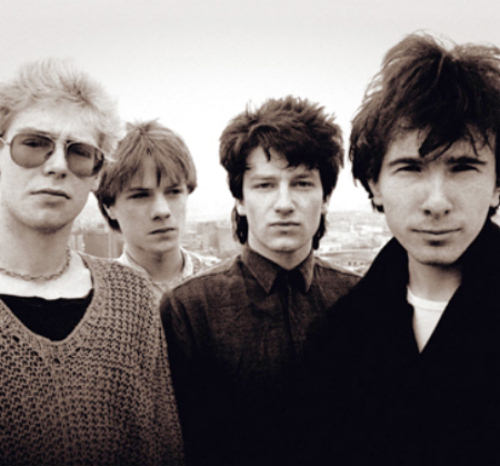
As some of my Internet colleagues (and friends) talk about their on-going learning and professional development events as well as other educational experiences that are meaningful to the churches they serve and share ministry with, I am reminded of U2. After first breaking on the scene as a fusion of punk energy and beat sensibilities filtered through an Irish evangelical Christian lens – think of “I Will Follow” or “Gloria” from the early years – they discovered the need to reinvent themselves three times.
+ First, there was the soulful exploration of social justice themes broadly shaped by Dr. King and the shadow side of US political realities in the 1980s – think “Pride in the Name of Love” or even “I Still Haven’t Found What I’m Looking For” – that brought them wider notoriety and fame.
+ Second, there was the angry but playful experiences of Achtung Baby, Zooropa and Pop in which they turned their old earnest image inside out to expose what greed and ideology can do to the best people. Think of Bono as Macphisto calling world leaders from the stage – or the piercing critique of “Numb” – or the manipulation of the biblical wisdom tradition with some Charles Bukowski thrown in on “Dirty Day.”
+ And third, the post September 11th identity as standard bearers of both integrity and hope albeit in a more humble incarnation a la “Beautiful Day” or “Grace.”
I suggest this U2 lens for two reasons: as artists they were willing to engage and manipulate their culture in order to discover both the blessings and the curses of our era; and as teachers they understood the necessity of connecting their message to both head and heart, light and dark, hope and a post-modern sensibility simultaneously so that their music was always real and raw, never sentimental and always hopeful without ever denying the pain and agony of our lives.
It is small wonder that “Dirty Day” continues to speak to me on a host of levels – perhaps even paradigmatically for religious education – in its paradoxical fusion of rant and prayer to say nothing of somberness and ecstasy. Because that is what often seems missing from most professional development: passion, reality, God-centered hope joined to a humbling sense of humor.
Another way of saying the same thing might simply be to restate the Serenity Prayer:God grant me the serenity to accept the things I cannot change; courage to change the things I can; and wisdom to know the difference. Living one day at a time; enjoying one moment at a time; accepting hardships as the pathway to peace; taking, as He did, this sinful world as it is, not as I would have it; trusting that He will make all things right if I surrender to His Will; so that I may be reasonably happy in this life and supremely happy with Him forever and ever in the next. Amen.
Here is reality that doesn’t inflate our problems, hope grounded in our real flesh and a sense that God’s grace is always greater and more available than we often recall. Two books have been particularly helpful to me in discerning the “U2 methodology” for the local church (or my own professional development): Beth Maynard’s anthology, Get up off Your Knees: Preaching the U2 Catalog, and Christian Scharen’s, One Step Closer: Why U2 Matters to Those Seeking God.
Like another colleague noted in his earlier remarks: the established progressive resources are not missional but institutional – and that is not our call. I might add that other resources are gimmick driven and rarely apply to contexts like the UCC congregations I have served whether in Michigan, Ohio, Arizona or now Massachusetts. Perhaps Dorothy Bass and/or Diana Butler Bass have been most helpful for me but… I find U2 more instructive. Again, their song “Dirty Day” holds three clues:
+ Verse one begins:I don't know you and you don't know the half of it; I had a starring role I was the bad guy who walked out. They said be careful where you aim 'cause where you aim you just might hit; you can hold onto something so tight you've already lost it. So much of the work I have to do personally, professionally and spiritually has to do with “letting go.” And this is true for congregational life, too: letting go of our previous identities, letting go of our pride and shame, letting go of anything that gets in the way of Christ’s grace. Richard Rohr and a few others have done some GREAT work re: letting go.
Verse two continues:Dragging me down that's not the way it used to be – you can’t even remember what I'm trying to forget! Why? We don’t know tradition, we don’t teach discipleship, we have forgotten about liturgical literacy and as Marva Dawn has written we often try to do with some worship gimmicks what we’ve lost by abandoning evangelism for 3 generations. The song continues: You're looking for explanations I don't even understand; If you need someone to blame throw a rock in the air you'll hit someone guilty.
+ And then their wildass conclusion:these days, days, days run away like horses over the hill. Guess what? We’re not in control – like Rabbi Heschel writes in his work re: Sabbath: once we can rest and enjoy and trust God long enough to experience Sabbath, then we can let God be God so that we don’t have to keep doing all the work.
Don’t get me wrong: I am not suggesting that U2 has it all together (musically, theologically or even pedagogically.) But they are a lot of fun, encourage real humility and offer a paradoxical way of learning that I am discovering helps.
Funny how the epistle lesson for tomorrow - I Corinthians 9 - speaks of this:
If I proclaim the gospel, this gives me no ground for boasting, for an obligation is laid on me, and woe to me if I do not proclaim the gospel! For if I do this of my own will, I have a reward; but if not of my own will, I am entrusted with a commission. 18What then is my reward? Just this: that in my proclamation I may make the gospel free of charge, so as not to make full use of my rights in the gospel. For though I am free with respect to all, I have made myself a slave to all, so that I might win more of them.
To the Jews I became as a Jew, in order to win Jews. To those under the law I became as one under the law (though I myself am not under the law) so that I might win those under the law. To those outside the law I became as one outside the law (though I am not free from God’s law but am under Christ’s law) so that I might win those outside the law. To the weak I became weak, so that I might win the weak. I have become all things to all people, that I might by all means save some. I do it all for the sake of the gospel, so that I may share in its blessings.
I read this morning that Dewey Martin, drummer extraordinaire with Buffalo Springfield, was found dead in his California apartment. A few years ago, Bruce Palmer (bass player) left this realm, too. For the oldsters among us, Buffalo Springfield was the quintessential North American band of the 60s: they did country and soul, they did rock and poetry, they were angry and hope-filled, they were American and Canadian - and they had the sweetest harmonies of any band around.
Like the Byrds - who also mined some of the same ground of genre-blending sounds - Buffalo Springfield gave us Neil Young and Steven Stills as well as Richie Furray (who later gave birth to Poco) and paved the way for folks like the Eagles and Linda Ronstadt to rock on with banjos as well as electric guitars. (My favorite tune, "Rock and Roll Woman" - above - gets it all together in under 3 minutes!) Check out their costumes - dig those harmonies - and then that smokin' nasty guitar break that ends with a harmonic chime. Damn, I miss those guys!)
Most folks know the Springfield from their classic, "For What It's Worth," (check out David Crosby from the Byrds playing with the band here from Monterey, 1967.) It became a mantra as the Vietnam War dragged on... and then the band ended and CSN&Y were born on the eve of Woodstock.
Certain musicians have touched my heart - and shaped my prayers - and Dewey Martin and Buffalo Springfield were right up there. I used to go to sleep listening to Dewey sing his blue eyed soul on their second album with the Memphis Horns behind him - he was so funky - he gave this white boy hope! Rest in peace, brother, and many, many thanks.
A prayer from the funeral liturgy of my tradition says:
O God, whose days are without end and whose mercies cannot be counted,awaken us to the shortness and uncertainty of human life. By your Holy Spirit, lead us in faithfulness all our days. That when we have served you in our generation, we may be gathered with those who have gone before, having the testimony of a good conscience, in the communion of your holy family, in the confidence of a certain faith, in the comfort of a saving hope, in favor with you, our God, and at perfect peace with the world; through Jesus Christ our Redeemer. Amen.
PS: I was just reminded that it was 45 years ago today that Sgt. Pepper taught the band to play - or more precisely that the Beatles, who would later morph into Sgt. Pepper - arrived in the USA to play the Ed Sullivan Show. That was Pentecost for me - and the first creation story, too - where the Spirit of the Living God blew across the chaos of my life and filled me with hope, focus and the spirit of rock and roll! It changed my life. Another aspect of rock and roll serendipity as we bid farewell to Dewey. It made me think of this... these cats STILL make me crazy!
When I was a stay-at-home dad back in San Francisco with a very small child, my next door neighbor - a gay man - told me about new mommas with cabin fever. He said, "It is not totally crazy to feel overwhelmed when the only person you get to talk to is nonverbal, man!" It was a revelation for this young dad to realize that not only were my feelings natural, but that it was up to me to find a balance between caring for my sweet child AND having a life beyond my child.
Same seems to be true with cabin fever and/or winter blues in the Berkshires. More and more people are telling me that February is the WORST month: everyone is tired of the cold and snow, nobody likes having to still wear 3 layers of clothes and the only alternative to being totally wigged out is exercise and getting out to share live music with friends. Thank God for the friends who took us out tonight. It was JUST what the doctor ordered - literally - as we were out with a doctor friend and his wife.
Funny how long it takes me to learn some basic truths. Long time Berkshire-folk have said you have to find a way to make winter-sports part of your life or else... Well, I've discovered the or else part and it is not pretty. So onward towards discovery of being outside in the cold! And LOTS more live music, too!
Well, hold the phone, the news is in: I am like everyone else in the Berkshires and suffer from Seasonal Affective Disorder. That is, I get depressed and cranky when there isn't a lot of sun and I can't get outside! As you might imagine, this was NOT an issue for me in Tucson where the sun shines more than 300 days each year. And in my typical style of being waaaay too slow to realize what is happening, I have been crankier and more down over the past 2 months - life seems flat and not all that interesting - and blessings can seem incidental.
So after writing a particularly acerbic barb yesterday - which my good wife had the sense to say "why don't you just delete that damn whole thing?" - she turned to me and asked, "Are you depressed, honey?" Now I hate being so dense but I had to admit that yes I probably was although I had never considered depression as an option. I am mostly (but not always) upbeat and interested in the joy side of life; true, I feel things deeply but live most of the time on the "sunny side of life" as the Carter Family used to sing... and therein lies the problem.
It has been brutally cold - and I hate the cold! It has been dark and grey - freakin' Nanook of the North weather - and I haven't realized how much I've missed the sun. And I was so sick for most of January with a flu bug that would not quit. So... yes I've got a bad case of the Berkshire Winter Blues - and I'm not happy about it. You see, I have come to love this place - and the people I am sharing ministry with - and it startles me how much the winter wears me out. But it does and I've got to find a way to deal with it so that I don't keep on feeling like such a sad sack!
Tonight we're getting out - gonna listen to some jazz and blues - and simply enjoy the blessings. A strategy for the winter blues will emerge (maybe even getting out of town in January or February to places warmer and sunnier; like my honey said, "Everybody is crazy here in February, babe!") This song is sooooooo sad and soooooooo sweet all at the same time... with Clapton and B.B. King, too.
One of the genuinely fascinating challenges of serving a local church is managing the emotional roller coaster of each day - especially the unplanned challenges. Today, for example, began at 8:15 am with morning prayer and study. About 9:30 am there was an email newsletter to write, then off to church for a time of checking in, phone calls and editing. Upon arrival I was told that our current interim musician is still down with a back injury - he will be back in the musical saddle NEXT week - so we'll have to punt again!
So after rewriting the liturgy it was off to Berkshire Community College for a forum on the arts in prison. After the presentation, I met with a colleague who will be preaching for me in March and whom I would like to begin a formal/informal spiritual friendship. It was a beautiful conversation sharing our wounds and blessings and history as white, Protestant intellectuals of this time and place. He is a bright, insightful man who I look forward to knowing better as we talk and pray about growing deeper into God's gracious spirit.
Then it was a quick dash back to church to meet a dear man who is very active in our local mission just to catch up after my recent illness. After some chai and conversation, the head of our Stewardship Team stopped by to have an impromptu conversation about managing our finances in these uncertain economic times. It was an unexpected but helpful conversation and I suspect good things will come out of it all.
Before meeting with a young couple for premarital counseling, I needed to return a few phone calls and talk with my secretary about some scheduling concerns. (We are trying to work with another local arts group for a wild April Fools Day event that is going to require LOTS of coordination!) Then my young couple gathered for a conversation about where God might be present in our marriage liturgy before some more follow-up phone calls. On my way home, I had an update conversation with our moderator - thank God for cell phones - and finished up my work day with emails about our search for a new music director.
Watching the news I wept and prayed as the Roman Catholic Church continues to shoot itself in the foot with the so-called reconcilation of a Shoah-denying bishop and all the bullshit they have to swallow to make peace with this lunatic. It brought to my heart the need to find a way to very clearly stand in solidarity with my Jewish colleagues in the Berkshires in a new and creative way. Before bed I will say my end of the days prayers, pray my new Psalm of the heart - Psalm 131- and read a few articles from a professional journal.
This work is something I love and it certainly beats heavy lifting - it has been a deep privilege -but sometimes take a toll, yes? It is deep and satisfying. There has always been an element of surprise in this ministry - sometimes good and often tragic - and there is no real rhythm to any day (except my study and writing days which I have carved out of my schedule to give myself time and perspective once a week.) I am blessed to live this life and share this ministry with those I love. It is just a wild ass way of walking by faith... My favorite hymn puts it like this:
NOTE:Here are this week's sermon notes - my on-going reflections on some of the ways worship shapes and informs our discipleship - a series that will continue throughout February. Join us at 10:30 am if you happen to be in town. We would be blessed by being together.
Words are important – very important – in our political life they can inspire us, bore us or drive us to distraction. In our love lives they can draw us closer to those who share our hearts or make us crazy and afraid. And in a sermon they can help us, confuse us, anger us or just put us to sleep. You see, we may tell our children that sticks and stones may break our bones but names can never hurt us… but that simply isn’t true because names, language and words matter.
I think of the two ministers who died at the same time and found themselves before St. Peter at the Pearly Gates. Peter says, “I would like to get you guys in right away but our computers are down so you’ll have to go back to earth for about a week. But you can’t return as a human beings so… what would be fun for you?”
The Methodist minister says, "I've always wanted to be an eagle, soaring above the Rocky Mountains, it reminds me of the words of the poet Isaiah.” To which Peter says, “So be it” and off he flies. “Hmmm,” the Congregational minister says mulling all of this over for a minute. “Tell me, Peter, will you be keeping track of what we do when we go back?” to which St. Peter replied, “No, I told you our computer is down and there is just no way of keeping track of anything. This week is a freebie.” So the minister says, “Ok, then, in that case, I’ve always wanted to be a stud.” Looking at him with a little shock, St. Peter replies, “Ok… so be it” and the Congregational minister disappears.
Now a week goes by, the computers of heaven are all repaired and the Lord tells Peter to bring the ministers home. “Will you have any trouble locating them,” God asks? “Well, the first one should be easy,” St. Peter says. “He is somewhere over the Rocky Mountains flying with the eagles but that second guys is going to me more of a problem.” “And why is that,” asked the Lord. “Because right now he’s on a snow tire somewhere in Alaska.”
I’m telling you, words are important. And as we consider the way we use words in worship as part of our on-going reflection on the essentials of worship in our tradition, let’s be clear: our words must bring us into a deep and lively engagement with Scripture. We take the Bible seriously – we treasure the insights of tradition – and we are committed to wrestling new insights out of the scripture all at the same time.
In other words, we are neither fundamentalists – nor Biblicists – who take each and every word of the scripture as a literal truth; nor are we New Age spiritualists who pick and choose the words of God that please us like we’re at a sacred salad bar. Rather, we continue to engage the Bible like our first Puritan preacher and teacher, John Robinson, did more than 400 years ago: “We know,” he wrote, “that there is still more truth and light to break forth from God’s holy word.”
+ Did you get that? There is still more truth and light to break forth from God’s holy word!”
+ No one has a monopoly when it comes to God’s truth and even the Bible requires interpretation because… God is continually revealing new truth and light to us.
+ No wonder we talk about serving a still speaking God: there is still more truth and light to be revealed. Are you with me on this? Does that make sense?
Now let me push this a little deeper because our commitment to discerning God’s truth and light in scripture takes some work. One of my favorite Biblical scholars, Walter Wink, has suggested that in addition to searching for God’s still speaking voice in discrete passages of scripture, our tradition also recognizes that not all of the proclamations of the Bible are equally important. In fact, like Douglas John Hall, Marcus Borg, Rosemary Reuther and Phyllis Tribble, Wink goes on to say that contemporary people of faith have a choice to make when it comes to listening and trusting the Bible:
+ What perspective or broad tradition in the scriptures ring true for this moment in time? How do you hear the voice of our still speaking God within the competing theological perspectives?
+ James Russell Lowell of West Congregational Church in Boston put it like this in a hymn from 1845: Once to every man and nation comes the moment to decide; in the strife of truth with falsehood for the good or evil side. New occasions teach new duties, time makes ancient good uncouth; they must upward still and onward, who would keep abreast of truth.
So let’s consider the three most significant clusters or categories of insight and wisdom that exist in the Bible as one of the ways we can have a deep and lively engagement with Scripture during worship. First there is the most complicated tradition in the Bible – the poetic and mystical words of Scripture – that give us a taste of God’s vast and mysterious nature. Sometimes people call this the wisdom tradition of the Bible or even the mystical poetry of Scripture which would include the Psalms and Proverbs, Ecclesiastes, the Song of Songs and the book of Job.
+ Some of these poems are practical – a way of passing daily insights from one generation to the next – like the opening words of Proverbs: Learn about wisdom and instruction, pay attention to the words of insight, for gaining instruction in wise dealing, compassion, right relations and equity comes from teaching shrewdness to the simple, knowledge and prudence to the young… and discernment to all. Remember: the fear of the Lord is the beginning of all knowledge for fools despise wisdom and solid teaching.
+ Other poems are comforting – like Psalm 23 – the Lord is my shepherd, I shall not want, he maketh me to lie down in green pastures, he leadeth me beside still waters; he restores my soul… Yea, though I walk through the valley of death, I fear no evil for thou art with me, thy rod and thy staff they comfort me.
+ And still other wisdom poems underscore that God’s ways are not our ways. Think of today’s text from the prophet tells us that God never tires out – we may grow weary and faint – but the Lord never quits: Don't you know anything? Haven't you been listening? God doesn't come and go. God lasts. He's Creator of all you can see or imagine. He doesn't get tired out, doesn't pause to catch his breath. And he knows everything, inside and out. He energizes those who get tired, gives fresh strength to dropouts. For even young people tire and drop out, young folk in their prime stumble and fall. But those who wait upon God get fresh strength. They spread their wings and soar like eagles, they run and don't get tired, they walk and don't lag behind.
What does this tell you about God? One way of organizing scripture – and one very clear overview – is that God is mysterious and beyond all knowing. Like the end of Job, this tradition tells us that we can only experience God – we cannot know or understand the Lord – because God’s ways are not our ways. Are you still with me?
A second perspective in the Bible is called the Deuteronomic tradition – it is grounded in the holiness codes of Israel’s religion after the destruction of the Temple by Babylon in 586 BCE – and often seems to be about karma and rule keeping. You see, after Israel was destroyed and brought to weep by the waters of Babylon, the spiritual leaders sought to understand why God had allowed life to become so broken. “How can we sing the Lord’s song,” they wailed, “in a foreign land?”
+ The mystics and poets among them concluded that there is just a harsh rhythm to God’s creation – to everything there is a season including a time to be born and a time to die… a time to kill and a time to heal – and the key is learning how to let go and let God: go with the flow said this minority report and leave it to the Lord to sort out.
+ But the spiritual majority couldn’t tolerate such ambiguity and paradox – they needed to believe that there was order and clarity to the will of God – they ached for a rational and linear way to discern God’s divine rulebook.
+ And so, as you might imagine, they began to create a spirituality of explicit instructions for holiness that clearly documented who was in and who was out – what was good and what was bad – how to know both the blessings and the curses of the Lord our God. This was their way of trying to make all of life an act of prayer - it is a beautiful but demanding spirituality - and it brings comfort to many.
Think of the opening of the Bible –the first creation story – that tells us how God brought order out of chaos, light into the darkness and set up a time for work and a time for Sabbath. This came after the waters of Babylon – it became the dominate way of thinking after the destruction of Israel’s old way of life – it developed as a way of finding security and hope amidst the chaos all around them. Perhaps the finest example of this spirituality is found in Deuteronomy 28:
If you listen obediently to the Voice of God, your God, and heartily obey all his commandments that I command you today, God, your God, will place you on high, high above all the nations of the world. All these blessings will come down on you and spread out beyond you because you have responded to the Voice of God, your God: God's blessing inside the city, God's blessing in the country; God's blessing on your children, the crops of your land, the young of your livestock, the calves of your herds, the lambs of your flocks. God's blessing on your basket and bread bowl; God's blessing in your coming in, God's blessing in your going out.
Are you with me here? Do you see the clear guidance of this spirituality and the promise that if you follow the rules then blessings will be yours? It is the Hebrew way of karma – what goes around, comes around – and it promises security and clarity and blessing. But let me ask you: do you know any good people – those who love their children and serve their country – who have had a tough life? Who have been treated unfairly or had bad things happen to them? Are they unfaithful? Are they cursed? Are they sinners? Do you see the limits and even cruelty to such a theology?
Bad things DO happen to good people – loving and gentle souls are often crushed by events greater than themselves – and it has NOTHING to do with the will of God. Babies die. Loved ones get cancer. Hurricanes destroy cities. Wars and famine are eternal.
(NOTE: a friend and well respected rabbi has called me on my over simplification here - and she is right. The Jewish way of wrestling with suffering did not end with Deuteronomy; there is the on-going dialogue with God and tradition in the Mishna. Moreover, the tradition believes that the dialogue continues - and so it does. I guess what I am particularly concerned about here is how Christian fundamentalists have limited our understanding of God's presence within/among human suffering by celebrating only a very narrow reading of Deuteronomy. And I also guess there is much more work for me to do in this area!)
And this brings me to the third way of organizing the words of scripture: the love ethic of Jesus. Dare I overstate the case by saying that Jesus is more interested in discerning God’s grace than judgment? That his heart is grounded in compassion not keeping score? And that those who follow him are invited to do likewise by bringing hope and healing into the world. Consider the details of our gospel text:
+ Jesus enters the house of a sick person – a sick woman to be precise – and not only brings her healing but touches her unclean hands all on the Sabbath! He’s breaking down barriers right and left because this spiritual path is not interested in holiness codes – only compassion.
+ What’s more, once Peter’s mother-in-law is healed and restored to wholeness, she can help out with other acts of hospitality – which may not seem all that important to us but which was huge to the first century Mediterranean world of Christ – Jesus isn’t paying any attention to insiders or outsiders, sinners or saints.
+ And the story goes on with more acts of healing on the Sabbath: the whole city gathered around his door and he cured many who were sick of various diseases. You see, the love ethic is about restoration not punishment, grace not judgment and hope within the mystery of real life.
Curiously this story of healing and hope ends with Jesus taking a little down time for himself – quiet time for prayer and scripture reading – and as one wise old salt put it to me: “If Jesus needed to get away for some quiet time of prayer and study, what about you and me?” We don’t need to always be worrying about healing and saving the world, right? That’s God’s work – and we can let God be God.
What we are called upon to do is choose to make the love ethic of Jesus clear and visible and a part of the heart of our existence. And you are going to think I’m crazy – or maybe just crazier – when I say this but I have come to believe that one of the best ways for us to put this love ethic of Jesus into our worship is to make sure we do the happy dance at least once every day. It is a body prayer - a silly little act of trust - that is all about joy and humility that I think can help us give expression to our words.
+ Do you know the happy dance? Have you seen it on You Tube? My friend and colleague, Vicki Forfa, turned me on to it a few months before she died – and it is a totally beautiful, simple and funny way of saying, “I give thanks to God that God is God – and I am not!” In fact, it is a mini-sabbatical.
+ A slacker from Seattle by the name of Matt came up with the happy dance idea and he has travelled all over the world THREE TIMES recording what it looks like when people meet one another with grace rather than judgment. It is a beautiful and healing thing.
Next week we’re going to introduce our Sunday School children to the happy dance – some of us have pooled our mission money to buy our children some cameras and film - and we’re going to ask them to go around the church and take pictures of us DOING the happy dance. Some other photographers will take pictures of our children taking pictures of you and so that we can document some of the blessings that are taking place all around us if we but had eyes to see.
So that means you have to know how to DO the happy dance - it goes like this:
But you don’t have to do it like me: you can do it however you can do it. The key is to let your body show something of the words of Christ’s love ethic – something of God’s grace rather than judgment – a spiritual truth that is simultaneously joyful and humble.
Don't get me wrong: in the midst of all the anguish and confusion in our world I am not saying that a "happy dance" will solve our woes. Rather, I am saying that when you let your body give expression to the joy of Christ's love, you are on the road towards making the words of our faith flesh.Let the love shine, beloved, let is shine - and dance - and bring people together because we are all in need of more grace than judgment. Such are the upside down words of good news for today; let those who have ears to hear, hear...and maybe even dance.
There are two songs that continue to grab at me these days: Things the Grandchildren Should Know by Eels and Dirty Day by U2. (I can't WAIT for the new U2 CD out later this month! The new single is so hot...)
Free me from a dark dream Candy floss ice cream All the kids are screaming but the ghosts aren’t real Here’s where you gotta be Love and community Laughter is eternity if joy is real You don’t know how beautiful You don’t know how beautiful, you are You don’t know, you don't get it do you You don’t know how beautiful, you are
Meanwhile, back at the ranch, the previously mentioned tunes speak volumes to me about what it means to be a child, to have children, to be a parent and to figure out how to embrace your aging parents with honesty and grace. And as is often the case with me, it is more both/and rather than either/or. First "Dirty Day" with those two killer lines:
Dragging me down, but that's not the way it used to be You can't even remember what I'm trying to forget + Get it right, there's no blood thicker than ink Hear what I say there's nothing as simple as you think Wake up, some things you can't get around I'm in you more so when they put me in the ground
This song is so ominous, dark and true that it blows me away every time I hear it... and I listen to it over and over and over. The tension, the contrast and the sad harshness... I've been there, maybe you have, too, yes?
Then Mr. E, a cat who has every right to be angry and crazy, sings this incredibly real and tender song about a father he never understood - and who clearly never understood him - but who he has found a way to love. My wife OWNS this freakin' song... it rings so true to her and her father - but it is pretty true for so many of us. (Funny, this song ALWAYS gets people crying in church.)
The poet, Michael Meade, has written:It is our knowledge of death that makes us pray. Every path a child takes looks precarious to the parent's eye. And it is, and precarious is an old word that means "full of prayers..." Blessing requires something of the 'other world' or else it may miss the delicate accuracy of anointing a life. And the father cannot himself be in the position of the child nor caught in his own 'inner child' if he is to bless. The one who prays must give the space of the child up or else a swamp of sentimentality will come in. You see, if there is no bear or king or temple involved, the ritual of blessing will stop and a need of the parent or a moral lesson will rush into the gap.
Yeats once wrote "A Prayer for My Daughter" which I have always loved:...may she be granted beauty and yet not beauty to make a stranger's eye distraught, or hers before a looking-glass, for such, being made beautiful overmuch, consider beauty a sufficient end, lose natural kindness and maybe the heart-revealing intimacy that chooses right and never finds a friend.
Bono is right... "those days, days, days run away like horses over the hill."
So often I am stunned at the rhythm of paradox in my life: I am physically exhausted and uninspired when two or three different blessings break into my life that pull me back from the brink of self-pity. Or I am jammed with important commitments when I get so sick that I have to lay around for two weeks and rest - and think. Or worship is a mountain top moment and then I get a call later in the day that somebody in the community has done something stupid, mean-spirited and selfish to another at the worst possible moment. Last week, for example, just when I was feeling like I was getting NOWHERE fast:
+ on Thursday our church leadership team gathered to break bread and in the midst of our conversation about our economic woes a plan began to emerge that truly embraces the living spirit of Jesus within and among us.
+ then some colleagues from my doctoral program in California sent me a note asking if I might join them in the Midwest to preach their installation service later this Spring - what an honor!
+ on Friday a colleague called me to ask if I might be willing to serve our local church association in an administrative role for the next few years that would include working with the committee on ministry and the regional administrative team - could be lots of fun - and is something I've always wanted to do.
+ and on Saturday our annual meeting went so well that people left happy, inspired and committed; today's worship rocked and rolled in all the right ways and our after worship "sermon talk back" was loving, energized and lots of fun.
So let me simply say that it is fascinating to me how these totally unplanned and undeserved blessings pop up just in time to offset the hard and disappointing stuff that is always just below the surface.
It is always both/and - never either/or - yes? There are blessings right next to the curses, joys amdist the sorrows. It feels like this song by Pentangle - a little jazzy, a little bluesy and a whole lotta fun.

 ord just in from Tucson that another friend has passed from this life to life everlasting. Chuck Ballard, sound man/techie at First Church in Tucson (where my friend Briget is pastor), notified us two weeks ago that he had entered hospice - and now he is dead. Life is so unpredictable and nothing - absolutely nothing - can be taken for granted. It is all grace upon grace - and the dark times are part of the bargain.










.jpg)

