So our Good Friday gathering is over - about 80 people gathered on a rainy Berkshire night - to consider what a still speaking God might be saying to us at this moment in time. Some people wept at the beauty of the music - it was genuinely sweet. Others were moved by the readings and poetry and art. Still others grasped something of the new life that is being claimed by people in this once and still struggling congregation.
During a slow and soulful version of "Turn, Turn, Turn," the gathered individuals began to become one body as they shared harmonies and lifted their voices. As the U2 tunes - songs by Joni Mitchell and the Eels matured alongside Taize chant and gospel hymns to say nothing of sweet and honest readings - the singing got better and better until the a capella verses to "Were You There?" rocked the house. We lit one another's candles and closed with the Wailin' Jennys' song, "One Voice" which embodies the theology of our band and its ministry: and EVERYONE was singing along - in harmony - for by this time we could feel the Spirit in the house.
One man said to me afterwards, "It was beautiful and sad and encouraging to be together all at the same time." I think he was right. I am grateful to my musician and techie colleagues for their hard work and commitment. I am blessed to explore ministry with a congregation that is increasingly able to color outside the box. And I am humbled to be trying to do this ministry in the spirit of "sacred ignorance."Very few people understand the complicated nature of ministry at this moment in history -hell, I rarely understand all the challenges -but it is clear that tender faith, honesty and encouragement matter more than ever. Lord may it be so on the way to Easter.
I just returned from a community "Way of the Cross in the Streets." About 25 people walked to the courthouse, Public Square, the Immigrant Center to offer brief reflections on the compassion and pain in our midst. We read scripture, prayed and sang together. And all the while two very sobering thoughts were going through my head:
+ Tonight, a large nondenominational para-church group has rented the Colonial Theatre to "do" their Easter worship celebration - even though it is Good Friday!?! Now, what's wrong with this picture? Sloppy agape? Cheap grace? All party and no struggle? Resurrection without a Cross? I could go on and on... but let me just close this rant with a note that I am allfor church that emphasizes grace over judgment. That was our motto in Tucson - but it is just bad theology to "do" Easter without first moving through the Cross. It is hurtful to real people, too, who know all about betrayal, suffering and fear and need a God who is with them in the midst of all our shit, not some phony magic-man.
+ My other thought was that those of us wandering through downtown were taken for granted and hardly noticed: the once powerful, mainline congregations are now as irrelevant to the life of our community as Christ. Being disinherited and forgotten is the blessing of this age for us; now we can not only act beyond the status quo/civil religion work, but be open and honest about radical hospitality. But you could see the pain and disappointment on the faces of some of the old timers; they miss the good old days.
At 7:00 pm our band, Between the Banks, will be leading an experimental liturgy in rock music, post-modern art, prayer and the ancient story of Christ's betrayal to tease out where we might be able to discover God's light within the darkness. We'll do U2, the Eels, Joni Mitchell and other songs - along side some brilliant and challenging visual art - in our search for the blessings of the dark night. If you are around, drop in as there's always a place at the table for you... and you'll dig it.
As I move with my congregation through the extremely complicated work of renewal - trying to rebuild an old power church into a community of equals in an open and affirming spirit - Maundy Thursday has taken on a great deal of symbolism for me. First, it is becoming clear that this work is much more about kneeling rather than being in charge. This doesn't come easy to ANY of us - especially the former elite - but it is the spirit of the hour for more and more of us. Not completely - and certainly not without resistance - but more and more people - new and old - are sensing we are being called by the Living God to SERVE one another. What a blessing.
Second, this day is about more than the old words: it is about looking at life from the perspective of those who have been wounded the most. My church leaders ache to make this real here; there are those who resist, but the leadership is so ready to find new ways of being servants that it makes me weep. When we sang, "Go to Dark Gethsemane" tonight, we were all in tears because this hymn is more than a sentimental look backwards. It is where we are as a community of faith. Grieving the past, embracing the present and trusting that God is in control of the future.
And third, this Maundy Thursday is all about paradox - both/and rather than either/or - and today there is among us a sense that there is really a place at the table for all of us. Last year it was mostly bullshit - talk and hope, jumping through the old words - but now there is a real place and embrace for all people. Tonight they were reading... and leading... and fully engaged in the heart of the community - alongside many who have been around forever. So, for me it felt like Paul said: we were old and young, rich and poor, gay and straight, Jew and Gentile, street and middle class, male and female, rich and poor. And it was beautiful... Passover matzo from a local rabbi, hand washing to honor our Passover cousins... Jesus on his knees - sisters and brothers on their knees, too - as equals. I give thanks to God for these courageous and faithful souls. They are bringing blessings to this little community... and all I can thing is ELEVATION!
For the last week I have been LOVING this poem by Jack Gilbert. It feels honest, hopeful, tender and real to me - so I share it with you as part of this week's Lenten journey through Holy Week.
When we get beyond beauty and pleasure,
to the other side of the heart (but short
of the spirit), we are confused about what
to do next. It is too easy to say arriving
is enough. To pretend the music
of the mountain needs only to be heard.
That the dance is known by the dancing,
and the lasagne is realized by eating it.
Not in this place on the other side
of desire. We can swim in the Aegean,
but we can't take it home. A man finds
a melon by the road and continues up
the hill thinking it is the warm melon
that will remain after he has forgotten
the ruins and sea of the summer. He tells
himself this even as the idea of the taste
is replacing what the melon tasted like.
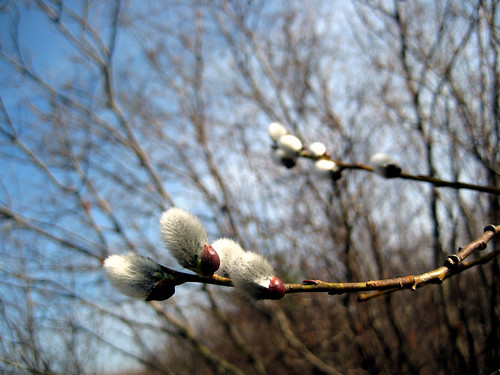
Isn't that perfect? "He tells himself this even as the idea of the taste is replacing what the melon tasted like." This is what it looks like outside my window - a hint of the beauty to come - but I've already forgotten it...
Tomorrow is Maundy Thursday - an odd day for most Protestants - as we fixate on thedeathof the Lord rather than his call to become servants. I guess it is hard for all of us to embrace the invitation to quit being in control. But what I find is that all too often we forget that the death of Jesus is just a part or consequence of his servanthood, but never the goal.
The goal is life - in abundance - the goal is grace and joy... and all too often we fetishize this death - and then sentimentalize it - and then forget it about it until late Holy Week rolls around again. Here is another one of those both/and tunes by my boys, U2, called "God: Part II" which was Bono's reply to his rock and roll mentor, John Lennon's, anti-God rant. I'm with Bono... I believe in love - and grace - and the joy of love in real life amidst the sorrow... even when I can't always remember.
Last week - call it a combination of shitty weather, a sick-wife, an accumulation of petty complaints and a periodic broken spirit - and I began to doubt whether I was supposed to stick it out in our work of renewal here in the beautiful Berkshires. Yes, I understand ups and downs. And to be sure I know that moving a church from the brink of closing back into viability is not an easy gig... but man I was really perplexed last week. REALLY perplexed.
Both Dianne and I wept some - we love this place and our new church - so we prayed a lot, too and came to a sense that perhaps it was time to shake the dust off our sandals and all the rest. And then SUNDAY happened - Palm Sunday - we had LOTS of people. And you could feel the presence of the Holy Spirit in the music and the prayers and the preaching... and the WHOLE faith community. It was a mini-Pentecost and it was ALL of the Lord. Yeah, I did my work and preached hard and true; yes the musicians were focused; but the weather was still shitty so it wasn't just a blast of sunshine. It was God's spirit within and among us.
We held a somewhat sponataneous Eucharist afterwards - I was certain only a few people would hang out - and almost 100 people stayed. And they cared for one another, sang deeply and made the sharing of Christ's love palpable. As one young man said to me as he embraced me with gusto: "In my opinion, man, this BEATS standing in line for a little chunk of bread." Damn straight.
So as we were riding home, Dianne turns to me and says, "How come we have to get ready to move on before there is a sense that God is with us?" I wish I understood that one, too. But that seems to be the rhythm here - and the funny thing is it makes some sense. We are going for broke - striving to be a bold and radically inclusive community in the place that privilege and power once thrived - and we have to rely upon the Lord for these old bones to live.
I love the Ezekiel story: "Can these bones live, Ezekiel" saith the Lord? "Only THOU knowest, Lord, only thou knowest." Well then PROPHESY to those bones... and they began to move together and all the rest. Tonight we practiced for our Good Friday experiment in worship and music - a time of paradox, prayer and promise - using contemporary music, the old readings and post-modern art to reclaim the blessings and challenges of this sacred time - and it was a powerful and beautiful experience. The centerpiece of this worship, Joni Mitchell's song, "Passion Play," is a hard, jazzy conversational jam that moves each person through the life, death and crucifixion of Jesus with only the hint of resurrection. Sometimes ministry feels like Nina Simone's version of this old Bob Dylan song... do you know what I mean?
More than ever before, maybe I am starting to get that...
PS: sometimes people say I am waay too transparent in some of my notes but... over the years I have come to believe that being tender and open works best for me.
I know that it sounds rude, but holy week has often been called "hell week" by those who work in the world of the church... And while I understand this casual lament by church workers, I have never really bought into it because no matter how much work this season is, it is still always a privilege to take this journey with others in a deep and intentional way.
I really mean that. Yes, I get stressed out - and in my early days in ministry I used to freak out when parts of the liturgical celebrations went south - oh it was horrible. My children can tell stories of me spewing flame and anger when some befuddled deacon turned the lights ON rather than OFF during a Good Friday veneration of the Cross - or when some goofy usher passed out the wrong bulletins for the Easter Vigil only to try and make an exchange during the chanting of the ancient prayers - or the sound system in the Sanctuary exploding into a barrage of static during a Tenebrae silence.
Now don't get me wrong, I don't like human error during worship - and do my best to plan and practice against it - but let's just say that... um it seems to me like it goes with the territory, yes?
So this week I will join my congregation as we gather on Maundy Thursday to ponder the connection between the Passover feast and Christ's passion. On Good Friday, we'll use the music of U2 and others - including contemporary visual artists and poets - to see where the paradox of God's presence is breaking in through the darkness. On Saturday, many of us will gather to celebrate the birthday of the first African American clergy person in the Berkshires, Samuel Harrison, at Second Congregational Church (brother Harrison was the chaplain to the black troops in the film "Glory."
And then on Sunday we will regroup for the festival of the resurrection. It is a joyous, demanding and full journey. And while it takes its toll on us all emotionally and spiritually, it is never hell. Makes me think of Bob Dylan's total gospel rave-out, "Saved" which one incarnation of my band played for my ordination. I don't fully embrace the totality of this theology - but I do dig the full tilt groove - and still find myself singing right along with his gospel choir. Blessings.
Now we are into the Holy Week groove - or as Joni Mitchell sings - "enter the multitudes... in Exxon blue and radiation rose!" Powerful retelling of the passion narrative this morning - great music - and lots of folks from the fringe are finding their way into the community. Our children did "Kids with Cameras - Redux" today - and we'll have the results later this week. It is fascinating what it looks like when children take pictures of their peers - and the wider community - a real new perspective.
And as an extra bonus our second TV show started to air last week on the local public station. To be sure, there are a few places that were a little ragged but it was our Gaelic music show with a Berkshire perspective. If you want to see it, try this link: http://www.pittsfieldtv.net/Cablecast/Public/Show.aspx?ChannelID=1&ShowID=10611
Bono once talked about the Psalms of lament as our traditions first connection with the blues - and I think he is right! As a musician and pastor, I find the blues to be an essential way to express some of the truths of real life. I am also sadly aware that some church folk have either been trained to be terrified of connecting feelings and body to their faith - or else so confused about the high/low art divide - that they don't know what to do when the blues winds its way into our worship.
One of the best new (relatively speaking) blues expressions is Springsteen's "Reason to Believe" that first made its appearance on the scene during the down days of the Reagan regime and was resurrected three years ago. In its new persona can sound like a techno-folk rant from the fields or even a full tilt boogie a la ZZ Tops. The song, however, remains the same as Led Zeppelin knows so well: amidst crushing sadness, fear and brutality people still... hurt and find a reason to believe.
U2 certainly has applied the blues-thing, too, in their new work - think "40" or "Sexy Boots" - Dylan has perfected and reinvented the genre and even CCM artist Michael Card has recognized the importance of lament for our worship lives. - and I haven't even mentioned country singers and jazz! But we have a long road to walk before most "blended" congregations understand the value of the blues - and can connect their lives to the wisdom of the music. God knows we've felt and lived the blues... we just don't always know what to call it.
As my congregation takes the Palm Sunday journey tomorrow from joy into lament and certainty to ambiguity, I will be hearing Nick Cave's masterpiece, "Hiding," the whole way. Cave sings and embodies something of the mystery of a God who seems to be hiding amidst the darkness of our lives. It is a lament for a post-modern generation - true and subtle - bold and bewildered. And it is the best expression of a theology of the blues embraced by art and faith that I have ever encountered. (His "Mercy Seat" is pretty damned good, too!)
And when Cave and his band wrap up this wildass tune with the charge, "We all know that there is a law... and that law is love: there is a war coming!" it is a bold reminder of grace - but, man, does it ever take a commitment to the blues to get there with him! So I'm in a palm sunday sort of groove today... waiting for the God who is often hiding within the ordinary with the promise of grace.
I waited and waited and waited for God.
At last he looked; finally she listened.
God lifted me out of the ditch,
pulled me from deep mud.
God stood me up on a solid rock
to make sure I wouldn't slip.
He taught me how to sing the latest God-song,
a song of joy to our God.
More and more people are seeing this:
they enter the mystery,
abandoning themselves to God.
Blessed are you who give yourselves over to God,
turn your backs on the world's "sure thing,"
ignore what the world worships;
The world's a huge stockpile
of God-wonders and God-thoughts.
Nothing and no one
comes close to you!
I start talking about you, telling what I know,
and quickly run out of words.
Neither numbers nor words
account for you.
Doing something for you, bringing something to you— that's not what you're after.
Being religious, acting pious—
that's not what you're asking for.
You've opened my ears
so I can listen.
So I answered, "I'm coming... coming to the party you're throwing for me."
So today I find myself in a Northern Exposure kind of groove: reflective, ironic, a little melancholy but simultaneously hopeful about what God holds in our future. It should come as no surprise that my main man is Chris - especially when he's making art or talking on the radio - and as the rain POURS down today, my heart takes me here:
How sweet. How true. How beautiful and happy/sad all at once. Remember Tim Buckley? I fell in love with his "Happy/Sad" album and used to drift off into new and untried places with it oh so many years ago. And even now his groove seems to be where my soul drifts when I'm not paying attention. My Northern Exposure man, Chris, put it like this:
Well, you know... the human soul chooses to express itself in a profound profusion of ways. What I'm dealing with is the aesthetics of the transitory. In this particular exhibition, the fleeting nature of the piece itself becomes a comment on mortality. Like the temporary installations of Christo, I'm creating tomorrow's memories. And, as memories, my images remain as immortal as art which is concrete.
And then, of course, Chris flings a huge piano into the air. It was going to be a cow but that became both cruel and too complicated - for Chris and everyone else. So... in cooperation with the whole community, his encounter with art changed. And it became better...
I was fixated on that flying cow. Then when Ed said that Monty Python had already painted that picture, I thought I was through. I had to let go of that cow to see all the other possibilities, even though that was frightening, because Ididn't know where I was headed - and I didn't know where I'd come out, see? As Kierkegaard said so well, "The self is only that whichit is in the process of becoming." Art, same thing. James Joyce had something to say, too: "Welcome, O Life! I go to encounter for the millionth time the reality of experience and to forge in the smithy of my soul the uncreated conscience of my race."
That's what today feels like in this northern exposure groove: happy/sad, exploring and discerning and all the rest. We are here to fling some thing, an image that bubbled up out of the collective unconscious of our community. Blessed Sabbath.
In what has become an important annual event - our Good Friday mix of prayer, contemporary secular music and the various spiritual themes of the season - we are getting ready. This year Good Friday feels even more paradoxical than others: what good will emerge from the current economic chaos? what signs of hope will grow stronger amidst our fears? what radically new insights can we glean that we might never have considered?
I feel a need for more gentle beauty this year - people are tender and confused - so an invitation is needed more than a challenge, yes?
Four key songs stand out in this year's liturgy: U2's "Dirty Day," Joni Mitchell's "Passion Play" the Eels' "The Stars Shine in the Sky Tonight" and the Wailin' Jennys' "One Voice." (We're also working on "Pride," "40" and "Turn, Turn, Turn" as well as some gospel and Taize.)
As I have written before, "Dirty Day" is a beautifully tragic jumble of competing truths about family, faith, fate and all the rest... a perfect way to open the liturgy after reading the world weary words of Ecclesiastes 3: "to everything there is a season..."
Joni Mitchell's "Passion Play" is equally ambiguous as she sings about celebration and tragedy, fear and apathy all within the context of being moved into a new way of living by Jesus. At the same time, she creates a critical tension given her lament about the church: "who you gonna get to do your dirty work now that the slaves are free?" (This version is not nearly as moving as her conversational jazz groove, but it is the only one available.)
The music of the Eels always startles me with the simplicity of the sound and the depth of the message: brilliant. Mark Everett evokes what it must have felt like for both Jesus and the disciples to face his death without ever being explicit or sentimental. (There isn't a clip of this available - sorry.)
Which brings me to the closer for worship - "One Voice" - the heart of my theology of our current band: it blends real life into the sacred fabric of worship. It is experiential, honest, beautiful and participatory in ways that embody the change we all ache for. It helps me BE the change I long to SEE.
One of the texts we will use is Peterson's reworking of Romans 12 and the challenge to be counter-cultural: So here's what I want you to do, God helping you: Take your everyday, ordinary life—your sleeping, eating, going-to-work, and walking-around life—and place it before God as an offering. Embracing what God does for you is the best thing you can do for God. Don't become so well-adjusted to your culture that you fit into it without even thinking. Instead, fix your attention on God. You'll be changed from the inside out. Readily recognize what he wants from you, and quickly respond to it. Unlike the culture around you, always dragging you down to its level of immaturity, God brings the best out of you, develops well-formed maturity in you. I hope you will join us if you are in town...
NOTE:Here are my weekly worship notes for Sunday, April 5th - Palm Sunday - in which I look at the paradoxical wisdom of the Cross in light of the healing it brings to us in community. I am deeply indebted to the writings of Rene Girrard and Douglas John Hall for shaping my emerging alternative theology re: the atonement. As I often say: if you are in town at 10:30 am on Sunday, please stop by. The table of Christ always has room for you as an honored guest. Be well.
Palm Sunday is a mixed-up celebration: one minute we’re rejoicing and the next we’re in tears. We start the day with blessings and shouts of joy only to conclude with lamentation and sadness. We join ourselves to the ancient crowd in Jerusalem chanting “Hosanna,” and before you know it we’re part of the mob screaming, “Crucify, crucify!” No wonder this liturgy often reminds us of Judith Viorst’s children’s book: Alexander and the Terrible, Horrible, No Good, Very Bad Day. Everything is upside down – bewildering and beyond our control – and of course that is the point.
+ More than most of our high holy days, this week – Holy Week – invites to wrestle with the mystery of God’s love in the world.
+ It s all about paradox – the upside down wisdom of God in the Cross – the counter-cultural truths exposed by the life, death and resurrection of Jesus.
Now let’s be clear: allof our deepest Christian celebrations are paradoxical. Christmas is all about the incarnation – the word and idea of God becoming true flesh and blood. Epiphany points to how the covenant of Israel was shared with those beyond the tribe in the story of the Magi coming to bring gifts to our infant king. Even the idea of a powerless baby as Messiah is paradoxical, yes?
And so it goes: Easter and the resurrection, Pentecost and the body of Christ alive within you and me, the light in the darkness, Christ’s presence in Holy Communion, forgiveness and sin and all the rest. How baffling – incomprehensible – genuinely mysterious. And all the more so during Holy Week – Palm Sunday included – for now we are confronted with the reality of the Cross and what it holds for each and all of us by faith.
Without denigrating any of the other complex and nuanced insights about the Cross that scholars and saints have shared with us over the years, let me suggest to you that for our generation the Cross must show us something of God’s grace or we will lose heart. Unless we can begin to grasp that the Cross is a sign of God’s unconditional love for the world – a love that sin and death cannot extinguish – we will be a part of the problem rather than Christ’s solution.
Bible scholar and pastor, Brian Stoffregen, tells us that Mark’s gospel makes this point clearly in his description of the first disciples. Luke and John note that before Judas could betray Jesus the devil – Satan – had to enter and corrupt him “so it wasn’t really his fault.” Matthew tells us that the betrayal was rooted in greed – Christ’s opponents offered Judas 30 pieces of silver – so one of the seven deadly sins was the root cause of this catastrophe. Only Mark observes that before the devil and sin, before the conspiracy and all the various temptations, Judas chose to betray the one he loved.
“It was an inside job,” Stoffregen writes: inside the heart of Judas, inside the first faith community, inside the unfolding of events in the real world. And the picture is equally bleak for the other disciples, too:
+ Peter swears his allegiance but before the cock crows twice denies and betrays the healer of his soul. “I would have thought that the first crowing,” says Stoffregen, “would have served as a warning and reminder to Peter – but it doesn’t!”
+ The other disciples, in the garden, are lazy and ignorant: they flee and jump ship – argue and collapse – during the hour of trial. They are individually and collectively a mess.
And God still loves them – never abandons or betrays them – and brings back into life a love that will not let us go. Jesus knows the emptiness, Jesus cries out in agony and Jesus takes onto himself all the pain that betrayal has to offer – and responds with grace and love. The first mystery the Cross exposes to us this day is that God will not let us go no matter how great the sin or onerous the offense.
And the second is equally paradoxical and hope filled: namely, that by taking on the sins of the world – literally exposing us to what happens when we are ruled by fear and hatred – the Cross invites us into a new way of living. Now that we see the horror that we ourselves can create on the Cross – the mangled bodies of war, the burnt flesh of executions, the wasted lives of malnutrition and disease – we are asked to change our direction. Literally we are invited to repent – metanoeo – change our direction in life so that we, like the Magi of Christmas, go home another way. A better way. A way that does not make scapegoats out of anyone – especially those we don’t understand.
Richard Rohr at the Center for Action and Contemplation in New Mexico puts it like this: “The crucifixion is our standing icon of both the problem and the solution to violence and evil in the world.” It shows the problem clearly: this is what happens to the scapegoat – torture and death – and the scapegoat may be Jesus or Jews or heretics or homosexuals or witches or the poor or those who are simply not like us. Without a change of direction, our fear drives us into violence.
But the solution is exposed on the Cross, too. “Jesus offers us another way of overcoming evil and violence – by absorbing it in God – the true meaning of his suffering body. Instead of attacking, Jesus absorbs the evil and gives it to God… and this is the most counter-intuitive” – dare I say paradoxical – truth of the whole Bible?
+ Jesus absorbs evil – he embodies forgiveness – he shares grace unconditionally. And not just once on a lonely hill two millennia ago in Palestine – but here and now and every time we join him in practicing God’s alternative.
+ Forgiveness – grace – transforms evil in a way that brings healing rather than hatred to birth. No wonder it is said that “The cross dramatically reveals the paradoxical wisdom of God: it exposes both the horror of our darkest selves while promising to inoculate us against doing what we hate.”
How did St. Paul put it in Romans 7? Left to ourselves we know what is good and true and holy… but we can’t – and if Mark’s description of the disciples is true – won’t do it. I need something more! For if I know the law but still can't keep it, and if the power of sin within me keeps sabotaging my best intentions, I obviously need help! I realize that I don't have what it takes. I can will it, but I can't do it. I decide to do good, but I don't really do it; I decide not to do bad, but then I do it anyway. My decisions, such as they are, don't result in actions. Something has gone wrong deep within me and gets the better of me every time.
Then Paul nails it when he confesses: “It happens so regularly that it’s predictable. The moment I decide to do good, sin is there to trip me up! I truly delight in God’s commands, but it is pretty obvious that not all of me joins in that delight.”
Parts of me covertly rebel, and just when I least expect it, they take charge. I've tried everything and nothing helps. I'm at the end of my rope. Is there no one who can do anything for me? Isn't that the real question? The answer, thank God, is that Jesus Christ can and does. He acted to set things right in this life of contradictions where I want to serve God with all my heart and mind, but am pulled by the influence of sin to do something totally different. Not magically – not without our change of direction either – but honestly, compassionately and without reservation – and that is the paradox the Cross exposes for us on Palm Sunday. It confronts us clearly with God’s grace and judgment and asks, “What needs to be sacrificed within me – among us – in order to forgive?”
This is how we participate in the journey of Holy Week: a journey into fear and shame and sin as well as grace, forgiveness and new life. What needs to be sacrificed in me so that God’s grace is strengthened? It is always there as light within the darkness and hope right alongside despair – but now we are invited to embrace it and make it our own.
Such is the bewildering but simultaneously good news for today: so let those who have ears to hear, hear.
NOTE: There is perhaps no better musical expression of all of this than Jeff Buckley's version of Leonard Cohen's "Hallelujah." And so it goes...