Ok, this is a total rant... (almost.)I heard on the radio this afternoon that conservative columnist, Robert Novak, died today. He was a man - like Dick Chenny - who deserved the moniker: Prince of Darkness. In fact, he used it as the title of his autobiography. To my sensibilities he was mean spirited, boorish and unwilling to admit that his ideas and often half-baked blathering caused harm to innocent people. (I can already hear someone say, "please, tell us how you really feel!")
Please don't misunderstand: I am not fuming because he was a social conservative. Most social and religious conservatives are principled, dedicated people who value serving others and encouraging the common good. But there are a handful of public bullies - Dick Armey, Rush Limbaugh, Tom Delay, Ann Coulter, Dr. Laura and Glenn Beck to name the obvious - who all learned from the master: Robert Novak. He confused authentic questioning of the government with treason, shouting for civil discourse and venomous attacks for serving the body politic.
For those too young to recall, Novack was the role model for the Saturday Night Live skit - Point/Counter Point - where Dan Akroyd turned to Jane Curtain and rather than argue her point simply said, "Jane, you ignorant slut..." Very funny, too honest and pure Novack. Take a look at:www.hulu.com/watch/2306/saturday-night-live-point-counterpoint-lee-marvin-and-michelle-triola_)
Never forget: he was the hack who did Dick Chenny's public bidding by "outting" the undercover CIA agent, Valerie Plame in order to distract and punish those who opposed our scandalous war in Iraq. (Karl Rove and Richard Armitage were the actual "leaks" but Chenny was the source.)
No wonder Jon Stewart awarded him the "Number One Douche bag of Liberty" award: he was a person who hid his questionable ethics behind a loud voice and a cruel persona. You can be tough - look at Tim Russert (rip) or even David Gregory - but Novak was ruthless regardless of the costs. And when James Carville - no slouch to political street fighting - called his bluff on CNN, Novak could only curse him, throw down his microphone and pout off the set.
When Americans lament our lack of public ethics - or even propriety and manners - let us not forget Robert Novak and the deceptive, lying minions he spawned - he has a great deal to acount for and we are all the worse for his life's work. My heart goes out to his family as it is always tough and empty to grieve a loved one. May God's spirit be with you all. And, let's not forget this man's legacy...
Thank God we serve a Lord of grace... On a brighter note, I was back at church day - and it was wonderful to see my friends and staff after a two week vacation - this is a sweet place. It feels like a new beginning as I start my third year as their pastor. I was struck this morning in prayer by this poem of Mary Oliver's:
There is the heaven we enter
through institutional grace
and there are the yellow finches bathing and singing
I head back to church tomorrow after a truly wonderful 14 day respite: it was exciting and restful, filled with adventure as well as lots of down time. I got to hear some GREAT music in Montreal, practice speaking French with creative and compassionate people, share lots of time in the sun with my beloved and do some of the reading I've been laying aside, too. I even began to reclaim a more ordered prayer life (although there is more attention needed here!)
What's more, I watched some classic films that I've always wanted to see, read lots of poetry, walked my ass off and spent some time cooking French food for Dianne. And, we started to explore the sweet, wild world of French wines.
Two really fun things that are symbolic of this time of renewal:
+ I grew my beard out again and it is TOTALLY white! Yikes... no hint of my once dark brown tones. And I will probably keep it this way a la Yusuf Islam. I really dig this guy more and more: he opted out of the rat race and cultivated a spiritual life. It is different than mine but it is totally authentic. And now, after growing and maturing, learning to shut up more than say anything out load - and take care of his family and many others - once again he is making music. Sweet music - even playing some of the old tunes, too - all for the cause of peace and compassion. He is truly one of my spiritual mentors.
+ And I finally learned to play "Jesu, Joy of Man's Desiring." I've wanted to get this song since 1974 - before my children were born - and now I have it. I still have to do some practice but... one of the blessings of getting older is setting goals and knowing how to achieve them. I remember hearing Leo Kottke do this back in St. Louis all those years ago... and I ached to play it, too. But, like most things, you gotta sit down and work at it hard to make it happen and I wasn't willing to do that for 35 years but... when the student is ready, the teacher will appear: and now I have it. And a white beard, too!
So, back to church life for a few weeks again (and then a little more vacation time, too!) Makes me think of this poem by my boy Rumi:
There is a smile and a gentleness inside. When I learned the name
and address of that, I went to where you sell perfume. I begged you not
to trouble me so with longing. Come out and play! Flirt more naturally.
Teach me how to kiss. On the ground a spread blanket, flame that's caught and burning well, cumin seeds browning, I am inside all of this with my soul.
How did Zep put it onHouses of the Holy:The song remains the same? Well, I've been having an all day - on and off - internet conversation with my main man in Tucson about this whole electric/wooden divide. And, dude, he's got some important things for us to consider that render some questions about whether or not the song DOES remain the same. But before I summarize his insights let me share a little of his background in the spirit of full disclosure and transparency:
+ lead guitarist and bass player with a variety of bands + singer/songwriter + we worked together in our Tucson church band, Stranger, where he was SMOKIN' + computer analyst/philosopher/dad/husband who has studied jazz and classical guitar - taught them too - in addition to playing more rockin' chops with bar bands
And he's one of my all time favorite human beings in the world: more than anyone else, leaving him was the hardest thing about moving to the Berkshires. I love him, respect him, learn from him and LOVE playing guitar with this dude: he is, as Springsteen used to say about Clarence, the BIG man and Master of the Universe!
Ok, now on to the insightsand the first grows out of working/playing music with someone a generation younger than myself. The dude knows the technology of today and isn't bound by the old arguments of the past.You see, when I set up this dichotomy of electric and wooden songs, it didn't speak to him as new technology has rendered this distinction irrelevant. It DID communicate with some of us dinosaurs who heard CSNY at Woodstock make this split - but for my man this is way too dated!
Second, there is clearly a difference in the type of music I was describing but my distinctions were too mechanical: the distinctions can be heard and felt, to be sure, but maybe this much more nuanced labeling is more helpful:
+ some songs are personal and express in words and music something that can be shared but must essentially be observed and embraced only by listening; they require a quieter sound and setting.
+ some songs are intimate in sound and lyric but invite your participation - more than listening and learning - so that you find yourselves quietly singing along as well as feeling the emotions.
+ some songs are about community building - they are all about "we" rather than "them" - and are are intended to be shared and experienced because they help strengthen and encourage the community
+ and some songs areanthems that need be shared with all of creation from the rooftops: there is no distinction re: insiders and outsiders here for this is bold proclamation
In this typology, my breakdown goes like this:
+ Personal:Angel, Fire and Rain, Woodstock, Blackbird, Hallelujah
+ Intimate:Peace on Earth, Smells Like Teen Spirit, Things the Grandchildren Should Know
+ Community:What's Going On, Like a Rolling Stone, While My Guitar Gently Weeps, We Shall Overcome
+ Anthem:Twist and Shout, One of Us, Beautiful Day, Open All Night There are two other important insights: some songs - or settings - call for an intimacy and that requires different instrumentation. Think, for example, of what MTV did with the whole "Unplugged" thing: they gave a variety of performers - often those used to doing stadium shows - the chance to get closer to their audience and express deeper connections. VH1 did the same thing with their "Storyteller" series. Here's Springsteen's anthem - The Rising - done in an intimate and very personal setting - it cries out for different sounds when put across like this, yes?
Additionally, the interaction between musicians can contribute to a sense of intimacy even in a large setting. Finally, as artist tries to communicate through both the instrumentation and setting, sometimes the sound and emphasis changes. When Eric Clapton got the chance to get up close and personal on Unplugged, he shared some powerful new songs including this incredible reworking of a rock standard that became gospel given the instruments, the interaction and the intimate setting: "Running on Faith."
So that's what's going on right now... more on Feast of Fools soon. What do you think?
NOTE:over the next week I will be sharing an overview of what I believe are the insights in The Feast of Fools by Harvey Cox for this generation. Like Woodstock, it, too, is 40 years old. And besides some innocence (better than cynicism in my book) the major ideas in it continue to be important - probably more important than Woodstock itself.
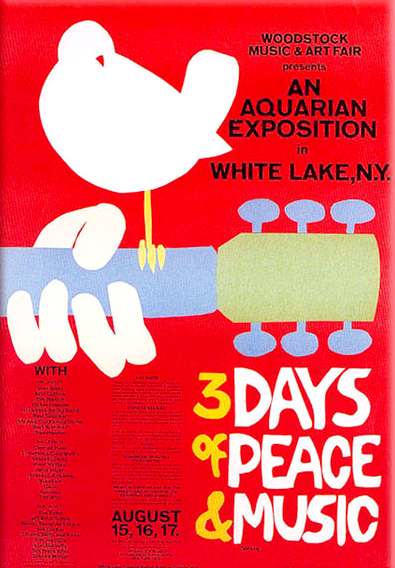
THE FEAST OF FOOLS AT 40: Part One The Woodstock experience of 1969 that is currently making the rounds in popular culture is clearly one part nostalgia mixed with two parts marketing-hype: such is the reality of a world primarily defined by the metaphors of the marketplace. At the same time, however, the Woodstock revival also offers us a unique invitation to playfully reconnect with some great music – and it is this playfulness that warrants our careful attention.
Forty years ago, Harvard theologian, Harvey Cox, published The Feast of Fools as a follow-up to his block-buster, The Secular City. This thin volume – which eventually became the inspiration for the musical Godspell– has generally been overlooked and forgotten. In some ways, the hopeful naiveté of the text is dated. Woodstock was not the dawning of the Age of Aquarius. Rather, within a few months, both the horror of the Manson clan and the ugly chaos of Altamont were unleashed on America and the hopeful promises that Cox pointed toward were discarded and forgotten.
And yet, after working as a pastor in a variety of American churches for the past 30 years, I sense that the heart of The Feast of Fools continues to be relevant even if some of the rhetoric has outlived its usefulness. What Cox describes – and what his spirituality of festivity and fantasy suggest – is a healthy and healing alternative to the cynical status quo. Further, I believe that the new/old spiritual disciplines of holy humor, mystical improvisation, playful prayer and radical acts of hospitality offer us a way to ground the creative impulses of the Woodstock experience so that they are less likely to burn out or implode.
Forty years ago, Cox put it like this:
Though we have no annual Feast of Fools, the life affirmation and playful irreverence once incarnated in that day are bubbling up again in our times… our period may be rediscovering the value of two components of culture both of which were once seen in the Feast of Fools. The first is the feast or festival… the other important cultural component is fantasy and social criticism. In a success and money oriented society, we need a rebirth of patently unproductive festivity and expressive celebration. In an age that has quarantined parody and separated politics from imagination we need more social fantasy… we need a renaissance of the spirit and there are signs that it is coming. (FOF, pp. 4-5)
Forty years later, the need for imagination in politics – to say nothing of the invitation to feast our souls at the banquet of creativity and social equality – is even more pronounced. Two post-modern writers, Brian Walsh and Sylvia Keesmaat, speak of our era as one “without metanarratives, a world where people have to make their way without fixed referents and traditional anchor points… a world of rapid change, bewildering instability where knowledge is constantly changing and ‘meaning’ floats.” (Colossians Remixes, pp. 23-23)
As an antidote to this fear and a gentle corrective to our social confusion, Cox reclaims the importance of festivity – especially the biblical significance of the feast. Table fellowship has historically been the Christian alternative to both moral relativism and busyness: more than scripture, liturgy and theological instruction, the radically open table of Jesus provides pilgrims searching for answers with an experience of deep acceptance with the hint of community.
The feast holds all of life’s contradiction in balance by celebrating grace as the heart of God while simultaneously pointing people towards a path of redemptive suffering. It is a clear alternative to the consumerism of this age that embodies the serenity and trust that so often haunts the postmodern soul. As Jesus puts it in Eugene Peterson’s reworking of Matthew 11:"Are you tired? Worn out? Burned out on religion? Come to me… learn the unforced rhythms of grace.” (The Message, Matthew 11: 28-30)
Here's a song done with my band that takes the call to festivity and the biblical feast seriously: My City of Ruins by Bruce Springsteen. As you know, I find great solace and spiritual wisdom in music and this is one great prayer.
There is a fascinating paradox at work in the insight from Dostoevsky that “beauty can save the world.” As this morning’s NY Times makes clear in their accounting of the July murder of Marwa al-Sherbini in Dresden, Germany, this just “ain’t necessarily so.” At the same time, however, the testimony of Alexandr Solzhenitsyn – made explicit in his Nobel Peace Prize essay – continues to suggest that beauty and art have a unique and mysteriously redemptive role to play in creation that is always beyond our consciousness. (See: http://www.nytimes.com/; and www.nobelprize.org/nobel_prizes/literature/laureates/1970/solzhenitsyn-lecture.html)
In his article, “In Dresden Cultural Beauty Meets Ugly Bigotry,” columnist Michael Kimmelman wrestles with the fact that hate crimes are on the rise in the midst of this city saturated in cultural depth and beauty. Dresden is not only home to the Baroque music of Bach, it has become something of an icon to peace and human reconciliation.
For nearly 60 years the bombed ruins of the cathedral were left as a sober testimony to the wages of war and social intolerance. In 2005, the Frauenkirche was rebuilt to include over 2000 pieces of the original altar and images of its former destruction. Into this context, Kimmelman asks: “What are the humanizing effects of culture? Evidently there are none… (because) nothing can make sense of a senseless murder or help change the mind of a violent bigot.”
Here are the facts:
• Ms. Al-Sherbini was an Egyptian pharmacist who was stabbed 18 times in front of her three year old son in a Dresden courtroom. Her husband, a genetic research scientist, was also critically wounded trying to defend her – and when the police arrived “on the scene, (they) mistook him for the attacker and shot him in the leg.”
• What brought them into the courthouse is important: besides wearing a hajib, Ms. Sherbini had asked the man who would eventually murder her to give her son room on a playground swing set. His reply was to call her “an Islamist, a terrorist and a slut.” They were in court to settle and pay his fine.
How could a society that nourishes Mozart on its street corners, asks Kimmelman, simultaneously encourage such hatred and violence? Indeed, how could a culture that regularly celebrates the wisdom of multi-culturalism by showcasing the genius of European art alongside comparable gems from African and Asia – and attracts over 10 million tourists each year eager to witness the city’s sublime architecture and traditions – also support the senseless murder of Ms. Sherbini? Kimmelman concludes:
The lesson of Dresden, which this great city unfortunately seems doomed to repeat, is that culture is, to the contrary, impractical and fragile, helpless even. Residents of Dresden who believed when the war was all but over, that their home had somehow been spared annihilation by its beauty were all the more traumatized when, in a matter of hours, bombs kissed tens of thousands and obliterated centuries of humane and glorious architecture.
The truth is, we can stare as long as we want at that Raphael Madonna; or at Antonello da Messina’s “St. Sebastian,” now besides a Congo fetish sculpture in another room in the Gemaldegalerie; or at the shiny coffee sets, clocks and cups made of coral and mother-of-pearl and coconuts and diamonds culled from the four corners of the earth in the city’s New Green Vault, which contains the spoils of the most cultivated Saxon kings. But it won’t make sense of a senseless murder or help change the mind of a violent bigot. What we can do, though, is accept that while the arts won’t save us, we should save them anyway. Because the enemies of civilized society are always just outside the door.
I resonate with Kimmelman’s frustration. I share his horror. And I wrestle with what role culture, beauty and art play in the healing and redemption of the soul. Clearly as the NY Times’ chief art critic, Kimmelman’s observation that the “arts won’t save us but we should save them anyway” is not without gravitas.
The revival of Neo-Nazi ideology as well as the widening clash of cultures between Western Europe and Islam is authentically frightening. Christopher Caldwell, writing in Reflections on the Revolution in Europe: Immigration, Islam and the West, notes that: “Through decades of mass immigration to Europe’s hospitable cities and because of a strong disinclination to assimilate, Muslims are changing the face of Europe, perhaps decisively. These Muslim immigrants are not so much enhancing European culture as they are supplanting it. The products of an adversarial culture, these immigrants and their religion, Islam, are “patiently conquering Europe’s cities, street by street.” (NY Times, July 29, 2009) The fears – and the violence – are escalating.
What is missing in Kimmelman’s reflection, however, is that longer vision of both the human soul and the arts that Alexandr Solzhenitsyn brings to the table. Nourished by a life time of spiritual discipline, critical reflection on human nature, worship, and engagement with the arts, Solzhenitsyn understands that there “a certain peculiarity in the essence of beauty, a peculiarity in the status of art: namely, the convincingness of a true work of art is completely irrefutable and it forces even an opposing heart to surrender.”
In the speech that he was to deliver upon receiving the Noble Peace Prize for literature – and which he was prevented from sharing by the Soviet regime – the Russian reflects on his own experience as an author as well as what he has learned from other artists. Without a hint of romanticism – or bitterness – Solzhenitsyn makes the case that during a season when both truth and goodness are wounded, it is often the presence of beauty that nourishes what is noble in humankind so that the diminished members of the ancient Trinity are able to be revived.
One day Dostoevsky threw out the enigmatic remark: "Beauty will save the world". What sort of a statement is that? For a long time I considered it mere words. How could that be possible? When in bloodthirsty history did beauty ever save anyone from anything? Ennobled, uplifted, yes - but whom has it saved? But a work of art bears within itself its own verification: conceptions which are devised or stretched do not stand being portrayed in images, they all come crashing down, appear sickly and pale, convince no one. But those works of art which have scooped up the truth and presented it to us as a living force - they take hold of us, compel us, and nobody ever, not even in ages to come, will appear to refute them.
So perhaps that ancient trinity of Truth, Goodness and Beauty is not simply an empty, faded formula as we thought in the days of our self-confident, materialistic youth? If the tops of these three trees converge, as the scholars maintained, but the too blatant, too direct stems of Truth and Goodness are crushed, cut down, not allowed through - then perhaps the fantastic, unpredictable, unexpected stems of Beauty will push through and soar TO THAT VERY SAME PLACE, and in so doing will fulfill the work of all three?
The essay is worth rereading from time to time: not only does the old master review how he was given strength and hope through beauty, but he also describes how through the writing of The Gulag Archipelago other artists were given strength to renew their own quest for truth and goodness. His conclusion warrants another hearing:
We shall be told: what can literature possibly do against the ruthless onslaught of open violence? But let us not forget that violence does not live alone and is not capable of living alone: it is necessarily interwoven with falsehood. Between them lies the most intimate, the deepest of natural bonds. Violence finds its only refuge in falsehood, falsehood its only support in violence. Any man who has once acclaimed violence as his METHOD must inexorably choose falsehood as his PRINCIPLE.
At its birth violence acts openly and even with pride. But no sooner does it become strong, firmly established, than it senses the rarefaction of the air around it and it cannot continue to exist without descending into a fog of lies, clothing them in sweet talk. It does not always, not necessarily, openly throttle the throat, more often it demands from its subjects only an oath of allegiance to falsehood, only complicity in falsehood.
And the simple step of a simple courageous man is not to partake in falsehood, not to support false actions! Let THAT enter the world, let it even reign in the world - but not with my help. But writers and artists can achieve more: they can CONQUER FALSEHOOD! In the struggle with falsehood art always did win and it always does win! Openly, irrefutably for everyone! Falsehood can hold out against much in this world, but not against art.
My reflections on discerning the spiritual in popular culture – particularly rock music – is grounded in these insights of Solzhenitsyn. As a consequence of his wisdom, I have appropriated three broad spiritual disciplines from the work of Harvey Cox in The Feast of Fools to guide and shape my work. They include:
• Festivity as the cultivation of humility through humor: grace not judgment.
• Fantasy as a type of playful prayer and embodied imagination: the word made flesh.
• Hospitality as a prophetic critique of the status quo: life as a part of Christ’s living body/community.
Tomorrow I will spend some time of these spiritual disciplines – festivity, fantasy and hospitality – so that the conversation might go deeper.
This collections of tunes is going to be both more challenging and eclectic than yesterday's electric/rock and roll songs of the spirit - for two reasons. While I was driven to learn to play the guitar after seeing the Beatles on Ed Sullivan in February 1964, I have mostly played acoustic music over the years. (BTW here is the song that set it all up for me: a true rock'n'roll Pentecost!)
So, first of all, there is a tension going on when it comes to songs of the spirit: I LOVE electric songs - everything from Garth Brooks' "We Shall Be Free" and Hendrix's "All Along the Watchtower" to the work of Tears for Fears, Talking Heads, Gil Scott Heron, the Allman Brothers, the Dead, the Police, the Stones, the Clash, the Kinks, Cinematic Orchestra, Clapton as well as Springsteen and the E Street Band - but I mostly PLAY acoustic country blues.
In fact, while the Beatles set my soul on fire, it was sitting in a small New Haven coffee house in 1968 listening to Mike Cooney play a version of Dave Von Ronk's setting of the Rev. Gary Davis', "Cocaine Blues" that pushed me over the edge into serious guitar playing. (I couldn't find a youtube version of "cocaine," but this song, "Sunday Street," is pure genius and my preferred go to doodle...)
So, there is this real gap between my practice and my experience (something the liberation theologians have a lot to say about) no matter how many garage and rock bands I've played in over the past 40 years. That's the first thing - and the second is that while I LOVE rock - and play it LOTS - I am really probably better at the softer acoustic stuff. That's why most of my own arrangements end up more like CSNY or James Taylor than the Dead - although this Dead set-up is almost perfect to my ear cuz it's got EVERYTHING I need in an arrangement.
Ok, that's a waaaay to long set up, but as the liberation folk also teach: context is half the story! So let me give this a try...
TOP SEVEN WOODEN SONGS OF THE SPIRIT:
+ Hallelujah by Leonard Cohen but performed by Jeff Buckley: this is the killer interpretation that speaks of depth, grace, suffering, God's presence and absence all at the same time. And Buckley takes the organic beauty of Cohen's poetry and marries heaven to earth in both his guitar playing and anguished singing. I can not think of a finer secular song that exposes God's still speaking voice better than this... it brings biblical imagery into real life, it exposes human brokenness without judgment and always points towards the Lord's grace just beyond our vision and grasp. It is perfect.
+ Angel by Sara McLachlan: there are many incarnations of this song - from the movie version to the way it was done at the Lilith Fair - and each one is deeply moving to me. At the heart of this song is what it feels like to ache for God's grace - it is about longing and trust - as well as the sweet assurance of God's presence every now and again "in the arms of an angel." Sure, it is a love song, but as George Harrison noted all earthly love songs also point to a higher love. (please forgive the dualism for what I take from this is that the spirit and flesh are connected rather than divided.) I would add Jewel's "Hands" to this type of song - brilliant in its own way - along with a ton of Leonard Cohen songs, too.
+ Woodstock by Joni Mitchell: both Joni's original version and this stellar remake by Eva Cassidy capture what is for me a prayer for healing: listen to the longing in both the lyrics and the music. A child of God is aching to get back to the garden - to a time of innocence - to a life without sin. This isn't a celebration of the naive dreams of hippies, rather it is a sober song that sadly confesses we cannot be restored to wholeness without a love greater than ourselves. Into this category of song I would add the work of Carrie Newcomber as she carries on the torch and also much of the work of Bob Franke. (I was going to give him a spot by himself but ran out of space. Check out "Thanksgiving, Eve," "Hard Love" and "Beggars to God." Brilliant - and a fun blues player, too!)
+ Peace on Earth by U2: there is not a more honest prayer of despair in all of contemporary music than this little song from the Irish rockers. Written after the cruel and cowardly bombing in Omagh, it begs God for a healing: Jesus can you spare a dime or throw a drowning man a line? It simultaneously mocks the sentimental and elusive Christmastime promises of peace on earth while making it vividly clear that fear - not God - is driving us to destruction. Another weeping prophetic lament.
+ We Shall Overcome by Pete Seeger: how could I not include the grand daddy of folk music? This song has changed the world - and created 3 or 4 generations of singers who are also committed to deepening the change! What I think is important here is the use of very old African American hymnody - with its symbolic calls for freedom - in a contemporary context. Seeger makes the song REAL both by changing the words to fit the civil rights struggle of the 50s and 60s, but also giving future singers the ability to keep the change happening by doing likewise. (I would want to include most of Dylan's 60s tunes here, too, especially "Blowin' in the Wind" and "The Times They Are A'Changin'.)
Two brilliant derivatives of what this type of singing can do include Richie Haven's reinterpretation of "Motherless Child" at Woodstock 40 years ago and Springsteen's reworking of his own material during the "Seeger Sessions" tour. The story goes that after all the rain and traffic congestion, the opening acts at Woodstock were unavailable so Richie Havens was encouraged to go out and play for the crowd - and he did for 90 minutes. When he left the stage, they still needed more music so... he went back and improvised this rendition of an old gospel tune with some new twists...
About 40 years later, during a tour dedicated to introducing some of the great gospel and protests songs to a new generation, Springsteen took "We Shall Overcome" to a whole new level. And what is fascinating to me is that in doing this he found another layer of creativity and passion for his own music. Just listen to the way he reinterprets his own former sparse New Jersey lament, "Open All Night," into something close to a beat poet rant for the 21st century with the benefit of a killer dixieland band to top it all off! This is all about overcoming... finding your true voice... living into God's image!
(OMG do I LOVE that song... I got to do a version much like this in our Tucson band's farewell before we moved to our new gig in Massachusetts: a whole big band with GREAT women singers, too boot!)
+ Blackbird by the Beatles: a gentle love song written to the Civil Rights movement by Paul McCartney that countless people sense is an invitation from the sacred to live into their best selves. Pure beauty - and beauty, truth and compassion are the ways God is most clearly encountered - so this has to be included. I am particularly fond of the Gaelic resetting of the Beatles' tune by Julie Fowlis. Again, this is perfect.
+ Fire and Rain by James Taylor: is a prayer and a story and an invitation to grace done with finesse and tenderness. There are a hundred other songs - by Dave Matthews, Lucinda Williams, Arlo Gutherie, all the great southern blues guitarists as well as Dylan - but Taylor seems to bring them all together with care and respect. He borrows from them all but never steals - and I think mostly brings his humility and humanity to God much like we sing in "Just As I Am" or even "Precious Lord."
Well, that's a lot of music - and a lot of rambling - but I think it cuts to the chase for me. Two additional notes: over the weekend I will try to summarize how I evaluate these tunes given a theological context I've been working with in Harvey Cox's Feast of Fools. I haven't even brought up the whole realm of meditative music - mostly instrumentals - that are soul healing, too. But here's one of my favorites to bring this to a close.
One of my favorite movies, High Fidelity, shows a young man's journey from selfishness and insecurity into the beginnings of what could become humility and maturity. And because the male characters all work in an indie record shop, one of the truly fun devices used to chart this sojourn involves making "top 5" lists of songs that describe an experience: top five break-up songs, top five monday tracks, etc. This clip shows each of the emotionally delayed guys at their essence: Jack Black as the total asshole, John Cusak as the depressed and aggrieved lover and Todd Louiso as the unappreciated but wise music geek into sensitive songs.
There are too many wonderful sequences in this film to suggest here - especially great is when Jack Black debuts what everyone thought was going to be an obnoxious punk band but what has become a truly soulful motown soul group - as well as conversation Cusak has with his idol, Bruce Springsteen, while pondering what the Boss might do while nursing a broken heart.
Which brings me to my top seven spiritual songs released by popular culture performers in both the electric and wooden categories (rock and roll and acoustic for those of the post Woodstock era.) I am NOT including any so-called Christian artists here because with the exception of a few - Slipknot and POV - they are too derivative for my tastes - and they're mostly preaching to the choir.
TOP SEVEN ELECTRIC SONGS WITH SPIRITUAL VALUE:
+ Beautiful Day by U2 - and there could be 100 other tunes from these guys, too - because they meet creation as it is, use their art and their prayers to get at the deepest issues facing all people and suggest a vision of what life could be like from within God's grace. Others in their catalogue would have to include: God Part II, When Love Comes to Town, Vertigo, Grace, Dirty Day and everything on Achtung Baby, Zooropa and Pop. The key to God's still speaking voice in this song is the coda where different visions of creation are lifted up including that of Noah's dove with a leaf in her mouth. All we have is this moment: don't waste it -redeem it!
+ Things the Grandchildren Should Know by the Eels - another band with a host of tunes that bridge the sacred/secular divide including: God Damn Right It's a Beautiful Day, Wooden Nickels and Soul Jacker. They tend to write about the agony of how life wounds us - they are often graphic and harsh - but never cruel or unfair. In fact, Mr. E is always looking for the lure of God in even the worst tragedies. Here God's presence is claimed after a lengthy litany of wounds are shared only to find that there have been little blessings mixed in along the way.
+ While My Guitar Gently Weeps by the Beatles - this song defines both the anguish of a world torn apart by war and greed - listen to Clapton's searing guitar solo that is the wailing of both Rachel's orphaned children and the Lord - and our ability to bring compassion to those who are hurting. The Beatles, of course, were masters of this - think Let It Be, Nowhere Man, A Day in the Life - but none of their songs cuts as deeply as Harrison's masterpiece.
+ Like a Rolling Stone by Bob Dylan - the quintessential song of alienation and self-delusion: it is a part prayer of confession from someone who hasn't hit bottom yet but is clearly on the fast track to despair and part reality check by one whose been to hell and come back. The whole Highway 61 Revisited album, Blood on the Tracks, his two most recent releases plus Desire, Slow Train Coming and Oh Mercy are winners, too.
+ Smells Like Teenage Spirit by Nirvana - this is what the clueless soul falling into hell in Dylan's 1965 song sounds like thirty years later. It is much more cynical and angry but a brilliant description of what social losers felt like when the economic boom of the 90s left them behind. Cobain was a master song writer and prophet of angst - he embraced the sophistication of both the Beatles and Jimi Hendrix - and died way too early. I hear God's still speaking voice in this prophetic lament of one who is heart sick and aches for those who are the walking wounded, too.
+ What's Going On by Marvin Gaye - the heart and soul of Motown social critique and certainly Marvelous Marvin's most honest and tender recording. It is a bewildered look at the breakdown of North American urban life by one who is grounded in compassion. This is the prophet Jeremiah with a killer rhythm section!
+ What If God Was One of Us by Joan Osborne - arguably the best contemporary song about the incarnation in pop culture. This song - used on Joan of Arcadia and countless church programs - makes it clear that most folk are terrified of the enfleshment of God because then we would have to take ourselves seriously! Here's my band's treatment of a totally GREAT tune.
Tomorrow I'll share my thoughts on the wooden/acoustic tunes...
One of the new theologians that I most enjoy - embracing and arguing with him at the same time - is Peter Rollins. He writes about theology, culture, the imperative for Christians to be heretical and so much more...
In a recent blog - www.peterrollins.net/blog - he shares a post-modern tract that he is working on that deserves the WIDEST circulation. And just below this blog, he reflects on one of the most important new - but disturbing - films to be screened at Cannes: "Antichrist" by Lars von Trier. Now there are two things that I want to celebrate about Rollins:
+First, he doesn't' take himself so seriously as to be a pain in the ass. That is, he is honest, flawed, fun, incomplete and totally human. He is a philosopher and theologian by training, but he is also a full person, too. He's the kind of guy you would want to share a beer with and talk about life and God and other stuff, too. In fact, one of the things his small group - Ikon - does is to hold a monthly dinner called "the last supper" where a leading intellectual is invited to share a meal and conversation with the IKON folk. She/he gets to stay around for another month - and another dinner - until such time as they start talking lame - then... it is the last supper! Freakin' brilliant.
+And second, he takes the upside down nature of Christ's kingdom very seriously. He doesn't give a rat's ass about the institutional church - that will have a life (or not) depending upon whether it is faithful or not - rather he is eager to nourish disciples who will be fed by Christ's spirit. And who just might be a source of light and hope for another. Here's how he puts it in a story from his most recent book, "The Orthodox Heretic."
Believe me, I understand that Rollins isn't for everybody - he can really get under your skin - but I resonate with him on so many levels it makes me rejoice! Let's have fun - and let's change the world - like Jesus did! I say, "Let's hoist a pint for Peter Rollins in the spirit of Jesus!"
One of my commitments this week (during vacation part two) is to REALLY practice my guitar playing. Last night I found that I wanted to relearn the electric guitar break to a classic rock song, "You Shook Me All Night Long," by AC/DC. I know the opening riffs in my sleep - and love them - but that middle break is pure ecstasy so by week's end I'm gonna nail it...
At the same time - after practicing that thing for about two hours last night on my acoustic guitar (and let me just note that you CAN'T bend notes like you need except on an electric machine) - I found that I was hearing Bach's "Jesu, Joy of Man's Desiring" go through my head, too. So this is gonna be another of those Jesus meets AC/DC weeks...
(Doesn't this guy play it sweetly?) That's the essence of my spirituality in a nutshell: bold and ecstatic embodiment married to inner commitment, compassion and beauty. It is a both/and thing for me - never an either/or - both the feasting of Jesus and the fasting of the Baptizer, yes? Listen to how my boys ZZ Top with the Allman Brothers Band put it in "Jesus Just Left Chicago>"
The first part of my summer vacation came to a close yesterday as we left Montreal and headed back to the USA. We slept in after hanging out at the Francofolies on Saturday and eating GREAT French food (lamb and duck) with LOTS of red wine! In some ways, we were both ready to return to Pittsfield after a week away, but it takes me about a week to really unwind during vacation so I am glad I have another week (and more at the end of August, too.)
Sunday was a day of transitions: after checking out of the hotel we went up Mount Royal to experience the "Tam Tams." Since the early 70s, Montrealers trek to the statue of Jacques Cartier, bring their drums and groove together for about 7 hours. It is part hippie love-fest, part pagan dance groove, part "let's dig the sunlight while it still lasts before six months of darkness" and part "free spirit" community building. It was a sweet groove during the two hours we spent watching people, dancing to the ever-building drum choir and checking in with the various artisans who set up around the periphery.
Saying "a bien tot" to Montreal, we set out - had some "pain au chocolat" - another proof that there is a God - and headed through customs. Ninety minutes later we were in Burlington, VT for what turned out to be their annual "Feast of Fools" day! What timing! More buskers and street acrobats, lots of people in this very cool old town and another noodle bar to die for. Not wanting to leave, but having another four hours to drive, we returned to our "schlep" back home and got here just about 10 pm.
It was good to be back in our own beds... where we both slept like rocks. Part two of my vacation begins today as Di had to return to work this morning. I did a baptism at church for some friends in from California this morning, but now I'm back into the "summer time" mode and living IS easy! I've got hours of guitar practicing to get back into... and some new novels by China Mielville, too. Probably a trip or two to the local art museums, gardening and I promised myself I would start my French cooking assignments as well.
What's more Josh Ritter is going to be at MassMOCA (Massachusetts Museum of Contemporary Art) on Saturday for an all day festival. And there is a Georgia O'Keefe exhibit happening at the Clark, too.
Blessings to you all... more as this week unfolds.
The likelihood of saying anything new or even insightful about the movies of the recently deceased John Hughes is slim. I loved his early movies - so did my children - and we saw them all over and over again. The girls knew the dialogue to "Breakfast Club" in their sleep, we each cherished "Planes, Trains and Automobiles" for its portrayal of radical hospitality and all of us would break into Ducky's lip sync of "Try a Little Tenderness" from time to time when it played in supermarkets or shopping malls.
(NOTE: this is one of those classic Hughes' scenes where one of the outsiders transforms an ordinary moment into something extraordinary by sharing a little humor, style and heart.)
To say that Hughes touched our family would be an understatement: he gave a tender but realistic (and always commercially viable) treatment to teen alienation in America. He helped others - teens and adults - know what it felt like to be shut out and judged. He also showed us how barriers and divisions can be overcome and how healing this is for all involved. He was a master of comedic timing, had a gigantic heart and soul and loved bringing people together. What's more, he did it with real humor and grace.
In a word, he was a missionary dedicated to helping us overcome the alienation of class differences in a country that pretends they don't exist. He was also an ambassador for that upside down kingdom where children and outsiders are often our wisest rabbis. And he used pop music in movies better than anyone else at the time and had spot on taste!
Like J.D. Salinger - but a whole lot more accessible and nice - John Hughes lifted up the feelings and experiences of American young people as authentic. He carefully crafted little windows into the souls of hurting kids while always celebrating the possibility of hope and redemption. The world will be a little darker without his light and I am glad he shared so much with so many. Rest in peace old friend...

 Robert Novak, died today. He was a man - like Dick Chenny - who deserved the moniker: Prince of Darkness. In fact, he used it as the title of his autobiography. To my sensibilities he was mean spirited, boorish and unwilling to admit that his ideas and often half-baked blathering caused harm to innocent people. (I can already hear someone say, "please, tell us how you really feel!")
 e confused authentic questioning of the government with treason, shouting for civil discourse and venomous attacks for serving the body politic.




.jpg)


