At this time of year - just before Thanksgiving and the start of Advent in the USA - it helps my spirit and soul to get away from the grind for a short mini-retreat. This has been part of my spiritual rhythm for almost 25 years. So, we found a place for the dog (he is an old coot who loves the kennel) and headed out for Brattleboro, VT.
What an oasis for us: art galleries everywhere, an old time restored movie theatre AND five - count them: 5 - independent book shops! We had found our new "get-away" retreat and it is only 90 minutes away. Travelling through the hill country of Northern Massachusetts was lovely and the wee town of Brattleboro, built along the Connecticut River, is JUST what we were looking for, too.
We stopped by the "In-Sight Photography Project" consortium for teens which has intrigued Dianne for years. Their website notes:
The In-Sight Photography Project was conceived by Bill Ledger and John Willis when they were distracted by a large number of teenagers hanging around aimlessly in downtown Brattleboro and by the police who were moving them along for loitering. This scene was so distressing that they decided to teach a free course for these youths. The plan was to offer a one-time, one-month class during the summer break for area youth. Encouraged by an outpouring of community support, John and Bill built a gang darkroom and teaching facility at the Brattleboro Teen Center (now known as the Boys and Girls Club) and the one-month course quickly blossomed into a year-round program.
As photographers committed to their medium, the volunteer staff at In-Sight knows the value of the photographic image and its use of visual language to help individuals discover themselves. This process of seeing and discovering helps teach individuals about themselves through a visual language that can then be used to communicate with others. The result is teens who have greater self-esteem and who are more willing to develop a viewpoint and present it to others. The medium of photography thus becomes a tool for building both self-esteem and communication skills. (check them out: www.insight-photography.org/History_of_The_In-Sight_Photography_Project.html)
Later we visited local artist. Marilyn Buhlman, who is working on a "Sacred Spaces" project using a variety of styles. And serendipitously, upon returning to our hotel room we discovered that her art work adorns the walls of our room - another gentle affirmation that this little trip was food for our souls. Then after resting and fine food, we watched "Pirate Radio" with about 300 local hipsters. On the surface this movie is mostly soundtrack - GREAT 60s rock and pop tunes - and some fun and eccentric characters.
And that would be enough - some movies are just about fun - and this show works on that level. But there is something else going on, too, and that has to do with the battle between cynicism and joy. Or repression and beauty. Or between pausing for refreshment and being trapped in the grind of the status quo. And this is where "Pirate Radio" shines...
It is worth the effort to see it - especially with someone you love who LOVES rock and roll - it will not only make you smile, it will also feed your soul. Music matters, my friends. Beauty matters. Art and poetry and dance and movies matter.
There is growing momentum for exploring authentic new tools for Afghanistan. Jim Wallis in Sojourner's Magazine writes:
When all you have is a hammer everything seems like a nail. No famous line more aptly applies to the president’s current dilemma of seeking the best solution for Afghanistan. When it comes to foreign policy, if all you have are military options, then every situation becomes an argument for a troop escalation. For Afghanistan, President Obama has been presented with four options -- all hammers -- ranging in size from 10,000 to 40,000 more troops. Fortunately, he has sent his advisors back to the drawing board to come up with some new options.
The Times of London reported that President Obama also spoke with Karl Eikenberry yesterday, the U.S. ambassador to Afghanistan, who has raised concerns about increasing U.S. troop presence without clear progress from President Karzai in cleaning up corruption and mismanagement. Without a dependable and reliable partner in Afghanistan, our ambassador to the country is raising fundamental concerns about adding more forces. As a former general himself, Mr. Eikenberry is well aware of the military issues at stake in the country, having commanded the U.S. troops in Afghanistan from 2006-2007. But that experience has also increased his concern that the U.S. is failing when it comes to a strategy vital to our success in that deeply battered country: development.
“Change means movement. Movement means friction. Only in the frictionless vacuum of a nonexistent abstract world can movement or change occur without that abrasive friction of conflict.”Saul Alinsky
Today is Veteran's Day in the United States - a Federal and local holiday - born after WWII initially in Birmingham, Alabama to coincide with the older Armistice/Remembrance Day. This former somber national "holy day" marked the conclusion of hostilities in Germany during WWI at the 11th hour on the 11th day of the 11th month of 1918. By 1954, however, Armistice Day had been broaden into an All Veteran's Day to remember everyone who served the nation in the Armed Services and President Eisenhower signed this change into law on May 26, 1954.
Yesterday President Obama addressed the Ft. Hood Army base in Texas bringing both his condolences to the grieving as well as a word of hope and perseverance for those throughout the United States who have ears to hear...
And it is to those who have ears to hear that I write today because there is an odd and unsettling thing happening in America right now: political amnesia. I suspect that this has always been true to varying degrees in the white middle class - it certainly was a reality for me growing up in the 1950s - and yet something unique is going on right now. And it grounded in a truly ungrounded understanding of our history.
+ Perhaps you've heard pastors or political commentators decry our "loss of civility?" I've done this myself and there is something to be said about the coarsening of public culture. Without a doubt, there is a crudity and vulgarity that used to obscured but is now a part of our prime time TV viewing habits. Where once Red Foxx records were kept hidden and dragged out only at late night cocktail parties, now "South Park" rubs our nose in irony, hypocrisy and the absurdity of a consumer culture gone wild. (Don't get me wrong, I LOVE "South Park" and think it is one of the truly insightful pop culture critiques - just watch the episodes about either Tom Cruise or Mel Gibson - but they are clearly speaking in ways that once were not publicly tolerated.)
+ At the same time, as Lenny Bruce made clear (and George Carlin after him) when those in power whine about the crudity of public discourse, it is a distraction. There are far greater obscenities before us than potty humor: think of our inability to provide health care for the most vulnerable, the on-going legacy of racism and misogyny to say nothing of the two wars being conducted on Muslim soil. But these authentic social obscenities are rarely named out loud because so much of our time is spent bemoaning our verbal degradation.
Evangelical preacher and teacher, Tony Campolo, once clarified this as he spoke to a large church gathering nearly 30 years ago. He said something like, "Every 60 seconds hundreds of thousands of God's children die because of our unwillingness to share medical and food resources... and you don't give a shit." He waited poignantly while his conservative Christian audience gasped in horror and then added: "And the greater obscenity is that you are more offended by the word shit than you are about their deaths." Precisely... and in spades!
American historian, James Loewen, has dedicated most of his professional life to correcting both the overt lies most Americans have been taught in school as well as the political amnesia that our training has encouraged. Whether it is our completely sanitized understanding of Columbus - and the systematic obliteration of 95% of the First Nation peoples through disease - to our more willful ignorance of our organic anti-racist legacy, Loewen makes it clear that most of us have been conditioned to prefer being nice and polite to being effective on behalf of justice and compassion. And yet, if our real history teaches anything, it is what Alinsky noted at the top of this blog: NOTHING happens without friction and conflict - especially when it involves money, power, race and sex. (Take a look, for example, of his listing of the 10 Worst Summaries of American History @ sundown.afro.illinois.edu/content.php?file=slideshow.html)
And clearly our world is experiencing conflict around all of this and more right now: unemployment is at a record high, a Black man and his family have taken up residence in the White House, the old majorities are being replaced by post-modern generations and religious absolutes are being questioned and discarded. So it is not at all unexpected for the old guard to fight dirty - that is just reality - and as Meister Eckhart used to say, "REALITY is the will of God - now it can always be better - but we must start with what is real." Same is true in the wisdom of the 12 Steps: "God grant me the serenity to accept the things I cannot change; courage to change the things I can; and wisdom to know the difference."
I remember back in the early 80s when the Religious Right was going public after having discovered the organizing tactics the liberals used in the 50s and 60s: the elite was horrified - the middle class was disgusted - and the alienated evangelicals were energized because they were effectively enacting their conservative social agenda. The same might be said about the way Tom Delay and his minions helped steal the election from Al Gore. Like Alinsky also said: "Last guys don't finish nice."
It was during this same time that a much younger Bruce Springsteen discovered both Joe Klein's book about Woody Guthrie as well as the writing of Flannery O'Connor. The result was a transformed rock and roller who recognized what all the conflict in America was REALLY all about... and he went on to share it. And he has kept sharing it as a way of combatting our social and political amnesia.
Many of us rejoiced with Barrack Obama was elected - and it was a blessing - so let's not go deaf, dumb and blind now that change can be accomplished. Let's stop wasting time and energy whimpering about the loss of civility. It is a distraction that simply isn't true. Rather, let us be compassionate and kind to one another while at the same time staying vigilant about a social agenda that binds up the wounds of the broken and feeds the hungry, clothes the naked and builds community. For anything less is... bullshit.
NOTE:Here are this week's sermon notes. They wrap up a series I started - and then interupted - re: resources for journeying with God into the dark night. This conclusion speaks of both soul friends and worship as keys to discovering strength during our weak times. The texts include the lectionary readings: Daniel 12: 1-3, Psalm 16 and Mark 13: 1-12.
For most of us here today, the Biblical texts for this morning sound weird: they are bewildering and strange, a little frightening for sure and just plain peculiar to our post-modern ears. What’s all this cosmic talk about “those who sleep in the dust shall awake” or “nation will rise against nation and kingdom against kingdom; there will be earthquakes in various places; there will be famines, too… for this is the beginning of the birth pangs” have to do with our contemporary lives?
• Why do these words matter when unemployment is over 10% and our national leaders can’t find a consensus for real health care reform?
• Who cares what esoteric wisdom might be distilled from these arcane and ancient texts when right now peace seems more elusive than ever before in the land of our Lord?
• And what, for the love of God, do these crazy words have to say about a time when soldiers turn on their own comrades in arms and slaughter them in a religious rage?
As an old mentor used to say: why does any of this matter? Which is as good a place as any to start with weird verses from the Bible – what use is there to these texts – because at first glance their value is not obvious: these are apocalyptic readings – and they are mysterious. Intentionally obscure. They are poetic words that require care and attention because they have been crafted not for their utilitarian impact, but rather for their symbolic significance.
• What comes to your mind when I say: the apocalypse?
• What does it mean to you and where did you learn about it?
Most folk in our tradition don’t know a lot about apocalyptic literature save those dreadful “Left Behind” books by Tim LaHaye and an NBC mini-series a few years back. Maybe you know that the last book of the Bible – Revelation – is also called “the apocalypse of John” – but as Richard Foster has written: “This book may well be the least read and most feared in the New Testament. Not only is it full of malicious monsters, but even the good guys strike us as bizarre creatures – a lion, an ox, a human face and an eagle, each with six wings and covered all over with eyes” – totally weird! It takes a lot of work to dig through the symbolism and, let’s face it, our lives are hard enough without adding more weirdness to the mix.
• But listen carefully: at the heart of apocalyptic writing is the belief that God’s goodness is stronger than evil and pain. We may face trials and suffering – and we do – but they are not the end of the story.
• Using bold and challenging images, the apocalyptic stories of scripture confront sin without reservation. “Evil is real,” they shout “and it wounds and defiles God’s people throughout the ages.”
Writer, Matthew Fox, puts it like this in his book, Sins of the Spirit and Blessings of the Flesh:
The biblical tradition treats sin as a cosmological event… in the apocalyptic writing of Israel… there is a struggle against the cosmic forces of the utmost malignancy. Their evil reaches everywhere – even into the human heart –and their defeat requires nothing less than the birth of a new creation… for chaos happens when evil reigns… The early church recognized this, too, as St. Paul wrote in Ephesians: our context is not against mere flesh and blood but against principalities and powers, against the rulers of this present darkness, truly against the spiritual forces of evil in high places.
Evil and sin are real – and they create chaos and pain in their wake. And yet, at the same time, God’s love and presence is stronger than all the evil and sin in the world combined. How did Martin Luther King, Jr. put it? “The moral arch of the universe is tipped ever so slightly in favor of that which is good and pure and noble.”
And that is what our weird texts for today urge us to discover. The Jewish prophet, Daniel, writing about 160 years before Jesus asserts that: the protector of your people shall arise.
There shall be a time of anguish such as has never occurred since nations first came into existence. But at that time your people shall be delivered… Many of those who sleep in the dust of the earth shall awake, some to everlasting life, and some to shame and everlasting contempt. Those who are wise shall shine like the brightness of the sky and those who lead many to compassion shall be like the stars forever and ever.(Daniel 12)
Jesus used apocalyptic words, too: “Watch out for the doomsday deceivers” he says in today’s lesson.
When you hear of wars and rumored wars, keep your head and don't panic. This is routine history, and no sign of the end. Nation will fight nation and ruler fight ruler, over and over. Earthquakes will occur in various places. There will be famines. But these things are nothing compared to what's coming… it will go from bad to worse, dog-eat-dog, everyone at your throat because you carry my name. Remember: You're placed there as sentinels to truth. The Message has to be preached all across the world. So when they bring you, betrayed, into court, don't worry about what you'll say. When the time comes, say what's on your heart—the Holy Spirit in your heart will make his witness in and through you… Stay with it—that's what is required. Stay with it to the end. And you won't be sorry; you'll be saved and made whole.
Stay with it – God won’t let you down – there will be meaning and value and even inner healing and wisdom if you journey through the suffering. Because, you see, that is God’s nature – to redeem and make whole – to overcome evil with grace even when the jury is still out and the evidence is obscure. (Mark 13)
Now here’s the thing: NOBODY can do this all by themselves. One of the key truths for making sense of the darkness and finding value and even healing from our suffering is that we all need help. We need some evidence that Christ really is with us on the journey through our darkness. You see, there is an unholy and dangerous lie that most of us have accepted and affirmed – often without really knowing it – that sounds something like this: God helps those who help themselves.
• Have you heard that before? It isn’t true – completely – and doesn’t even come from the Bible. Like I’ve said before, this is an aphorism from St. Ben Franklin – who was a wise old dude – but not a spiritual master.
• And the fundamental problem with buying what Ben was selling is that it tends to drown out the authentic voice of God. If all we hear and know is that God helps those who help themselves, then we will forget that God’s true voice says, “Come unto me all ye who are tired and heavy laden and I will give you rest.”
Do you grasp the difference? If all we know is the command to tough it out in private all by ourselves, you can bet that we will become deaf to the Lord’s sweeter but more quiet song that says: The LORD is my chosen portion and my cup… I bless the LORD who gives me counsel; in the night also my heart instructs me for I keep the LORD always before me; God is at my right hand, I shall not be moved. Therefore my heart is glad, and my soul rejoices; my body rests secure. For you do not give me up to Sheol, or let your faithful ones see the Pit forever. You show me the path of life. In your presence there is fullness of joy; in your right hand are pleasures forevermore. (Psalm 16)
You won’t hear that promise outside of worship, my friends. It just isn’t a song that is celebrated in our popular culture. The wisdom of our consumer society is if you work hard enough – and pay dearly enough – you can get everything you want and need. And if you don’t… you are a loser.
And that is why our tradition reminds us that in order to make it through the valley of the shadow of death, we need spiritual friends – wise helpers – to serve as Christ to us in our need. Without them, we’re sunk. And one of the most blessed things you can do for another is journey with them through hard times.
• It isn’t easy and it often isn’t pretty, but it is a blessing for all involved. So I want you to think about something: are there any here – or in our midst – who might be interested in serving as a soul friend to another in need?
• Think about that and if you sense your heart encouraging you, let’s talk because we need more spiritual friends to help others walk through the wilderness.
That is one way to become Christ for the world in these dark times: to serve as a soul or spiritual friend. The other is equally simple but also so hard, too: public worship. Most of us take worship for granted – the church has always been here and always will be – but worship is another sign of God’s loving evidence in the world. And if our worship is not strong and vibrant, some of Christ’s light becomes obscured.
You see, worship is an antidote to the lie that pain and suffering is all there is in life. It is a time-tested balm of healing that gently pushes us beyond our fears and limited vision. What’s more, worship saturates us with an alternative vision grounded in grace rather than judgment, hope not fear, blessing beyond the obvious suffering.
• What did our first hymn tell us? That the Lord will – not might – but will gather us in where we will be free from sorrow and free from sin!
• As soon as I get finished here we’re going to sing another affirmation of comfort – Like a Mother Who Has Borne Us – that tells us that God is Like a mother who has borne us, held us close in her delight, fed us freely from her body, for God has called us into life. Like a father who has taught us, grasped our hand and been our guide, lifted us and healed our sorrows, God has walked with us in life.
• And at the close of worship – Lift High the Cross – that assures us that just as God did not abandon Jesus despite the agony of the Cross, so, too, will God’s love fill and heal us, too.
Worship gives us an alternative vision – it trains us to see the bigger picture – the apocalyptic picture where we are not the center of the universe. And when we are feeling tired, afraid or worn down by anguish – and we really just want to stay in bed and be by ourselves – hearts and souls far greater than ours remind us that that is precisely when we need worship the most.
Because, you see, if you get your behind into gear and just park yourself in a pew, then just being here can open you to God’s grace in worship like water smoothing a stone.
The contemporary writer, Ann Lamott, tells the story of when she was at her worst: over the years she had become an alcoholic and if that wasn’t bad enough she also found herself knocked up and pregnant without any hope or desire of marrying the baby’s father. She was truly cruising in the valley of the shadow of death – and had no place to go. So what she found herself doing – often totally blasted on cheap wine – is stumbling into the back pew of a little urban Presbyterian Church in the Bay Area where she sat and listened to the hymns. She always left before worship was over so she wouldn’t have to talk to anyone – but she stayed for the songs.
And almost always the songs made her cry – weep and heave like Jesus – songs like “Precious Lord… hold my hand” or “softly and tenderly Jesus is calling… come home, come home, ye who are weary come home.” She did this for years – sat and wept and then snuck away – until finally she was ready to see whether this alternative vision of hope amidst the despair was real.
And now she is clean and sober and caring for that fatherless baby who has become a big, loving and smart mouthed adolescent – a little bit of divine irony – but Annie Lamott testifies to anyone who will listen that her healing BEGAN sitting in worship singing: “Amazing grace…”
But that isn’t the end of her story: she also writes that worship led her to ask for help – to be embraced by someone who could be Christ for her in the world – a spiritual friend. Spiritual friends, you see, can help us realize that we don’t have to reinvent the wheel when it comes to the journey of our darkness. Others have been there before and have discerned how to make the best of it.
So let’s face it: we have some work to do here, don’t we? Some of us need to discern whether God might be calling you to help out as a trained spiritual or soul friend. Others have to make sure you reach out to those who haven’t been in worship lately – not to scold them or to make them feel shame – but because worship can bring them hope and healing in ways unique to the Body of Christ.
And ALLof us – and I meanALL of us – have been called to lift our voices to the Lord in song boldly, buoyantly and with gusto. So, let's do it!
Last night my man, Bruce Springsteen, performed the totality of "The River" for a NYC audience. THAT was the album that made me a believer - so soulful - so rockin' - so filled with real pathos and clarity.
I still remember the first night I heard this brilliant album... NYC and I was in seminary with two little girls and marriage going south...
You make up your mind, you choose the chance you take You ride to where the highway ends and the desert breaks Out on to an open road you ride until the day You learn to sleep at night with the price you pay
Now with their hands held high, they reached out for the open skies And in one last breath they built the roads they'd ride to their death Driving on through the night, unable to break away From the restless pull of the price you pay
Oh, the price you pay, oh, the price you pay Now you can't walk away from the price you pay
Now they'd come so far and they'd waited so long Just to end up caught in a dream where everything goes wrong Where the dark of night holds back the light of day And you've gotta stand and fight for the price you pay Little girl down on the strand With that pretty little baby in your hands Do you remember the story of the promised land How he crossed the desert sands And could not enter the chosen land On the banks of the river he stayed To face the price you pay
So let the games start, you better run you little wild heart You can run through all the nights and all the days But just across the county line, a stranger passing through put up a sign That counts the men fallen away to the price you pay, and girl before the end of the day, I'm gonna tear it down and throw it away.
It is still freakin' INCREDIBLE to sing and hear this song all these years later. Tonight, our little band at church worked through the tunes we're getting together for Thanksgiving Eve - a benefit for our Berkshire neighbors who will need help with emergency heat this winter - and it felt so important to get the music right. I don't mean PERFECT...just right! Filled with soul and truth - hope and passion, too - and beauty. So, we junked a great song that just isn't coming together and added a few new ones so that the music will be RIGHT.
There is so much more to come... thanks be to God.
NOTE: Here are the sermon notes for today: Sunday, November 8, 2009. Thanks to the insights of Ched Myers and Brian Stoffregen re: the widow's mite story in both Mark and Luke.
This morning is Stewardship Sunday: our annual public dedication of the way we will share our gifts with God and one another in the coming year. It is also our liturgical expression of gratitude to God and one another for another year shared in service to the world in Christ’s name. It is an important regular event in the life of every church and I give thanks to God for this day. Now on every Stewardship Sunday – in every church across America – in addition to the gratitude, you can nearly always make the follow two predictions:
• First, some people will choose to participate prayerfully for they have given time to the spiritual significance of this commitment. They have listened carefully to the weekly Stewardship messages. They have read the preparatory literature. And they have taken time to discern how they will use their money to support the cause of Christ at First Church. They will have figured out what acts of service God is asking of them and they will share their gifts with creativity, conviction and compassion.
• At the same time, other folk will have either forgotten or ignored the call to commitment only to be completely caught off guard by our emphasis this morning much to their chagrin. They will scramble and worry and mostly end up duplicating last year’s effort. And a few others will discover that they are either so confused or resentful that we’re talking about money and sharing commitments in church that they won’t know what they want to do about it – and won’t do anything.
My friends, I’ve done church enough to know that you can take this prediction to the bank. In fact, by the time our drive is over it will once again be true that 20% of the church membership will fund over 80% of our budget while 80% of our ministries will be carried out by only 20% of the people.
That this fact is true just seems to be human nature – the 80/20 principal is almost genetic or pre-ordained – so I don’t speak of it as something to lament or celebrate. It is just a fact – like the weather – and if you’re going to be a part of a church you just have to come to terms with this reality. So that’s my first prediction: that the 80/20 principal will be alive and well in this year’s stewardship drive at First Church.
My second prediction is this: if you have been a part of a church in North America for any length of time, you have likely heard a stewardship sermon preached on today’s gospel – the widow’s mite – and you are dreading what I have to say about it. I know I would be:
• Sometimes these sermons are designed to guilt-trip you into giving more money to the mission and ministry of the church. Sometimes they point to the gap between the piety and generosity of the widow and our more divided loyalties. And sometimes they simply urge us to be clear about why we are making a commitment to God in the first place: is it a matter of heart and soul – or something more prosaic?
• In fact, I just came across a survey conducted on all the different ways the story of the widow’s mite has been used in stewardship sermons in America and the conclusion is fascinating. Most sermons say that the point of Jesus’ celebration of the widow is either to help us explore our selfishness in contrast to her generosity, or, to show us that it is not the amount we offer that matters but rather the spirit in which the gift is given.
“The story of the widow’s gift to the Temple of her last two coins,” writes Addison Wright “is often described by commentators as a beautiful story of generosity or a beautiful act of devotion in a desert of official piety. Almost universally it is seen as some kind of observation on the measuring of our gifts or an exhortation to give until it hurts.”
• Have you heard stewardship sermons preached on this text before?
• And what was the message you took away?
But here’s the thing: while I don’t blame you one bit for dreading yet another sermon on this story, when I review the biblical text carefully I can’t find any evidence that these old stewardship conclusions have been faithful to the story. Oh, they may all be generically true – generosity is always good and helpful – and they may advance the stability of the church and need to be said in a hyper-individualistic and often greed based culture. But the fact remains that none of these conclusions have anything to do with what Jesus was really talking about.
If fact, these conclusions really run counter to the message Christ consistently shared throughout his earthly ministry. So let me first walk you through this story carefully and then suggest another more faithful conclusion. And here is why: if any of us actually saw this story being acted out in real life, we would be horrified.
• Think about it: if you saw a poor old woman being fleeced of her life’s saving by some slick mega-church huckster, how would you feel?
• When you read about people who are dirt poor sending in their last dollar to a televangelist in the hope of getting rich or buying their way into God’s favor, how do you react?
Me, too: we are saddened, horrified and angry that something as sweet as the grace of God could be used in such a perverted and selfish way. And that is exactly what Jesus is talking about in today’s lesson – he is railing about religion that wounds and abuses people – but we almost never teach this when it comes to the story of the widow’s mite, right?
• How does this lesson begin? Who is Jesus talking about?
• The scribes – and what do you know about the scribes – any ideas?
Literally scribes were those who could read and write – the well educated ones of ancient Israel – and in the Biblical context they were also those who taught others Torah – the Law of Moses – the heart of the faith. And Christ’s relationship with the scribes of his day was tense. Here’s what a quick survey suggests. Jesus fundamentally believed that the scribes were teachers without deep spiritual authority. They often challenged both his method of teaching and his willingness to forgive the sins of others.
• They were furious when he ate with sinners and tax collectors, they believed he was unholy to eat without performing the ritual hand washing ceremonies and they came to teach that Jesus was really a cohort of the Devil.
• As his ministry intensified, they worked to arrest and have him executed, they mocked him on the Cross and they actively supported the persecution of the early church.
Now listen to what Jesus has to say about the scribes: they love to walk around in long robes so as to be noticed. They ached to be greeted honorably in the public market places and fought to get the first seats in the synagogues. What’s more, the scribes were often those at the head table during the feast and prayed long, empty prayers just to hear themselves speak.
Do you get the picture? Today we might speak about some politicians the way Jesus did about the scribes – or televangelists – because they tended to support a self-centered religion that wounds the most vulnerable. And that is what is really at the heart of today’s lesson: Jesus said that some of these scribes were hell-bent on devouring the homes of widows.
Biblical scholar, Ched Myers, puts it like this: “Jesus is crying out against the affluence of those scribes who… had come to serve as trustees over the estates of widows (who as women could not be entrusted to manage their deceased husbands’ affairs!”) He is also furious about the way scribal religion encouraged the poorest of the poor to make offerings that they could not afford. Such religion is much more about economic opportunism and exploitation than it is piety – and it made Jesus crazy with fury.
• Are you with me? Am I being clear?
• Do you see why this is more of a lament than a celebration when it comes to the widow?
Widows were often at the bottom of the social ladder – they were living beings with no means of support – they couldn’t own property and were the ancient welfare class. One scholar notes: “When a woman’s husband died, she could go back to her own family – if they would pay for her – otherwise she would have to stay wither her husband’s family which was often a low and humiliating experience.” (Stoffregen) What’s more, the word in our text tells us that this widow was poor – ptoche– which means she is a beggar.
• Do you see where this is going? Now listen carefully to this next part because the scripture says that Jesus was watching how the crowd was casting their money into the treasury.
• To be sure he noticed how much they were putting in but he was also observing something of the heart of the donor: was it done in joy or obligation – did it make them happy or sad – was it a blessing or a burden?
And when it was all over he told the disciples two more things: First he noted that the widow gave all she had – she gave out of her poverty – while others gave from their abundance. And second, as they came out of watching all this in the Temple, he turned to them and said: “Do you see this great building? Not one stone of it will be left here… it will all be torn down.”
All of this – this whole religious system built upon milking the poor of their last coins – will come tumbling down. Now be careful: Jesus is NOT saying that Judaism will be destroyed, right? He is not talking about supersession or any of that, but he is saying that the old ways of exploitation will come tumbling down in his new way of doing it.
• And what was true then is equally true today: the way of Jesus tears down injustice and replaces it with equality. His religion teaches “that human need always takes precedence over static religious values, because – and listen carefully – religious values are human values.” (Wright)
• Think of what he taught about the Sabbath: the Sabbath day of rest was created for… whom? Women and men and children, yes?
So let me wrap it all up like this: our stewardship campaign cannot and will not be based on guilt or grumbling or
• If you’re going to give a gift, do it only out of gratitude not obligation – share the gift of joy rather than judgment – is that clear?
• If you are going to give your time to the church in service, make certain it advances compassion, too. We are NOT about maintaining a building or an historic institution – that is for museums – not the body of Christ.
• So if you want to share your time, make certain it brings you hope and deepens love, ok? We don’t need any more cranky so-called saints around here: just more people living into God’s grace and authentic compassion.
That’s why I think that our new symbol for sharing resources and affection at First Church – the new symbol for Stewardship – should become our most recent Harvest Dinner. It was rooted in tradition but totally open to new folk and guests, too. It was all about nurturing one another in love and sharing and was a total blast!
• What’s more, it was truly and joyfully intergenerational: little children and old timers were equally at home alongside everybody in between.
• And it was bathed in gratitude… and it doesn’t get any better than that!
So, dear friends, this is what I sense the Spirit is saying to the church on this Stewardship Sunday, so let those who have ears to hear, hear and act accordingly.
There is a blessing and burden to every birth order, yes?For years I have been tortured over being the oldest of six children: sometimes I fled my crazy family and sometimes I engaged it with both anger and shame and a little love. But more often than not now that I am older - and some of my loved ones have died and we all have mellowed - I find that most of us have just done the best we could at the time. No more, but certainly no less. What's more, now I get to enjoy being the oldest as my sisters and I tell old stories and heal old wounds.
Today was another round of doctor appointments and errands at the bank and hardware stores. And as I loaded my dad's wheelchair in and out of the car, I was humbled in a gentle way thinking, "No matter how angry this old fool has made me... he, too, did the best he could at the time."
Meister Eckhardt once said, "Reality is the will of God - it can always be better - but we must start with what is real."And there has been pain here - dysfunction and disease, too - and it has all been very real for way too long, but there is also grace and humor and deep affection as well - and I am grateful for the time we have shared over these past few days. I know that I will remember these far more than the others... like Carrie Newcomer says so well.
Just a quick post tonight: I am back in Maryland to help out my dad after his long stay in a rehab facility. He is very weak and still literally getting back onto his feet after a fall back on August 29th. Today my sister, Laura, and I cooked 20 "home made TV dinners" for him. It was a special kind of day cooking with my "baby" sister who is 13 years younger.
+ I remember sitting in 7th grade homeroom the day she was born - and a whole lot more. At one point today her 25 year old son stopped by - he is a working electrician in the DC Metro and 6'4" with a bald head - and all I could think about was when he was born.
+ Later I took my pop to the doctor for another test. He needs a wheelchair and lots of support but he is still proud and independent. It was hard for us both when I had to take off his shoes and socks - and his trousers, too - and help him up onto the examining table. And afterwards when I was tying his shoes the memory of him teaching me how to dry myself safely after a shower came rushing in and learning to tie my shoes, too.
Last night we ate frozen lasagna and watched a Batman movie. Tonight we ate kielbasa and rice casserole and watched CSI. Tomorrow there will be another trip to the doctor's office and a few errands. I was feeling conflicted about coming down here... but not now. A dear colleague in Massachusetts dropped me a note of support and encouragement that ended: now give him all your attention and... practice what we both preach. And so it goes... holy as the day is spent.
Putting on a show in a small town is turning out to be a LOAD of fun: everyone is pulling together and wanting to help. Last night, after our first rehearsal, one of the musicians told me, "Hey, you know I have a son who is a GREAT bass player. How 'bout I bring him into this gig, too?" Totally wonderful.
Local merchants are supportive of the benefit to raise emergency heating funds for neighbors in need, the church is eager to welcome guests and share their hospitality and the musicians are having fun singing and experimenting. We'll be meeting at 7 pm over the next month to nail the tunes and make them our own - there's even a Sufi-inspired hymn written to a poem by Hafiz by one of the guitarists! Such sweet cooperation and creativity...
How does the Psalmist put it? "How good and pleasant it is when sisters and brothers dwell in unity!" Afterwards, over a few pints, we talked about why making music in this time and place is so important. One of the reasons has to do with how beautiful music brings healing to both those gathered for the show as well as the musicians. At this stage in our lives, we've all been around the block a few times and are mostly all too aware of our wounds. Like Nouwen and Springsteen said, we know that we are wounded healers searching for a little of that human touch.
(I love the vulnerability of the Boss in this clip... he was just climbing out of his own wilderness and man it shows. I saw both nights of this show in Cleveland and it broke my heart and fed my soul at the same time.)
I think another reason why doing music here and now feels so important is that through the creativity and beauty we are doing music grounded in compassion and hope. There have been times over the years when I was more interested in making an impression - or pouring out my aching heart - or something... But now we're into a groove that seeks to build up not tear down. And the musicians playing this gig are all committed to the same deep cause, too. They are people of faith - different traditions, to be sure - but like Paul said, we are in the service of the same God.
So here's a treat: a reflection on the word NAMASTE - that articulates both the theology of the greeting and the healing/political significance, too. Would that we in the body of Christ would be committed, yes?
Today will be spent mostly getting ready for a BIG first Thanksgiving Eve band practice with a number of guest musicians. We're working on two sets of Appalachian/roots/acoustic country tunes that really rock the house. And then there will be lots of group singing and harmonizing with an in-house ad hoc country gospel choir, too! What a GREAT interfaith gig: namaste AND country gospel in the Berkshires!
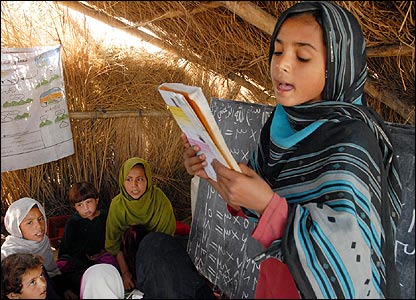
Well, it came to pass: I through away my sermon notes, spoke of working on a "Three Cups of Tea" commitment re: Afghanistan and invited the folk to see where the Spirit might lead us. Right after worship, we dedicated our new Peace Pole...
Interestingly, people were really energized about this approach. Like Brian McLaren wrote: conservatives can get behind this idea because it is all about personal initiative and responsibility and liberals can affirm it because it strengthens our peace and justice commitments. So... our next Monday evening series in November will jump into the book: Three Cups of Tea. And on my way out of worship, I was told of a local Berkshire connection with Afghanistan: The Peter M. Goodrich Foundation. (check it out: www.goodrichfoundation.org/index.php) For additional information go to: www.pbs.org/newshour/bb/asia/july-dec09/taliban_08-14.html

 grind for a short mini-retreat. This has been part of my spiritual rhythm for almost 25 years. So, we found a place for the dog (he is an old coot who loves the kennel) and headed out for Brattleboro, VT.



.jpg)

