Tuesday, July 14, 2015

There will come a time...

Today is blazing hot in Montreal - with 100% humidity - so we're mostly staying inside. Ok, it is not Tucson, AZ hot, but for this realm it is smoking!  After the weather breaks this evening, we may head out to a local jazz jam session or maybe watch another episode of "Vera" on Netflix streaming. We shall see.

I want to return today to the questions I raised in my "gimme shelter: ethics and aesthetics" post of a few days past: rethinking worship in the Reformed tradition for a 21st century people. As I noted earlier, my hunch is that our new forms of worship must include 1) silence and musical meditations; 2) sacramental theology along with Eucharist; 3) conversations within the worshiping community re: scripture and ethics; and 4) and a time for accountability (i.e. what concrete acts are going to arise from our gathering?) In other words, how do we use the charisms of this era to strengthen, nourish and shape living, loving disciples of Jesus? 

The poet, Derek Walcott, expressed both the challenge before us as well as a possible path for greater depth when he wrote:


The time will come
when, with elation,
you will greet yourself arriving
at your own door, in your own mirror,
and each will smile at the other's welcome
and say, sit here. Eat.
You will love again the stranger who was your self.
Give wine. Give bread. Give back your heart 
to itself, to the stranger who has loved you
all your life, whom you have ignored
for another, who knows you by heart.
Take down the love letters from the bookshelf,
the photographs, the desperate notes,
peel your own image from the mirror.
Sit. Feast on your life.
 

This is an invitation to contemplation - the ancient spiritual discipline of "taking a long, loving look at life" - in order to accept reality as it is and then discern where compassion might be shared most authentically. Contemplation is always both/and, it is never just about inner peace or social justice; but, rather, always about acceptance and sharing. Walcott makes three observations that speak to this moment in time:

+ First, he notes that there will inevitably come a time when we meet ourselves coming and going. Busyness is both an outward illness that leads to exhaustion and despair, and, an inner spiritual reaction to a world we cannot control. Busyness is about our fears as much as the expectations of others. Walcott seems to suggest that when we come face to face with our reality - our overextended selves and inner pathologies - it can lead to elation. Joy. Hope. Until that time that we see ourselves as the source of our frenzy, however, we will keep rushing and running from being fully at rest in this moment.  

Such is the promise of mystical union: we will see God in ourselves, and, all that is holy will look back at us from within our humanity. Richard Rohr put it like this in this morning's meditation:

Humanity was given three different sets of eyes, each building on the previous one. The first eye was the eye of flesh (the senses), the second was the eye of reason (meditation or intellectual reflection), and the third eye was the eye of true understanding (contemplation). [1] Third-eye seeing is the way mystics see. They do not reject the first eye; the senses matter to them. Nor do they reject the second eye; but they know not to confuse knowledge with depth or mere correct information with the transformation of consciousness itself. They are led still further.

One of the reasons I am so eager to explore the way musical contemplation can help us learn to meet ourselves in semi-silence has to do with the intergration of our "three eyes." Over the years I have led any number of seminars and classes in the way of sitting/breathing/centering prayer. Some people "get it" - and make the commitment to practice - but most contemporary people are so disconnected from stillness that they find themselves unable to rest and listen for the refreshment of God's grace. Before I left on this sabbatical, Carlton and I were experimenting with a "contemplative section" in every worship gathering that included:  1) a gentle and reflective musical interlude; 2) taize song (to bring the community together in quiet prayer); 3) silence and candle lighting; and 4) the reading of the gospel. Now, after 70 days of personal reflection and relative silence, I am more certain of the need for encouraging training in the opening act of contemplation: resting.(Take ten minutes and hear brother Jamal testify...)

+ Second, the poem points to feasting as one consequence of contemplation. We will be at peace within ourselves - and within the world - to such a degree that we can stop and ejoy life. Feasting is sacramental:  the bread and the wine nourish us with both Christ's real presence and as archetypal symbols of how our work/life (bread) and celebration/spirit (wine) might be lived in balance rather than discord.  There will be smiles - safety - there will be love and trust - embracing the stranger - and there will be time and space to allow our real lives to reflect our deepest calling: compassion.

One of the reasons I think Pope Francis' message re: eco-justice has resonated so deeply with so many is that he has refused to separate our working lives from our deepest aspirations. Spirituality is bigger than worship, it has to do with how we honor the holy in everything we do.It is about an integrated life rather than the segregation that shapes so much of our existence. Further, Francis has brought together Left and Right, prayer and justice, spirit and flesh as an organic whole. No wonder those who profit from war and pollution are terrified: Francis is calling out our historic divisions that keep us distracted and afraid. He is naming our reality as broken and destructive while offering a way for all of creation to join God's feast. Again, this takes practice - liturgy - to show us a sacred alternative to our current dis-ease.

+ And third, as we rest and feast in contemplation, we will be able to give up our illusions and idols - the love letters and photographs on the bookshelf - and start to feast within our real lives. We will be at peace within so that we might share the feast beyond ourselves. This is what I meant earlier when I suggested both conversations within worship - community learning - as well as a closing time for accountability - what then shall we do? - are vital ingredients of a new/old worship encounter. 

Rohr wrote in his book about the 12 Steps that one of the hard lessons he has learned over 40 years of ministry is the way the Church has diminished the importance of action. Disciples are not simply those who attend liturgy and know the Creed by heart. They are people who bring the heart of Jesus to the world by how they live. They are the ones who pick up their Crosses and follow Jesus as Lord. So he notes that if he had it to do over again, he would make membership in any faith community conditional upon action. That is, there would be regular questions of accountability built into worship, leadership and fellowship: what then shall we do?

Training in contemplation - music and silence, tradition and conversation, Eucharist and accountability - make "a long, loving look at life" part of the new/old healing of the church for the 21st century. The poetry of Sufi genius, Rumi, resonates with Walcott's vision in a meditation he called, "Be Lost in the Call." 

Lord, said David, since you do not need us,
why did you create these two worlds?

Reality replied: O prisoner of time,
I was a secret treasure of kindness and generosity,
and I wished this treasure to be known,
so I created a mirror: its shining face, the heart;
its darkened back, the world;
The back would please you if you've never seen the face.


Has anyone ever produced a mirror out of mud and straw?
Yet clean away the mud and straw,
and a mirror might be revealed.


Until the juice ferments a while in the cask,
it isn't wine. If you wish your heart to be bright,
you must do a little work.


My King addressed the soul of my flesh:
You return just as you left.
Where are the traces of my gifts?


We know that alchemy transforms copper into gold.
This Sun doesn't want a crown or robe from God's grace.
He is a hat to a hundred bald men,
a covering for ten who were naked.


Jesus sat humbly on the back of an ass, my child!
How could a zephyr ride an ass?
Spirit, find your way, in seeking lowness like a stream.
Reason, tread the path of selflessness into eternity.


Remember God so much that you are forgotten.
Let the caller and the called disappear;
be lost in the Call.

Sunday, July 12, 2015

Gimme shelter: thoughts on worship, ethics and aesthetics....

As the blessings and gravitas of this extended sabbatical bubble up into consciousness, let me offer a midpoint reflection. It clearly has been simmering within since we departed. But last week, two postings pushed them to the surface. And while the insights are wildly different, they offer a context for contemplation. 

The first is from Flannery O'Connor in an excerpt of a letter:

I am very pleased to have your letter. Perhaps it is even more startling to me to find someone who recognizes my work for what I try to make it than it is for you to find a God-conscious writer near at hand... I write the way I do because (not though) I am a Catholic. This is a fact and nothing covers it like the bald statement. However, I am a Catholic peculiarly possessed of the modern consciousness, that thing Jung describes as unhistorical, solitary and guilty. To possess this within the Church is to bear a burden, the necessary burden, for the conscious Catholic. It’s to feel the contemporary situation at the ultimate level. I think that the Church is the only thing that is going to make the terrible world we are coming to endurable; the only thing that makes the Church endurable is that it is somehow the body of Christ and that on this we are fed. It seems to be a fact that you have to suffer as much from the Church as for it but if you believe in the divinity of Christ, you have to cherish the world at the same time that you struggle to endure it. This may explain the lack of bitterness in the stories... The stories are hard but they are hard because there is nothing harder or less sentimental than Christian realism. I believe that there are many rough beasts now slouching toward Bethlehem to be born and that I have reported the progress of a few of them, and when I see these stories described as horror stories I am always amused because the reviewer always has hold of the wrong horror.

Like her compatriot in letters and Roman Catholicism, James Carroll, Ms. O'Connor accepts
with brutal honesty the brokenness and evil of our times. From the racial violence of Charleston to the unfolding brutality of Bill Cosby as a possible serial rapist - from the ambiguity of brokering a nuclear arms treaty with Iran even as ISIS continues its deadly march towards a renewed caliphate to the eco-disasters sweeping the Northern Hemisphere - Christian realism acknowledges that there "are many rough beasts now slouching towards Bethlehem to be born." As Carroll puts it: our era must be defined by both the Holocaust and Hiroshima. The Holocaust because it calls Christians to account for our historical antisemitism with clear-headed and unsentimental repentance. And Hiroshima because it pushes us to own our ability to destroy God's creation and our wanton willingness to do so. O'Connor states with a chilling perfection that our human condition in a modern consciousness is all about living as "unhistorical, solitary and guilty" people all at once.

The second is taken from the story of the inventor of the digital camera who once worked for Kodak: Steve Sasson.  In 1975, Sasson discovered a "film-less" camera, but management thought it was just "cute" and asked him to keep it a secret. Sasson suggests that Kodak eventually gave up the ghost and collapsed after once being the industry leader because:  1) They misunderstood their mission; 2) They failed to discern the signs of the times; and 3) They feared loss. In fact, as late as 1992, Kodak intentionally chose not to explore the digital realm because they did not want to cut into their existing revenue stream. As my old church mentor, Ray Swartzback, used to say: they became trapped in the trappings and it killed them. 

Writer and pastor, Thom Schultz, explains Kodak's fall from a 100 year position of power like this:  Kodak failed and squandered tremendous opportunities because its leaders chose to defend the status quo. They ignored reality and applied cosmetic changes to an irrelevant product. They refused to be bold and creative. They also believed their own press releases without taking stock of a radically new culture until it was too late.

Both of these insights - the challenge of Christian realism and the natural inclination of most institutions to play it safe until it is too late - speak to me. For you see even as I rest and read - practice jazz bass and explore the wonders of Montreal on my sabbatical - I continue to wonder about and wrestle with the experience of worship and Christian community for this moment in time. Not the meaning of worship, ok? Worship is always about turning our hearts toward God. It includes praise and lament, silence and song, ritual and communitas bathed in grace. Worship is not fundamentally about the individual or even the gathered body of Christ. And yet, unless the community is nurtured at a deep level with symbols that speak truths deeper than our distractions and sacraments that open our hearts and minds to awe and gratitude,worship becomes wooden and dogmatic. "Nehustan" as the Hebrew texts say, "a thing of brass become idolatrous," as recorded in both Numbers 21: 4-8 and  II Kings 18:4.

I wrestle with this professionally, of course: I have served the local church for 34+ years. But I also find myself raising questions for my return  to ministry after the sabbatical because I have only gone to worship twice in 10 weeks. Sure, it has been physically and emotionally refreshing to sleep in - and I've chosen to do so not only on most Sundays but throughout the rest of the week, too. And sabbaticals are intended for physical and emotional rest. But there is almost nothing that happens in most worship these days that attracts me. In this, I find myself in the company of most of Montreal and probably North America, too - and it is a reality that has taken me by surprise. An unintended gift? A vocational challenge? An invitation to go deeper into the unhistorical and solitary guilt of the modern /post-modern spirit? Probably yes to all three... so here are a few clues that emerge from all of this.

+ First, worship that honors mystery and tradition - grace, doubt, hope, truth, fear and love - needs silence. There is too much noise in most worship these days. At the same time, our culture is so saturated in sounds that many do not know how to enter deep silence. Could extended musical meditations become both a tool to contemplation and an experience of the transcendent for modern worship?  My hunch is that a good third of worship could be devoted to sharing different forms of silence in community.

+ Second, although I don't know how to "label" this for worship, our time for conscious reflection has to include: scripture, questions, contemporary readings/ poems and dialogue. Wrestling with the ethical dilemmas of Christian love  in conversation that includes space for questions and reactions - even disagreements - honors the role sermons have played in the Reformed tradition. But let's face it, most folk are both biblically and liturgically unschooled these days so a measure of education is essential for community building. At the same time, our public readings must expand to embrace the poetry and wisdom of this moment in history, too. Ortho-praxis increasingly matters more to me than ortho-doxy - right action vs. right thinking - because I am not at all convinced that holding correct doctrine alone becomes compassion and justice in the real world. Like Lou Reed said, "The goodly hearted made lamp shades and soap." (another Holocaust reference for uninitiated.)

+ Third, worship that would attract, sustain and nurture me would be sacramental and Eucharistic. I need to be fed by Christ in the sacraments and by Christ as the gathered body n community. Truth is, I don't "get" Jesus if it is all about words. I need to see and experience what his radical grace looks like and I need to taste in order to see that he is with me in the most ordinary things like bread and wine and broken, sinful people. And I would want the feast to conclude with some public statement from the gathered  faithful about what we/they are going to DO about their worship encounter as the new week unfolds: how will this matter and take shape, form and flesh within and among us? 

This is worship that I could get into and commit to strengthening. Doing this kind of worship would make a clear link between aesthetics and ethics in my life. Adding to the brutality of real life is inevitable just by breathing, right? It is the human condition so let's not advance bullshit or sentimentality.  Rather, let's also playfully honor a sacramental alternative that is grounded in beauty, truth and compassion. Perhaps this is part of what faithful living will look like for me on the other side of this experience? Let's see how it ripens...

Saturday, July 11, 2015

Saturday morning...

Today is for exploring - so we're going to ride the Metro to the end of the line and see what we discover. I have been loving this poem by Catherine Vallon-Barry included in Ahmad Jamal's CD of the same name: "Saturday Morning."
Saturday morning
alerts and delights us in our
transciency allowing us to taste
the nectar of the variations, the
respirations, the movements of 
life.

What are those steel, bronze,
silver, golden and crystal bells?
Where are we going?
Where and why go and why not
stay where we are?

Saturday morning
a musical stone that rolls in the
depth of our minds, like a song
that is forever sung inspired by
the hereafter,
essence of the essence of the
beginnings of music where minms,
crochets, quavers, semi-quavers
remain tirelessly the same.
So why is everything so
different?
Talking holds no weight before
the right to exist, this force
causing us to madly love life.

Life is simple
Why complicate it?

In the same way that light can
blind us
music bewitches us
the Saturday morning joyful
mantra
that encourages you to take
your time, to slow your pace,
to stop running and to sing, to
dance, to stretch out time,
to open, to open, to open
crack the shell as does the
may-beetle with its wings on 
awakening.
Flight to somewhere unknown,
pure joy of a Saturday morning.

Life is simple
Why complicate it?

Return to the origins of
Orchestrated sound and the
Silence of unknown notes.

Life is simple,
Why complicate it?

Behind this music laughter
Springs as on the first day of
Spring
When buds of the Chestnuts burst,
When blossoms of the cherry
Explode,
When blades of wild grass
Spring from the ground,
When one Saturday morning the
Clouds dance with men,
When piano and bass strings,
Percussion skins and drum
Cymbals
Dance, transfuse into the hidden
Corners of the earth and sky,
Where all memories of music of
The world entwine.
Funk, blues, be-bop, rap

Our bodies empathize with this
Magical world of sound,
Become specks of dust,
Fly freely away.

Take, take back and start again,
Like a child learning to take one
Step then another
Like the steps of life we climb to
Life's end
Singing, humming, whistling,
With the appropriate lightness,
So as not to fall.
Come on, go ahead, go forward
And smile.

Life is fun
Where are you going?
To the left, the right, straight
Ahead,
Just don't go back
Or only just a small step.

Life is simple,
Why complicate it?

Go on start today Saturday 
Morning,
It is market day for people and 
Cattle,
It is a day to watch the sun's
Journey
The new moon still there in the
Sky.
To take the time to stroll and to
Love,
To say to oneself today Saturday
Morning
All is aright, why fret, why let my
Thoughts worry me
Since it is the present time far
From the past and further still
From tomorrow,
It is time to gather the petals of
Soul
It is time to embrace the fresh or
Warm early morning air
To swallow the tears that
Flow down one's cheeks with
Happiness
For merely being alive
None of this changes with time
Time without age and suffering. 
Go then, tomorrow is in the 
Distance,
All this is but a game, the game
Of existence.

Little man, do not cry, life is
Simple

Do not forget that you will
Waste time often for nothing
Is easy to love, to observe, to
Listen, to advance even in the
Night
For always morning will down
The next day
The morning of a cycle that
Begins the morning.

After night, the morning,
After dreams, reality,
After reality, non-reality,
After life, death,
After me, you,
After the afters, it is the after
Of tomorrow.
Everything stops but that is an
Illusion.
Everything continues, turns,

Veers and returns

That makes one dizzy but that is
Life
It is the same time all the time.

Life is simple,
Why complicate it?

It is so simple to arise a Saturday
Morning
The right foot, the left foot, on your
Knees, on all fours
No matter providing that this
Morning be the one where lips
Smile at the light of day
That words right like sparks of
Love,
Fireworks of the soul,
Petals of silver, golden and
Crystal.

The heart expands like a peacock
Parading at the dawn of a
Saturday morning.

Life is simple,
Why complicate it.

(La vie est simple,
Pourquoui la compliquer?"

Friday, July 10, 2015

Only dead fish...

We took Lucie up Mont Royal again this afternoon for an extended "romp in the woods." Clearly she is happiest running around the trees, rocks and extended woodlands here. She tolerates Parc Baldwin - filled with urban families, dogs, games and fun - as it is; but given her druthers, it would be off to the woods. The only problem with this is that it takes us about 20 minutes to get there - most of it through busy city streets - and let's just say this is her least favorite terrain. So, we get there when we can, but it is a full day outing.

Today was devoted to a few practice exercises on the bass - really making certain that my left hand remained in correct form - and then playing patterns all over the neck and inverting various arpeggios. Most days include: 

+ reading some theory and familiarizing myself with notation
+ practicing scales in every key
+ practicing arpeggios using the Circle of Fifths
+ slowly working on a blues in Gm 6 solo transcription
+ reviewing my hand/body position (correcting bad habits)
+ playing along with a You Tube tune

Add caption
This weekend I'll start to get to know my new bow - another new adventure in playing - that will add some time to each session. Here's the thing: I am finding that after about 90 minutes with this big boy, I'm beat and ready for a break. There are days when I get to go back to practice, but most of the time I rest, read and then head out for some exploration. Today's romp with Lucie and Di on Mont Royal after practice was enough for us all.

So now, after the house cleaning is done, we're off to the local market for some pasta and sundries before a late dinner. Like many in Montreal, we've shifted our internal clocks. Maybe this is how I work normally: late to rise, work for a few hours, rest, more work and then head outside and carry on until a late dinner takes place about 9 pm. I don't think I've gone to sleep before 1 am since our first week here - or gotten up before 10:30 am - hmmmm...

Tomorrow we are likely to spend the better part of the day exploring one of the small neighborhoods of Montreal that we've never ventured into before - and maybe take in the new documentary on Amy Winehouse. Here's a closing picture that Di took recently at our local park. It was on one of the many picnic tables scattered about and reads: Seuls les poissons morts vont le courant. (Only dead fish go with the current.) Amen to that.


credits: 
1) www.ameriquefrancaise.org

Wednesday, July 8, 2015

Another day of wishing I wasn't me... for a bit

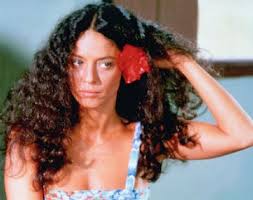
We often want what we don't have, yes? Women with hair like Sonia Braga's often favor the look of Ann Sophia Robb...and vice versa.


Men who realize they are aging would prefer Johnny Depp to Keith Richards or Denzel Washington to Bill Cosby.


As I was practicing today I started moaning to myself about all the time I wasted NOT carefully studying music back in the day: Damn, I wish I read better. Shit, I wish I had taken lessons back when I was a kid. Oh hell, my arm is tired. I wish, I wish, I wish. Now, please understand that I was playing scales at the time so I had to literally tell myself, "Shut up, dude and just play the freakin' exercises you have on the stand in front of you now!" Lord, I can be such a fuss bucket when it comes to practicing that I make my own head hurt.

And that got me to thinking: yes, I'm a sloppy player, but man I've played all over the world and sat in with some incredible cats since I was a kid. That was then and this is now. Then it was a time to be a hot shot and run head on into the challenges, bluffing it when I didn't know any better and just making the most of every song. Now is the time to study - and reflect - and practice. Jesus said something about there being enough worries for each day so just deal with what's in front of you and leave the rest to the Lord, right?


Kathleen Norris, one of my favorite teachers and writers, puts it like this in her book, Acedia and Me:

For grace to be grace, it must give us things we didn't know we needed and take us places where we didn't know we didn't want to go. As we stumble through the crazily altered landscape of our lives, we find that God is enjoying our attention as never before... Might we consider boredom as not only necessary for our life but also as one of its greatest blessings? A gift, pure and simple, a precious chance to be alone with our thoughts and alone with God?

Last night we went to listen to a local jam session where a lot of aspiring young jazz players gathered. It was a ton of fun in one of my favorite places. It was exciting to see so many young women and men interested in jazz. And it did my heart good to experience their commitment to learning the tradition. They work hard. They make each day with their instrument count. And they put themselves out there in public so that they can grow and learn from their mistakes. Sure, they may want to play like Miles or Monk or Trane - or Krall or Simone or Lady Day - but at least for last night, they just put themselves out there and gave themselves to the song.

After my daily practice (plus  a few surprises like our stove in Pittsfield giving up the ghost) I opened up The Real Book and started singing McCoy Tyner's "Contemplation" to myself. I did the same thing with Wayne Shorter's "Footprints." Little by little all this practice is making a difference... and soon I'm going to sit in at one of these jam sessions even IF I am more like Keith than Johnny. It was a good day.

Tuesday, July 7, 2015

Small developments on day 45 in Montreal...

Two small developments as we approach the mid-point of our sabbatical:

1) My mind no longer automatically goes to Spanish when I try to speak French.

2) I have discovered the sloppy ways I play bass, so now I can work slowly and carefully to make them less so.

Both of these small developments make a big difference as I move through each day. I don't
have to worry that I will speak Sprench while at a bookstore or grocery check out line. I may still run out of Quebecois vocabulary, but it will be"une absence né du français." And knowing what I do that is sloppy and slurred as a bass player gives shape and form to my daily practice. I am learning to play something slowly and precisely these days. My inclination it to get the basics and hurry on to something else, but that is part of the problem, n'est-ce pas?

Such small developments are wonderfully humbling in a helpful way. "May heaven protects us, cher monsieur," writes Camus in The Fall, "from being set on a pedestal by our friends." There is a reason why bass teachers ask their students to practice some of the time in front of a mirror: it is rarely a pretty sight! It gets better - incrementally - but watching my mistakes head on makes their ugliness vivid in a way that is useful rather than shameful.

Later tonight we're headed off to a jam session at Diese Onze Jazz Club to take in some of the hot local players. This week I hope to get a bow for the bass, make arrangements to purchase this bad boy and maybe even get an article I've written for the Christian Century sent off for their consideration.

And so it goes on day 45 of our 109 days in Montreal...

Monday, July 6, 2015

un dîner tardif à l'extérieur....

Started to read Albert Camus' The Fall this afternoon: why did I wait so long? The last time I read Camus was 1969 when I was in high school. And truth be told, it was wasted on me. For the past three years I've had an itch to reconnect with this old master, but I was either too tired or too forgetful or too something -- but not now. So before this afternoon's nap (I was up until 3:15 am last night finishing another novel) I took in the opening chapter and can't wait to return later this evening.

It is hot and humid in Montreal today so we've postponed our long walk until evening. There is a hipster place I want to check out to get my wild ass mane of hair trimmed - it has become completely bushy and beyond control in the humidity - and I have a craving for Indian food. So, we'll stroll Mont Royale to St. Laurent and search for a Quebecois terrasse  pour un dîner tardif à l'extérieur.

Bass practice was satisfying today, too.  And after chromatic reading drills and walking bass exercises I wrapped it up playing along with Herbie Hancock, Ron Carter and Freddie Hubbard on "Cantaloupe Island." 

\

Sunday, July 5, 2015

More about both/and than either/or...

It is fascinating the way calendars - and clocks - can focus as well as tyrannize our experience with time. Part of this sabbatical has involved a conscious withdrawal from both calendars and clocks. That has been so refreshing and liberating: mostly we do not plan our days. We get up when we are ready, we help Lucie take care of her business and then we see what grabs us. And with the exception of Jazz Festival concerts, we have not really paid attention to linear time.

AND... I have needed to reclaim a bit of order on each day and week so that I make time for serious practice. My goal is 90 minutes at least five times a week. Some weeks it has been more, but early on it was also less. So as I casually explored the calendar, it hit me: in order to make the progress I desire, I need to step outside of our easy frame of reference on a regular basis and step back into linear time. After practice, then I can let it go, but I need to consider what to work on during the time that remains. 

Once again I am struck by the both/and rather than either/or truth of my life: it is so easy for me to become obsessive and driven - and the sabbatical invites me to let go of time as a corrective. And at the same time, I can waste weeks without too much effort so the sabbatical has created this space and freedom in order that I learn to use time in a new. That is a valuable insight both for the time that remains and for the days after our return.

This afternoon I worked on scales for 20 minutes, then playing 3rds, 5ths and 7ths in a variety of keys before practicing a simple chart for walking bass in F.  At the conclusion of another 30 minutes, then I let myself play with creating improvisations in F using just the 3rds, 5ths and 7ths (plus the roots.) I've learned two things about my limited abilities doing this: 1) I tend to play ascending notes in my improvisations so I need to incorporate some descending grooves, too; and 2) it is totally fun to play all over the neck of this beast. As an accompanist, I tend to stick to the bottom half of my instrument, but as I become more confident of my intonation and awareness, I can zoom up and down and create some interesting sounds with octaves, 3rds and 7ths. Man, is that a gas - and LOTS more interesting for all involved, too!

Now that I am done practicing for today, we'll chat and figure out what else this day might present: both/and again, yes? Blessed rest and renewal as this Sunday unfolds.

Friday, July 3, 2015

Birthday fun continues...

Let me start by saying that if you get a chance to see Madeleine Peyroux in person: please do so! We saw her last night as part of my birthday celebration and I was knocked out. She wasn't wild or provocative - just very understated and earthy - and her band was equally grounded. But what a powerful and meaning filled performance she shared with us: a genuine blessing. As she said for her encore: Singing like this - and being so connected - this is heaven is for me.
Ms. Peyroux is a little Billie Holiday, a little Leonard Cohen and a whole lot of middle aged woman sharing the joys and sorrows of being alive in our culture. I was expecting someone more fragile and flowery. My mistake. She is grounded, bluesy and vibrant in a quiet and intense way. Check out her take on Leonard Cohen's "Dance Me To the End of Love" if you doubt my take on her groove: she is someone I want to give closer attention to, yes?

Today, still being in the birthday groove, we slept late - VERY late - then I walked Lucie and we ate sausages and drank tea for breakfast. I wrote and protracted the bass for a few hours while Dianne rested. We returned to Parc Baldwin later for Lucie to romp and then began another afternoon of wandering. We wound up at a copy shop in our hood so that I could get a hard copy of the bass study guide I've been reading on-line - and then took off for Rue St. Denis. A few miles later we decided it might be time for dinner - about 5:30 pm - so we wandered for another two miles before coming upon Chez Victoire on Rue Mont Royale. Totally excellent and upscale place where we ate on one of the ubiquitous Montreal "terrases" that are set up all over town to soak up the summer sun. We spoke French (and English) to the wait staff and had a ball sipping Cote Du Rhone red wine whilst people watching. 
Now we're home and taking it slow... Tomorrow I'm going to try my hand at a local coiffure and get my wild ass mane of hair trimmed and shaped before we head down to les Fetes du Jazz and hear maestro Ron Carter make his bass sing. A finer birthday could not be found for an old guy could like me. Thanks be to God - and my dear honey Dianne!

Post birthday practice...

My work for today....by tomorrow I'll have it in acceptable form: not hard, just good.

Thursday, July 2, 2015

Still crazy...

Today is my birthday: 63 years old! How did that happen? I can still remember buying - and the listening in awe - to the Beatles' new album: Sgt. Pepper! What a magical moment that was for so many of us. My best friend at the time, Ross, was on summer vacation with his family and we wrote back and forth to one another of listening to that record over and over as the summer matured. I was 15 and it seemed as if we had entered a parallel universe that millions of others had discovered, too. I still love that album and own it (and play it) in vinyl from time to time, too.

A few nights ago, as we were walking Lucie in the late evening after the rain, there was a group of unruly young men gathered on the far side of our local park. Suspicion and apprehension was heightened as the potent smell of ganga wafted our way - and we prepared for the worse. And then, from the portable, roving piano that the city has placed throughout Montreal this summer, came the gentle piano riff we know as John Lennon's "Imagine." We paused as six young male voices sang a verse and chorus together in French - and experienced a bit of peace.
Like Springsteen observed a while back, these are better days - hard, challenging, complex and often demanding - but better, too. Thank you to my friends who have sent birthday greetings and love. I am grateful for your affection and attention. Thank you to my dear family, too who still find ways to love me after all these years. More and more, I find myself embracing the cosmic, comic wisdom of Paul Simon....

the wisdom and grace of mystery...

In this week's summary of reflections at the Center for Contemplation and Action, Barbara Brown Taylor's synthesis of the apophatic ...