NOTE: Here are my worship notes for Sunday, October 12, 2014 using the
lectionary texts as part of a three part series re: Celtic Spirituality. I am deeply indebted to a number of sources including J. Philip Newell's book, Listening for the Heartbeat of God, my blogger friend, Blue Eyed Ennis @ http://blueeyed ennis-siempre.blogspot.com/2012/09/autumn-harvest-autumn-spirtuality.html) Parker Palmer, Working Preacher and the glorious season of autumn in the Berkshires.
Introduction
As some of you know, I was
recently called to be with my father and family during an unexpected medical
emergency. Thanks be to God that has been resolved for the time being, but for
about a week my father was on death’s door even though he was clear that he
wasn’t ready to cross over. And as so often happens while we are sitting in a
hospital or nursing home room at the bedside of a loved one, our memories begin
to revisit history – the good, the bad, the ugly as well as the grace-filled
histories of which we are apart – and that occurred in spades for me.
My father was a pastor’s kid
during the Great Depression – and that was a double whammy of poverty. Not only are pastors paid poorly – then and
now – but in that time they were often paid with things rather than cash –
things like discarded clothes for the pastor’s family to wear or a sack of
potatoes for a week’s supper. This grinding and humiliating double-whammy of
poverty pushed my father away from a calling to ministry where he probably
would have found blessing and challenge. Like many who came of age after the
Depression, he chose to go into business because, as he used to say, I NEVER
want to go back to such misery again.
+ To say that he
was displeased, therefore, when I disclosed my calling to ministry would be an
understatement: he was furious – which is how many men express their fear – and
for years he denigrated my chosen profession mostly because it had been so
miserable for himself.
+ In time, however,
he mellowed – somewhat – and we would talk about the peculiar work of a pastor.
“What are you preaching about this week?” he would sometimes ask. Once, early
in my ministry, I gave him a deeply detailed explication of my intended sermon
to which he first said: “Hmmm.” And after a lengthy pause added, “You know you
don’t have to teach them EVERYTHNG you know about theology in ONE sermon!”
I love that old Scotsman – in
spite of lots of reasons to hold a grudge – we eventually crafted both a truce
and a measure of mutual respect that will last well into our life beyond life. Now
I mention my dad today mostly because he is a true Scotsman while my momma was
as Irish as they come. And the ancient Celts, who migrated from an area south
of the Black Sea in what we know as Turkey known as ancient Galatia, developed
a unique way of celebrating and encountering God.
For a time they roamed
Brittany, Gaul and the British Isles but when the Anglo- Saxons invaded in the
middle of the 5th century CE, the Celts were pushed into what we now
know as Cornwall, Wales, Cumbria, Scotland and Ireland. For a few hundred years, they existed at the
extreme periphery of Europe and without much contact or intervention from the
West, developed an alternative orthodoxy as Christians that was quite different
from Roman Catholicism. In fact, their way of following Christ thrived well
into the first millennium as Celts became the first missionaries to Northern
Europe. The Romans gave them their name
by calling them “keltoi” – the strangers or hidden ones – and the Roman word
“ceilt” – which refers to the act of concealing something – is where we get the
word for… kilt (under which unknown mysteries are concealed!)
+ Now here’s why I believe this whole Celtic
Spirituality thing is important for us to explore: the Western Church as we know it is dying and shriveling
on the vine. People are worn out by scandal, exhausted from our theological
obsession with shame and guilt and bored beyond tears with our empty rituals.
+ In her book, Christianity for the Rest of Us, church
historian Diana Butler Bass, writes: Although
churches (might) seem (to be) the most natural space to perform spiritual
awakening, the disconcerting reality is that many people in Western society see
churches more as museums of religion than sacred stages that dramatize the
movement of God's spirit.
+ And when she considers the reason WHY this is true, she notes
that: Christianity did not
begin with a confession. It began with an invitation into friendship, into
creating a new community, into forming relationships based on love and service… (But today) other than joining a
political party, it is hard to think of any other sort of community that people
join by agreeing to a set of principles. Imagine joining a knitting group. Does
anyone go to a knitting group and ask if the knitters believe in knitting or
what they hold to be true about knitting? Do people ask for a knitting
doctrinal statement? Indeed, if you start knitting by reading a book about
knitting or a history of knitting or a theory of knitting, you will very likely
never knit.
 Western Christianity – in
both its Roman and Reformed expressions – is so heady, abstract and wrapped up
in doctrine and words that it not only feels irrelevant to many of us, it also
feels oppressive. And what I celebrate
about Celtic Spirituality and its “alternative or even generous orthodoxy” is
that it recognizes that being a person of faith is something you do not just
think about. It is embodied, playful, incarnational and creation based.
Western Christianity – in
both its Roman and Reformed expressions – is so heady, abstract and wrapped up
in doctrine and words that it not only feels irrelevant to many of us, it also
feels oppressive. And what I celebrate
about Celtic Spirituality and its “alternative or even generous orthodoxy” is
that it recognizes that being a person of faith is something you do not just
think about. It is embodied, playful, incarnational and creation based.
Insights
So let me share with you –
using today’s Biblical readings – not everything I know about this subject, just the three core truths that shape Celtic
Spirituality’s joy-filled practices. To my heart, they hold great promise for
those who want to be followers of our Lord Jesus the Christ at this unique
moment in time. I like the way Trevor Miller of the Northumbria Community puts
it: we want to learn from history not
relive it. By listening for the heartbeat of God with the Celtic cadence: We are not
out to replicate a period of time as many do in their expression of faith so
that we (find ourselves with) a 17th century
language, 18th century
hymns, 19th
century
morality and 20th century middle class values (when what we need is) a contemporary 21st century expression of life in God.
The three
essential practices that shape Celtic Christian discipleship are as follows: 1) Living as if creation and all of life is
GOOD rather than sinful and depraved; 2) Discovering God’s heart in ALL of life
– including the most ordinary human experiences – as well as in nature; and 3) Knowing
that being a follower of Christ is more about compassion than doctrine or
dogma. To be lofty, we could say Celtic Spirituality is about ortho-praxis
rather than ortho-doxy – right living rather than right thought –but that would
be too theoretical. I like the African American spiritual that cuts to the
chase: Lord, I want to be more loving in
my heart… but let’s unpack each of these practices so that we might go deeper,
ok?
The first – living as
if all of life is good rather than sinful – is a direct challenge to the
efficacy of St. Augustine as well as aspects of Luther and Calvin. This does
not mean that there isn’t sin and brokenness in the world, that would be
naïve and simplistic, and we know from our own experience or encounters with
the daily news that there is pain and greed and evil in the world. But the way
of Celtic Spirituality teaches that life and all creation is not fundamentally
sinful – creation is NOT fallen to use the traditional words – but rather
blessed and filled with beauty and wonder.
+ The first Celtic Christian theologian we know of is
Pelagius who lived between 390 and 418 of the Common Era. The former dean of
the Community of Iona, Scotland, J. Phillip Newell, has written: Pelagius
maintained the essential goodness of humanity (by asserting) that the image of
God can be seen in every newborn child. (p. 6, Listening for the Heartbeat of God)
+ This was a direct challenge, of course, to the wisdom
of St. Augustine of Hippo who taught that even the act of procreation was
saturated in sin and that a baby in the womb was already polluted and would
become a sinner in life just by passing through her mother’s birth canal.
Now Augustine’s theology triumphed over Pelagius – it has
shaped and defined both the Roman Catholic and Protestant Reformed realm for
1500 years – but I have come to believe that Augustine was wrong. Pelagius’ challenge to look upon the face of
a newborn child and see the very image of the Lord gazing back at you makes
much more sense to me – especially at this moment in time. In fact, I sense that the old Celt was far
more grounded in the way of this morning’s gospel text than his opponent. The story we’re asked to wrestle with in
Matthew 22 today is weird – it is complex and upsetting – and often called a
bizarre parable gone wrong.

But I don’t think that is fair. Rather, I think this story is
an example of Christ’s upside down challenge to make sure we are celebrating
with joy the bounty of the feast once we make it into the banquet hall. “Many
are called,” he tells us, “but few are chosen.” So here’s the trajectory of
grace I find in this story which is more allegory than parable, ok?
+ First, the king invites to the wedding banquet of his
son the usual suspects – his friends, those who are just like him, the powerful
and prestigious people of his society – some of whom disrespect the king,
others blow off the invitation because they are too busy with work while still
others go out of their way to murder the king’s messengers. That’s the first weird part of this story –
nobody would have expected the best and the brightest to be so abusive – but
Jesus says that’s often how things work.
+ And then, as some Bible scholars have noted, the story
goes completely off the rails: the king doesn't offer forgiveness to those who are so cruel, he kills them – kills them
all. And just to make things more bizarre, after their destruction he informs
the realm that the party is still on!
The city has been devastated, the elite have been destroyed but the
banquet continues – and who are the new guests? Exactly, the poor and the lame,
the broken and the maimed.
Ok, we might think, even though the previous murders are
disturbing, things are back on track with grace because now the forgotten and
wounded are being welcomed into the banquet, right? Wrong! Yes, the lost and
the least are now at the party, but what happens when the king shows up to
visit with his guests?
He bumps into somebody who isn’t wearing a wedding robe, yes?
And after asking how this soul got into the feast without the proper attire –
and rendering the poor person speechless – the story ends with the king saying
to his servants: BIND THIS MAN’S HANDS AND FEET AND THROW HIM OUT INTO THE UTTER
DARKNESS WHERE THERE WILL BE WEEPING AND GNASHING OF TEETH BECAUSE WHILE MANY
HAVE BEEN CALLED, FEW ARE CHOSEN.
Now that is just weird, don’t you think, and cruel? Punishing
a poor person for not dressing right? But that’s just on the surface – this is
an allegorical story that urges us to go deeper – so the real issue with not
wearing a wedding robe is this: he or she didn’t take the party seriously
enough.
The kingdom of heaven (verse 2) is a banquet, after all, and
you’ve got
to put on your party dress to get with the program. The kingdom
music is playing and it's time to get up on the dance floor. Or, as the
slightly more sober, but no less theologically astute Barth put the matter: “In
the last resort, it all boils down to the fact that the invitation is to a feast,
and that he who does not obey and come accordingly, and therefore festively, declines and spurns the invitation no less
than those who are unwilling to obey and appear at all. (Lance
Pape, Working Preacher, October 12, 2014)
+ I have come to believe that St. Augustine’s
sin-obsessed and unfestive theology has disqualified itself from contemporary
consideration and that the gentle and joyful way of Pelagius rings more true to
Christ’s gospel of grace and hope.
+ When I look at the face of a newborn child I do NOT see
a depraved and sin sick soul, but rather the very image of God gazing back at
me. The first practice of Celtic Spirituality is that life is inherently good
as it was created good by God our Creator.
Now, while time is rushing by, there are two other Celtic
practices that I want to say something about briefly before I close: a commitment to discerning God in all of
creation – even the most ordinary places – and the conviction that the way of
Christ is more about compassion than reason or rational results. Many of us
have experienced something of awe and wonder in the beauty of nature – we’ve
talked about that, honored it and even celebrated this blessing of the Lord
during the new liturgical season of creation – but what we forget is that more
often than not in the history of the Church, it has been the Sanctuary that has
considered the key locus of God’s revelation to us: the Sanctuary and then the
Bible. Even when we know better, this traditional understanding has trumped our
experience.
That’s the second reason Celtic Spirituality is so
valuable: it encourages us to “look for God in all creation and to recognize
the world as the place of revelation and the whole of life as sacramental.”
(Newell, p. 3) The contemporary Celtic theologian, Esther de Waal, put it like
this: "The Celtic approach to God opens up a world in which nothing is too common to
be exalted and nothing is so exalted that it cannot be made common… the
presence of God infuses daily life and thus transforms it, so that at any
moment, any object, any job of work, can become a place for encounter with
God.”
+ In today’s Old Testament lesson from Isaiah, we read
that God’s presence has destroyed the traditional places of power and
importance – the city and all its glory – only to render the mountain as place
of refuge, hope and solace for the hurting and beloved of the Lord. Today’s
Psalm – using an old Scottish folk melody – evokes much the same truth: we can
learn from the swallow about the loveliness of God’s resting place for our
hearts and lives because God inhabits the totality of our ordinary lives..
+ This broad and inclusive vision of the Holy One’s
residence has encouraged me to consider what our still speaking God might be
saying to us through the season of autumn. If the swallow and the mountains can
sing to us something of God’s song, what might be heard through the changing
leaves and cooling temperatures?
 The wise Quaker teacher, Parker Palmer, has written
profoundly about the spiritual wisdom of autumn. It is a season of “great
beauty, but also a season of decline,” he observes. “The days grow shorter, the
light is suffused and summer’s abundance decays towards winter’s death. Faced
with this inevitable winter,” he asks, “what does nature do in autumn?”
The wise Quaker teacher, Parker Palmer, has written
profoundly about the spiritual wisdom of autumn. It is a season of “great
beauty, but also a season of decline,” he observes. “The days grow shorter, the
light is suffused and summer’s abundance decays towards winter’s death. Faced
with this inevitable winter,” he asks, “what does nature do in autumn?”
She scatters the seeds that will bring new growth in the spring – and
she scatters them with amazing abandon… in this paradox of both dying and
seeding, I feel the power of metaphor… I often only look at surface appearances
– the empirical – the decline of meaning in our world, the decay of
relationships, the death of work. But if I look more deeply, I may see the
myriad possibilities being planted to bear some fruit is some season yet to
come. I can see in my own life, in retrospect, what I could not see in time:
how the job I lost helped me find work I needed to do, how the “road closed”
sign turned me toward terrain I needed to travel, how losses that felt irredeemable
forced me to discern meanings I needed to know. On the surface it seemed that
life was lessening, but silently and lavishly the seeds of new life were always
being sown. (Taken from
Seasons: A Centre for Renewal, Parker Palmer)
The Celtic way gives us a whole new means of seeing and
learning from God beyond our Sanctuary and the Scriptures. It recognizes that
nature and our seasons are the FIRST Word of God – created GOOD as Genesis
tells us – and that if we learn to listen for THIS heartbeat of the Holy, we
might come to walk in true hope and peace. More and more, I am certain that
listening for God’s truth in nature is absolutely essential given climate
change and the human greed and neglect that has caused it. Isaiah was right:
On this mountain
the Lord of hosts will make for all peoples a feast
of rich food, a feast of well-matured wines of rich food filled with marrow, of
well-matured wines strained clear. And
God will destroy on this mountain the
shroud that is cast over all peoples, the sheet that is spread over all
nations; he will swallow up death
for ever. Then the Lord God will wipe away the tears from all
faces and the disgrace of his people he will take away from all the earth
for the Lord has spoken.
And
finally the call to love – a way of being greater than reason and far greater
than our addiction to the bottom line: listen to how St. Paul put it.
Rejoice in
the Lord always; again I say, Rejoice. Let your gentleness be
known
to everyone. The Lord is near. Do
not worry about anything, but in everything by prayer and supplication with
thanksgiving let your requests be made known to God. And the peace of God, which surpasses
all understanding, will guard your hearts and your minds in Christ Jesus. Finally, beloved, whatever
is true, whatever is honorable, whatever is just, whatever is pure, whatever is
pleasing, whatever is commendable, if there is any excellence and if there is
anything worthy of praise, think about these things. Keep on doing the things that you have
learned and received and heard and seen in me, and the God of peace will be
with you.
· Notice
that the apostle says REJOICE in the Lord always. Not worry – not question – not parse and
ponder HOW God can be all powerful and all loving in such a broken and
beautiful world – but rejoice. Not that questioning or linear thinking is
wrong, just incomplete.
· We
like to convince ourselves that we are in control – that we are capable of
understanding God – and actually able to make sense of the Lord. Now I am all
for deep thinking and serious theology, but in the final analysis anything but
total surrender to love and compassion is arrogant deception because we are
incapable of comprehending the vastness of the Lord.
That’s one of the
reasons for the new liturgical season of creation we just completed: over and
again it reminds of our small place in the vastness of the Lord’s
enormity. As Christ taught his first
disciples – and teaches us now – if we want to KNOW the Lord, we must first
surrender to love.
Conclusion
It is the WAY of
Jesus. St. Francis used to say: Preach
the gospel at all times – use words only if you have to. Facts and doctrine
do not make disciples; Jesus said, “Come and see.” Paul said, “Without love I am
nothing but a clanging gong or a crashing cymbal.” That is why the Celtic Way is relational
and personal and grounded in compassion.
In an era when
fundamentalists of all stripes are vying for control of religion and power
throughout the world, I hear the gentle and tender voice of the Lord saying:
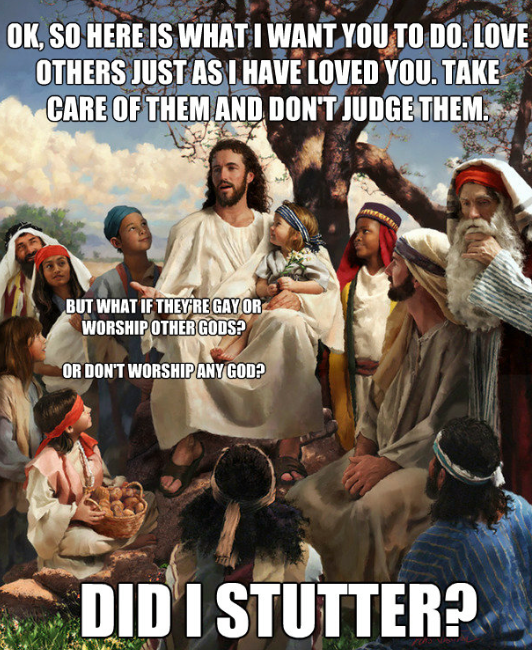
come to the banquet – and put on your party dress. Love one another as I have
loved you for everything else is commentary. And rejoice in the Lord,
beloved, always: Rejoice. Let your gentleness be known to everyone…
for then the Lord is near.
credits: most by Dianne De Mott, one by me and one from Iona (from a Diana Butler Bass posting)

 There is a friend and colleague of mine who is 90+ years old - sharp and wise as ever - who continues to help me think deeply about faith, church and why all of this matters. Recently, our correspondence considered some of my current ideas about Celtic spirituality - especially given the on-going collapse of traditional church of either the Reformed or Roman Catholic variety. In response to my message for this Sunday, one of his comments asked: "What does the realm of Celtic Spirituality say about Jesus?"




.jpg)


