Wednesday, July 18, 2018

peace and practice...

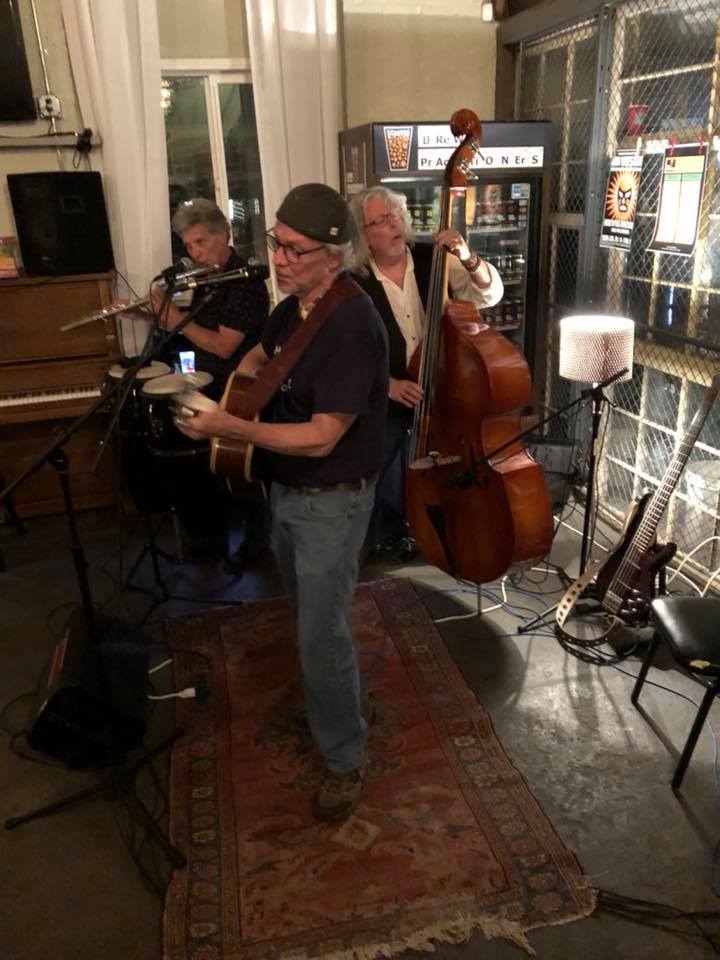
Getting ready for our "house concert" has been a gift and a challenge for me: the gift arrives in both the hospitality and the music; the challenge has to do with trust. In my little song, "Small Is Holy," I confess that "small has shown me strategies for leaving hell." I didn't want to overstate the case: I still experience hell on a regular basis - mostly as deep seated shame well rehearsed and all too well nourished - so I haven't vanquished it nor have I escaped untouched. What is different now is knowing that there is a love greater than my feelings and experiences. If I use some of the time-tested contemplative practices to reclaim a measure of grounding in grace, then the powers of hell within are diminished. So let me be clear: it takes practice to trust God's grace. It takes practice to make good music and share hospitality with compassion, too. But working to reclaim or remain grounded in grace takes practice to a whole other level. At least for me. Beauty and solidarity are rewards unto themselves with an immediacy that invites repetition. But trust? And spiritual practice?  Real but elusive. - and always in search of renewal. 

One of the practices that nourishes trust for me involves my modest connection with L'Arche Ottawa. Jean Vanier suggests why in this extended quote from the Introduction of The Heart of L'Arche:

God has given L'Arche as a gift to this particular time in history. Today, so much emphasis is put on technology, on scientific knowledge and on individual success that people, forgetting the importance of the heart and of faithful relationships, sink into depression and despair. Society often seeks to eliminate people who are weak, before their birth or through euthanasia, arguing that they are a nuisance and cost too much. Through L'Arche, God reminds us of the essential purpose of human life: out of love,we have been created to love. We are called to use all our energies and gifts to create a more just and loving society, where each person, whatever their culture, religion, abilities or disabilities, has a place.... God is love. God is goodness, compassion and forgiveness. L'Arche is not a solution to a social problem. L'Arche is a sign that love is possible, and that we are not condemned to live in a state of war and conflict, where the strong crush the weak. Our communities embody the belief that each person is unique, precious and sacred.

Much like Brother Roger said at the founding of Taize - we are a parable of festival in creation - L'Arche offers a comparable charism: carrying for one another's bodies as a sign that each person is beloved. Those claiming the L'Arche tradition and practices cherish each person while nourishing tenderness. Vanier notes that the 150+ small communities of L'Arche are not solutions to the wounds of the world, but rather signs of what is possible. My experience, inwardly and outwardly, affirms this testimony. Specifically, I am learning three interrelated truths about trust:  .

+ It is possible to live in respect with others rather than competition. 

+ Honoring the importance and value of each person helps me value my own brokenness.


+ None of this is automatic: I must learn to live in the tension of conflict as the honest way to peace.


Personal and inward spiritual practices are still foundational - especially when you wake up in the middle of the night consumed by fear or grief or anxiety. Using my breath as a prayer has proven to be a life saver. And now I am starting to use a multi-sensory meditative tools that was recently summarized like this: 

When overwhelmed or ungrounded, afraid or confused, look around you and find:

1) Five things close to you that are real and that you can see;
2) Four things that you can touch;
3) Three things that you can hear;
4) Two things you can smell; 
5) And one thing you can taste.

This is called grounding. It can help when you feel like you have lost all control over your surroundings. Or when you feel overwhelmed and bewildered.

For me - and perhaps you - finding, practicing, and trusting strategies to get through hell are essential.  The good news is that they are available, simple, and free. The bad news, or at least the complicated news, is that their blessings are not automatic. Like the old musician's joke puts it: "How do I get to Carnegie Hall? Practice, my friend, practice." Lord, may it be so you for me and you.

Tuesday, July 17, 2018

returning thanks for ambiguity and doubt...

Two poems that have recently found me offer a subtle sense that my year of wandering and beholding without a specific plan is on target. The first comes from the work of Israel's greatest modern poet, Yehuda Amichai. His translator Robert Alter calls him "the most widely read Hebrew poet since King David." 

Born in Germany in 1924, Amichai left that country at age twelve with his family and journeyed to Palestine. During the 1948 Arab-Israeli war he fought with the Israeli defense forces. The rigors and horrors of his service in this conflict, and in World War II, inform his poetry, although he is never ideological. (for more info: https://www.poetryfoundation.org/poets/yehuda-amicha)i

His words celebrate ambiguity - even doubt - resonating with what is turning into an invigorating season of desert spirituality for me.

From the place where we are right

flowers will never grow
in the Spring.

The place where we are right
is hard and trampled
like a yard.

But doubts and loves
dig up the world
like a mole, a plough.
And a whisper will be heard in the place
where the ruined
house once stood.


The second is from the contemporary American poet, Sheryl Luna, of El Paso, TX. "Rubbernecking" suggests that looking backwards is rarely edifying: remembering, yes, but never obsessively gazing in the rear view mirror for hints of what is still to come.

The art of the century is to hear
sun through mulberry,
small ball of white light centered
in torn leaves. We are not
biblical? Here in grounded
in verse as children while
the poor present alms to the poor,
we are freedom finding itself.

We have no answers.
Some of us missed the broadcast
to success. The neighborhood
fills with unseen deep-throated
robins. Remember
what it means to be alone
we say, disliking or loving
mad streets, where the broken
fearlessly ride buses.
We cannot fix the contest
outside, even if we
rubberneck our way
through accident and luck.


These poems arrived in my world at about the same time two essays captured my attention. The first, by Parker Palmer and Carrie Newcomer, speaks of how we "move towards our growing edge" in this era of fear, fatalism and fascism. Borrowing freely from the African America mystic, Howard Thurman, Palmer and Newcomer write that moving toward our growing edge has something to do with finding deeper meaning, solidarity, creativity, compassion and even hope. This growing edge always takes time:

Often (it emerges) as slow as the growth of a plant, so the process requires patient tending. We seem to go through three stages before we can begin to see and have confidence in the flowering. The first is a barely-perceptible nudge toward “who-knows-what.” This often takes the form of feeling that we’re somehow out of alignment with our souls, our relationships, our work, the world’s needs. It’s a quiet, intuitive sense that we’ve lost our way: We made a wrong turn somewhere, or were forced to take a detour, or were barreling down a speedway without paying attention. That’s when we have to pull over, get out of the car, breathe, acknowledge that we’re lost — and resist the anxiety that compels us to look for the well-marked road and miss the clues that point us toward the heart’s imperatives.(for more go to: https://onbeing.org/blog/parker-palmer-carrie-newcomer-look-well-to-the-growing-edge/mc_cid=8b78105c68&mc_eid=aaa79b290f&utm_campaign= 8b78105c68-EMAIL_

The other essay, by Jennifer Michael Hecht, is a reflection on Albert Camus. It is Camus' conclusion that in the face of life's absurdity and abundant disappointment, we always posses the power to live as women and men of integrity and love. His existentialism "sympathizes with anguish but cajoles the fellow sufferer to embrace life, all the more so because it makes no sense. We should, Camus advises, accept that our desires do not match up with the world as we know it, and yet love the unanswerable strangeness of it all." And then this: the zenith of creation's absurdity is our choice to not only endure life's agony, but to fill it full of love, beauty and compassion.

Life in the face of its pain, he writes, is the ultimate revolt. Suicide “is acceptance in the extreme.” Our challenge is to be aware of death and at the same time reject it. The tension between being keenly aware of death yet not being resigned to it is what creates the absurd, and keeping the absurd alive keeps the person alive.... The person who understands the absurdity of the human condition is strengthened by it. He or she still has to work unceasingly to bear up under the weight of being, but it is worth it. There is no higher destiny, Camus declares. The absurd man is the master of his days. When he gazes backward over his life, he contemplates that series of unrelated actions which becomes his fate, created by him, and like Sisyphus and his rock, the whole seemingly unreasonable effort turns out to have meaning, just because it constituted his life. (for more information: https://onbeing.org/blog/the-absurd-courage-of-choosing-to-live/)

For many people of faith, hope and love in the United States these days, the
ugly absurdity of this regime has evoked a stultifying sorrow. Some of us know a constant, low grade fatigue. Others have become filled with such fear or anger that we seem immobilized. And still more sense that creation as we know it is collapsing. I would never argue with those feelings. I often share them. But I consciously choose to believe that Camus is right: choosing to live fully into the absurdity is how blessings are born. It is even a sacred and sacramental act though Camus would never use these words. The bard of Vermont, Frederick Buechner, once put it like this:

Listen to your life. See it for the fathomless mystery it is. In the boredom and pain of it, no less than in the excitement and gladness: touch, taste, smell your way to the holy and hidden heart of it, because in the last analysis all moments are key moments, and life itself is grace.

For the past three years, my life - my heart, soul, mind and strength - was telling me that the time had come to move closer to my growing edge. What that was, however, wasn't exactly clear. It had something to do with music. And compassion. And solidarity and spirituality. What it was was not yet fully discernible. I needed more wandering in the wilderness. More trust even when it felt absurd. More emptiness and openness. More time in the garden so that my growing edge could take root and maybe even flower. Less looking backwards. Less rubbernecking. Less trying to be right. Less doing, more being. Less big changes and more celebrations of a small holiness. The fullness of this desert time is only now taking shape... so we'll play a small house concert for dear friends on Friday. As the toast proclaims with joy and resistance: to life!
 
credits
+ By Yair Medina (יאיר מדינה), CC BY-SA 3.0, https://commons.wikimedia.org/w/index.php?curid=56629706
+ https://philosophynow.org/issues/110/Albert_Camus_1913-1960
+ http://www.sargamgriffin.com/paradox-and-hair-on-fire/
+ http://www.risingher.com/the-self-awareness-paradox/


Sunday, July 15, 2018

giving thanks for small blessings...

This afternoon I had one of those "small" blessings that makes living in a small community so sweet. Yesterday, when I went to pay for groceries, when I opened my wallet, my ATM card was gone. Being a gentleman of a certain age, I always replace this card in the same place. But yesterday it was gone. I searched the car, my backpack, my shopping bags and other hiding places in my wallet, but alas: it was no where to be found. NOTE: at my retirement party, I was given a wallet with a clip-on chain - much like you would find upon a motorcycle aficionado - and that has helped. With the wallet. Apparently, I now need a chain for my ATM card, as well.

I got the groceries paid with another card only to conduct one more car search. A house search, too. "I last had that damn thing buying fresh tomatoes from the vegetable stand down the road," I said out loud. So, after worship (we're doing church these days at Riverside in NYC via the Internet) - I headed down to Jaeschke's. As I bought two ears of fresh native corn, I asked the cashier: "You don't happen to have a bank card that I left here while buying tomatoes on Friday, do you?" She broke into a big smile, touched my hand and said, "Yes, hun, wait just a sec. I couldn't catch up to you Friday. Sometimes we get so busy I am just checking people out; and by the time I realized the card was still here, you were gone." She opened the register and said, "James, right? Here you go." I thanked her profusely and she gave me a hug. "No problem, hun, no problem."

When I got home, I dealt with some weeds and did some pruning of wild ass branches in the back yard. All the while I was thinking, "There are so many blessings to keeping life small." In about an hour I'll grill that native corn - and some swordfish grilled atop fresh limes, too - and give thanks to God.

Saturday, July 14, 2018

can't stand the hipster banter on what passes for news...

I am gratefully and intentionally old school: this may strike some as a glorified geezer rant, but I'm willing to take the risk. It hit me driving to the grocery store tonight when the so-called replacement to Garrison Keillor's "Prairie Home Companion" came on the radio. (Yes, Virginia, there is a Santa - and some very old vehicles, like my 2002 Subaru Forester with 120K miles, has neither a satellite radio or CD player.) I've tried to like the new show - and it is not nostalgia that's rendered a verdict of thumbs down. No, the humor is flat, the music anemic, the attempts at social relevance forced, and the ambiance uninspired. Whatever Keillor's sins - and unlike others they are open for debate - many of his Lake Woebegone tales were poignant. Much of his humor was forced at times, too. But there was an old school commodity called soul that he brought to the air waves that is woefully missing from the new incarnation.

I have much the same reaction when I try to listen to NPR these days, too. Hipster banter and hyper-casual greetings (Hey Audie - What's up, Melissa?) have replaced serious news. Maybe I've become infatuated with Radio 1 CBC. They have their share of hipster hosts as well. But they do such solid, in-depth reporting with extensive behind the scenes interviews that they leave National Public Radio in the dust. Infomercials and news-lite is a boring and frustrating waste of time. Thankfully there is a measure of depth on the PBS News Hour (although Judy Woodruff flirts too often with frivolity for my tastes.) It beats the hell out of MSNBC, CNN. NPR, and Fox combined. Same goes for the renewal of hard news at both the NY Times and Washington Post as the Trump regime drones on. The Guardian from the UK has become my go to source for news and commentary each morning since the election.

When it comes news, facts matter. When it comes to politics, compassion and possibility matters. When it comes to exploring the significance of our common lot, integrity and perspective greater than self-serving spin matters. This is old school. It cuts deep. It listens carefully. It neither patronizes the elderly nor minimizes the young. Old school invites conversation - and conversations not only take time, but need to take place in real time about real things. Earlier today, Carrie Newcomer posted this quote from Parker Palmer about the meaning of hope. It is SOOO old school and speaks to my heart: "Hope is holding in creative tension all that is, with all that could and should be, and everyday taking some action to narrow the distance between the two." Sounds like this John Hiatt song to me.

One of the most fascinating, chilling and conversation evoking programs on Netflixs is "Black Mirror." It is a 21st century "Twilight Zone" with state of the art production values. At the core of this program is contemporary technology. Each show takes a current techno trend and teases out a few logical consequences. It is not anti-technology nor is it an exercise in nostalgia. It is sci-fi that invites ethical debates in the best of that tradition. Many of the programs will leave you unsettled and troubled. Good. "Black Mirror" asks you to go deeper than hipster banter and news-lite. 

I can only take it in small doses - and I need to talk about each episode afterwards - because each episode brings a challenging word to this moment in time. Take it from this geezer: its the real, old school deal about our brave new world. In addition to being entertaining, it is thought provoking. 

Friday, July 13, 2018

rockin' the casbah...

What a difference a reasonably priced pick-up makes on my upright bass! Wow! Why did I wait three years to make it happen?!? Well, now it is set up right and ready for next Friday's house concert. My hope is that we can hold it on our deck: the acoustics are great, it will be cool and visuals calming. If there is bad weather, however, I have scoured the basement and set up a performance hall down stairs: cool, clean, dehumidified and dry. It will be like the early Beatles playing in Pete Best's momma's club The Casbah. Mona opened it to give young rockers a safe place to play in the early 60s. We're OLD rockers, but we need a safe place, too!

This will be a fun gig: young and old and in-between - friends from the old days as well as colleagues and neighbors from the past eleven years. What's more, we'll have a chance to play the more introspective songs that require a "listening" room. My hope is that we'll have a chance to chat a bit about some of these songs, too. Not quite a salon, to be sure, but an intimate sharing of friends making new music for friends. If you are in the area next Friday night between 7-9 pm and would like to join us, please drop me a note. We have a few more seats - and if the weather is lovely there won't be a finer place to be in the Berkshires.


Thursday, July 12, 2018

small is holy...

Listening for the still, small voice of the holy is a challenge. It is no easier for life long contemplatives than for crazy-assed rock and soul musicians. There are just different cues. Being overly busy and overwhelmed, however, is deadly and deafening for all of us no matter what our unique discipline. Sadly, we are all victims of this curse. Jon Stewart, one of the genius comedic commentators on our weird and unbalanced culture, regularly depicts the absurdities of these times. Once, while Al Gore was hawking his new book, Stewart playfully fawned before him, obsessively stroking the glossy book cover while murmuring, "Shiny, shiny, mmmmmm. Me love shiny!" It was the perfect satire of our consumption culture addicted to glitz and glitter above substance. There was a non-too-subtle critique of our cult of personality at work, too.

To say that the challenges to a contemplative life have not improved under the Trump regime would be a gross understatement. Public culture has become more coarse and violent. Diplomacy is now conducted on Twitter. And anything resembling nuanced thought or conversation rests in the dust bin of history while reality TV sound bytes pound us into submission. No doubt, this is why I find solace in the work of Parker Palmer and Carrie Newcomer who describe our moment in time - and our calling to contemplative resistance - like this:

Given what’s going on in the U.S. and around the world, it’s easy for some of us to think apocalypse 24/7 and fall prey to the anger and paralysis that comes with it. We live in a era when, to quote Howard Thurman, the “times are out of joint and [people] have lost their reason” while “worlds crash and dreams whiten into ash.” Without turning away from all the dying and grieving — which, rightly held, can redouble our commitment to life — we must learn to “Look well to the growing edge!”

I experienced this overload, anger and paralysis in spades during the past two weeks. There was no escaping up-to-the-minute updates on the tragedy of the Thai soccer boys. Being trapped in a cave with their coach - frightened, hungry, and surrounded by rising water - fed all that is voyeuristic in our national psyche. It became, for a moment, our latest distraction/ obsession. Not that their plight wasn't grim. And the clear heroism of the rescue divers was brilliant, too. But 2,000 other children continued to be locked in cages like animals in our own nation. Further, the Trump regime willfully ignored a court order mandating reunification of families. The subsequent two week extension was mere window dressing: it has no teeth to force the beast of official racism and fear-mongering to surrender. More smoke and mirrors. Shiny!

Turning off even PBS News (I can't take in anything these days from CNN, Fox or MSNBC) pushed me toward finishing a new song, "Small Is Holy." We'll debut it at our house concert next Friday evening. For the past month it has been rambling around my head searching for focus. I knew I wanted to evoke the wisdom of Jean Vanier and the 10 Foot Rule - pay attention to what is close and what you can touch - and I hoped to find a chorus that could be sung simply. With about 50 written iterations - and a musical structure that started out like Tom Petty, took a detour trying to tease out a Leonard Cohen groove only to wind up more like something from Springsteen's "Nebraska" - I'm getting close. Nothing heroic. And certainly nothing bold. Just a little song about small acts of compassion and grace changing our hearts incrementally. Verse one is auto-biographical; verse two is my take on the quest of contemplation; the bridge tries to give a taste of paradox; while the closing verse suggests a hint of humble blessings.

Thinking big and acting strong – led me into all that’s wrong
Hitting bottom taught me well strategies to get through hell.
Touch the wound in front of you – that’s all you can really do
Hold it close – don’t turn away – make room for what is real today.

CHORUS
Small is me, small is you, small is holy and rings true
Small is hard, small reveals the way our hearts can be healed

Buddhist, Baptist, Gentile, Jew, Muslim, Sikh to name a few
Different prayer books can disguise paths to freedom deep inside.
Losing is the way we win: upside down, we start again
Here’s the secret – no more shame: Mecca, Rome, Jerusalem.

CHORUS

There’s music in our madness if we have the ears to hear
The melody of creation murmur, “Let go of your fear.”
The song within our sorrow invites us each to sing
The blues of our beginning that gives birth to everything

The dawn of spring comes slowly while the ache of winter lasts;
Our hearts give up their habits incrementally not fast.
To all there is a season: we whisper, wail or wait
Within a sacred silence bearing blessings of our fate.


When I get a recording, I'll share it. Keep on trucking...


Monday, July 9, 2018

songs from the choir of paradox #3

I have genuinely come to love the experience - and the spirituality - of each of our four seasons. This wasn't always true, but I can confess with confidence that I have learned to cherish them all. In New England, we are in the heart of summer where heat will spike and soar in a whithering way for a few days only to disappear a few days later bringing a reprieve of thunder storms, days with stunning sunshine and gentle breezes. Our garden is flourishing: pumpkins, herbs and cucumbers are hard at work maturing and our tomatoes just began to bear fruit. As I cut the front lawn and attacked this week's crop of weeds, I felt like I was in a walking prayer of gratitude. Later, we walked Lucie through the woods and the late afternoon sun basking in the glory of creation.

I have continued to think about what Parker Palmer and Carrie Newcomer wrote recently: When someone like Howard Thurman encourages people like ourselves — people of privilege, even power — to look to “the growing edge” for hope, we’d do well to listen, rather than giving in to a self-indulgent fatalism or cynicism.

So we’ll ask you the same question we ask ourselves: What’s the growing edge of your life? Some find it inwardly, as they reach for a deeper sense of meaning and purpose. Some find it with other people, at an edge where a relationship needs to begin, change, or end. Some find it in their work, as they look for ways to bring their gifts into deeper alignment with their souls’ imperatives and the world’s needs. Others find their growing edge in joining the struggle for justice in a broken world. The growing edge is rich with the promise of new life. But in our experience, moving toward it is often as slow as the growth of a plant, so the process requires patient tending. We seem to go through three stages before we can begin to see and have confidence in the flowering.


Yesterday I suggested that as a straight, white bourgeois man, listening to the experience and insights of people of color has been crucial for my calling. Today let me push that deeper and suggest that wisdom, challenge and clues for living with compassion have come to me through listening and trusting the witness of women, too. Walking through the woods, I started my list of names of the women who have opened my mind, heart and soul. There are teachers, artists, lovers, friends, family and colleagues in this list (that will always be incomplete.)
As I sat with these names after a wee nap,remembering these women and how they have been blessings to me, I experienced another type of prayer: sacred remembrance. You might want to make your own list. Or another list of those who have touched and brought you a measure of healing. 

This list is not ranked in any hierarchical way - with the exception of the first name - Martha. More than any other woman, she opened my being to the wisdom and experience of contemporary feminism - and I have never been the same. I am so very, very grateful...

Martha Baker, Dianne De Mott, Germaine Greer, Virginia Wolf, Lucinda Williams, Kathleen Norris, Gloria Stienhem, Angela Davis, Phyllis Trible, Katie Canon, Kathy Arzt, Jesse Piscitello, Michal Lumsden, Donna Minich, Donna Mescall. Deanne Langworthy, Stephanie Paulsell, Diana Butler Bass, Dorothy C. Bass, Linda Worster, Patti Smith, Alice Walker, Marie Howe, Mary Oliver, Margaret Atwood, Mary Karr, Terre and Maggie Roche, Gertrude Mueller-Nelson, Marilynne Robinson, Annie Dillard, Maggie Durran, Betty Pulkingham, Joy Mead, Henrietta Keleman, Elizabeth Hay, Roberta Flack, Grace Slick, Joni Mitchell, Joan Armatrading, Aretha Franklyn, Joan Baez, Linda Ronstadt, Maria Muldaur, Carole King, Carol Comstock, Pam McAllister, Barbara Cohen, Debby Anderson, Jane Swartzback, Dolores Brown, Irene Lefferts, Kristie Greene, Barbara Barkley, Carrie Newcomer, Maya Angelou, Emily Dickinson, Susan Sontag, Harper Lee, Barbara Kingsolver, Amy Winehouse, Sheryl Crow, Alanis Morissette, Sarah MacLachlan, Buffy Ste. Marie, Jane Sieberry, Sally Rogers, Eva Cassidy, Sarah Coakley, Susan Thistlethwaite, Linda Schloss, Dolores Huerta, Cynthia Bourgault, Sandy Denny, Odetta, Janis Ian, Madonna, Sinead O'Connor, Elizabeth Cotten, Hazel Dickens, Mimi Farina, Kate Wolf, Laura Nyro...

Sunday, July 8, 2018

songs from the choirs of paradox #2

Yesterday I borrowed words from two poets on the periphery - Parker Palmer and Carrie Newcomer - who wrote: To see life steadily and see it whole, we must find ways to hold the paradox of life-in-death and death-in-life. We can’t live lives of meaning and purpose if we succumb to the horrors of “apocalypse now” or fly off into the Aquarian fantasy of a day when “peace will guide the planets and love will steer the stars.”  Let me build on that invitation to join the choir of paradox today with this.

It is not coincidence that called Palmer/Newcomer to draw sustenance from the wisdom of Howard Thurman. Thurman's hard won equanimity was rooted in the spirituality of the African-American church. From slavery to Jim Crow oppression and beyond, this incarnation of the Church has been the institution that shaped the heart, soul, dignity, discipline, community, faith, hope, love, analysis and direct action for social change for so many people of color in the USA. When black Americans were not counted in regional records re: population, marriage, birth, etc. throughout the South, their ancestry was honored with painstaking written accuracy in the church records of the African American church. Small wonder that these two white wisdom keepers turn to Thurman at this moment in time.

When Howard Thurman calls the growing edge “the basis of hope in moments of despair, the incentive to carry on”, he’s not indulging a cheap fantasy. Those words came from a black man born into a culture of white supremacy, only one generation away from his grandmother’s experience as an enslaved human being. He stood in a long lineage of lived testimony to the fact that new life beckons to us even in the midst of horrors. When someone like Thurman encourages people like ourselves — people of privilege, even power — to look to “the growing edge” for hope, we’d do well to listen, rather than giving in to a self-indulgent fatalism or cynicism.


Those of us in the white, middle/working classes who are wrestling with the agony, emptiness and existential and political powerlessness of life within the Trump regime have something vital to learn from our sisters and brothers in the African-American realm. Their way of embracing sorrow and celebration simultaneously - living into a wisdom born of learning how to be in the harsh world of our white supremacist culture without become consumed by that world - offers us a way into the blessings and promise of paradox. Not appropriating or stealing from what is not ours; and certainly not without giving our propers. But rather respectfully and reverently, as novices, listening carefully to the guidance and witness of those far wiser than ourselves.

I believe this is white America's season to truly learn from the genius of black America. One of my mentors put it to me like this nearly 40 years ago: as a straight, white male of privilege, you need to shut up more and learn to listen, brother; watch and ponder - then you can experiment with this truth so that it might become real for you, too. Another mentor said: if you want to be an agent of compassion and justice always remember that your credibility is not portable. In each community you must prove you are trustworthy to communities of color by showing up and shutting up. 

It is time to enter the road less traveled for many of us, the way of embodied humility, for it will not only strip away all that gets in the way of love, but it will help us recognize the hopeful surprises of the Lord when they appear. The Rev. Dr. James Washington as well as the Rev. Dr. James Forbes at Union Theological Seminary in NYC used to say to me during my formative years: slow down and listen; there IS a balm in Gilead; but it is of the Lord's making not yours. Dr. 
Dorothee Soelle, another UTS professor and mentor, was more blunt: you have to commit race, class and gender suicide to be a disciple of Christ in our era.

So, if you are white, try this simple exercise: make a list of all the people of color who have touched your life and helped you grow in faith, hope and love. Here is my list that is still growing...

Maya Angelou, MLK, Malcolm X, Sweet Honey in the Rock, Richie Havens, Nina Simone, James Baldwin, Alice Walker, Ralph Ellison, Toni Morrison, Langston Hughes, WEB du Bois, Nikki Giovanni, Mechelle Nedegocello, Bell Hooks, Duke Ellington, John Coltrane, Billie Haliday, Ella Fitzgerald, Aretha Franklyn, Stevie Wonder, BB King, Miles Davis, Jimi Hendrix, Beyonce, Tupak Shakur, Gil Scott-Heron, Thelonious Monk, Marian Anderson, Drake, Childish Gambino, James Cone, Cornell West, James Washington, Mike Daniels, Jim Forbes, Mike White, Eugene Ward, Chambers Brothers, Edwin Hawkins, Ray Charles, Roberta Flack, Odetta, Eddie Harris and Les McCann, Ron Carter, Oscar Peterson, Ray Brown, Hugh Masekela, Angela Davis, Dennis Powell...


... Barack Obama, Little Richard, Michelle Obama, 

Saturday, July 7, 2018

songs from the choirs of paradox...

A small but wonderfully nuanced choir is starting to sing songs of paradox these days into the apocalypse now cacophony of the USA. It is by no means our national anthem any more than "Let America Be America Again (It Never Was to Me)" by Langston Hughes has found a hallowed place at Trump rallies. But the voices of this choir are beginning to be heard around the edges of the madness. And as Hebrew Bible scholar, Walter Brueggemann, notes: God's new song is almost always first sung from the periphery. The borderland between wilderness and mainstream society is where creativity, compassion and connection are re imagined. 

In fact, Brueggemann urges those prone to despair to rediscover the forgotten and marginalized texts of our Scripture for clues: we are not the first people to be in this morass - and we won't be the last. Our great cloud of witnesses from times past once learned the hard way how to honestly ground themselves in reality so that they might boldly grieve. In time they came to understand that this was how their hearts and minds became open to the sacred surprises God ached to bring to birth within and among them. Start with "by the waters of Babylon," stay by the River Chebar as long as necessary, and keep your ear open for a new song stirring from beyond the grief that is of the Lord's creation. 

Valerie Kaur and William Barber are part of this new choir in their work of revolutionary love. Two of my favorite poets from the periphery - Parker Palmer and Carrie Newcomer - have been listening to songs offered up by the waters of Babylon, too. On Krista Tippet's "On Being" program, they put it like this:

During a decade of friendship and collaboration in words and music, the two of us have often talked about the endless dance of darkness and light that challenges and enriches everyone’s life. Then came an April 2018 day when a dear friend of Carrie’s died in the early morning hours. Carrie had kept vigil at her bedside all night, singing and reading poetry as this good soul departed after years of living bravely and well with cancer. Later that morning, one of Parker’s good friends sent a video clip of the ultrasound she’d had that day, wanting to share the pure joy she and her husband felt about the new life that’s growing in her.

That afternoon, we talked about the way death and life, grief and joy, dance nonstop with each other around the world, day and night. It might not be a friend who dies; it might be a hope, or a work, or a relationship. It might not be a baby en route to being born; it might be a vision, an opportunity to learn or serve, or a small nudge towards who-knows-what.

To see life steadily and see it whole, we must find ways to hold the paradox of life-in-death and death-in-life. We can’t live lives of meaning and purpose if we succumb to the horrors of “apocalypse now” or fly off into the Aquarian fantasy of a day when “peace will guide the planets and love will steer the stars.” 

(see the entire article @ https://onbeing.org/blog/parker-palmer-carrie-newcomer-look-well-to-the-growing-edge/mc_cid=8b78105c68&mc eid=aaa79b290f&utm_campaign
=8b78105c68-EMAILCAMPAIGN_2018_06_05_02_09_COPY_01&
utm_medium=email&utm_source=On%20Being%20Newsletter&utm_term=0_1c66543c2f-8b78105c68-69812713)

Our new band, Famous Before We're Dead, is a part of this emerging social chorus of beauty, challenge, grief, silence and solidarity, too. Over the next few days I will share some of the sounds that I trust from within this chorus. They help me know that we are not alone. We are not going crazy. We don't have to reinvent the wheel. We are now learning to trust the darkness. And sing in harmony with others who know these songs better than ourselves. Here's one take on this with more to come...

Friday, July 6, 2018

famous in the right way...

Last night we practiced as a band: Famous Before We're Dead. It was a good albeit complicated time. We hadn't all played together in a few weeks given full lives and day jobs. That meant the groove didn't come easily. Naturally. It showed up from time to time, but there were clunky and awkward intervals, too. Like Chief Dan George says in the film, Little Big Man: Sometimes the magic works, sometimes it doesn't.

I don't like it when the magic doesn't work, but I know it is important. Healing even - if I pay attention. There's wood shedding I need to do; scales, riffs and experimentation so that I know each song with my eyes closed and heart open. There's encouragement I need to share, as well, with my other "famous brothers" in the band. And there is patience we all need to honor each in our own way. Life is complex. Demanding. And the heat wave didn't help. Chief Dan was so right: sometimes the magic works, sometimes it doesn't.

This afternoon, as part of my hyper- thorough house cleaning jag for July (a room each day from top to bottom), I found myself thinking/feeling/reliving last night's rehearsal. I was able to get clear what I need to practice. I also got some clues about where sharing encouragement and practicing patience might be a blessing. After my study was finished, I came across this poem at the Gratefulness Network. It is by one of my favorite writers, Naoimi Shihab Nye, which she calls "Famous." Like going to Famous Nathan's in Coney Island for hot dogs last week in Brooklyn, this too was a sign:  


The river is famous to the fish.

The loud voice is famous to silence,
which knew it would inherit the earth
before anybody said so.

The cat sleeping on the fence is famous to the birds
watching him from the birdhouse.

The tear is famous, briefly, to the cheek.

The idea you carry close to your bosom
is famous to your bosom.

The boot is famous to the earth,
more famous than the dress shoe,
which is famous only to floors.

The bent photograph is famous to the one who carries it
and not at all famous to the one who is pictured.

I want to be famous to shuffling men
who smile while crossing streets,
sticky children in grocery lines,
famous as the one who smiled back.

I want to be famous in the way a pulley is famous,
or a buttonhole, not because it did anything spectacular,
but because it never forgot what it could do
.

Wednesday, July 4, 2018

keep your eyes on the prize...

So today is Independence Day in the United States: what an odd, challenging, beautiful, confusing, heart-breaking, demanding and paradoxical time to be alive. I used to celebrate this day by reading Langston Hughes - out loud or to myself - and listening to Springsteen. Last year, I joined Sara Lee Guthrie, the Hoping Machine and the Four Freedoms Coalition for our annual parade singing "This Land Is Your Land," "If I Had a Hammer" and more. Today, however, my heart just wasn't in it. Not even the prophetic jeremiad of "America Never Was America to Me" cut it. Instead, we ate chips, salsa and Mexican beer for lunch. 

The truth of the matter is that America's shadow is no longer in the closet: both our ugly violence and generous compassion are on full display. Ultimately, this will be cathartic. Potentially it might even be healing if we take stock of the wounds we cause by arrogance, ignorance or plain old naiveté. But inside our borders and beyond I sense it will become a lot worse before it gets better. Like a drunken, raging bull filled with fear and shame, today America is acting out in public in ways we've always tried to hide away or deny. Of course our better angels speak out daily in newspaper editorials and op ed columns, but most of us no longer read. Hell, most of us can barely read the menu at McDonald's in 2018. For the short-term, I am not optimistic.


But that doesn't mean I am without faith, hope or love. Nor does it mean that I am pessimistic. Rather, this is a season for small acts of local compassion and a large dose of quiet prayer. We are not living in a time of rising expectations. This is not "morning in America." It is twilight. And as anyone who has ever driven our ribbon of highways in a car at dusk knows, it's best to keep your eyes wide open and wits dusted off at twilight. The rising heat can play tricks on your eyes as the sun sets. Animals are feeding and sometimes dash out into the road unexpectedly. Its just best to slow way down and take stock of what is real before racing forward. 

And to my eyes I see the most vile and viscous forms of racism, misogyny and fear of the future spilling out all over this country. Children in cages. Trade wars. Honoring dictators and degrading allies. Dismantling health care for the most vulnerable. De-constructing regulations to safeguard both the environment and free elections. Encouraging racial discrimination for entrance into college. Vulgar and stupid rhetoric in public. Chipping away at a woman's right to choose. Fear mongering and bullying as standard operating procedure. At the same time, I see ordinary working people caring for their neighbors in quiet and heroic ways every day. Millions of middle class women, men and children turning out in our streets every month to protest saying, "This regime is corrupt and does not help make America great in any way, shape or form." Women being elected to public office in record numbers. Progressive candidates finding a message that has traction beyond "no!" Allies willing to call out the President's stupidity in public. New coalitions agitating for economic justice. And the return of radical interfaith cooperation on behalf of the "least of these, my sisters and brothers."

It is, as my friend P from Brooklyn says, "the best of times and worst of times" with a tip of the hat to Dickens. And it must be: our shadow must be exposed - and challenged. Our collective heart must be broken open so that there is more room to love. And America's disillusions of grandeur must be exposed so that they can be embraced by more than the radical fringe. This is how we atone for our sins with humility. Fourth of July feels to me like THIS version of Springsteen's masterwork:


Last night the speech of Frederick Douglas was read aloud to the citizens of our small community. "What To the Slave Is the Fourth of July" is no less poignant in 2018 than it was in 1852: 13 years before the American Civil War ended. Douglas celebrates what is real in both promise and deed in America even as he clearly names the evil within and among us, too. And then he closes with the words of poet William Lloyd Garrison.

God speed the year of jubilee
The wide world o’er
When from their galling chains set free,
Th’ oppress’d shall vilely bend the knee,

...

God speed the hour, the glorious hour,
When none on earth
Shall exercise a lordly power,
Nor in a tyrant’s presence cower;
But all to manhood’s stature tower,
By equal birth!
That hour will come, to each, to all,
And from his prison-house, the thrall
Go forth.

Until that year, day, hour, arrive,
With head, and heart, and hand I’ll strive,
To break the rod, and rend the gyve,
The spoiler of his prey deprive —
So witness Heaven!
And never from my chosen post,
Whate’er the peril or the cost,
Be driven.


I see it coming to pass among us - unevenly and painfully - but powerfully. Hold on, hold on, keep your eyes on the prize hold on. The Boss hits it out of the park for me today with this one as he gets the joy and sorrow of this moment right.


the wisdom and grace of mystery...

In this week's summary of reflections at the Center for Contemplation and Action, Barbara Brown Taylor's synthesis of the apophatic ...