Another unexpected blessing/gift that I have experienced time and again after a death that is close to my heart is... a renewed sense of how important THIS moment is to me. That probably sounds trite - nothing novel or even wise about this - but it is true. These deaths open my heart and mind to a renewed commitment to sacramental living. Ed Hays, one of my long-time spiritual mentors, puts it like this in prayer: Help us, Compassionate God, to let Your ancient and eternal song of death and life be played out in each of us, as we live out our faith that death is but a doorway that opens unto a greater and fuller expression of life, that opens to a final union with You who are life! Blessed are You, Lord of Life, who alone knows the hour of our death and ultimate union with You. Blessed are You, Lord our God, whose messenger is death.
Maybe it is because I am so broken - or simply give thanks that God chooses to use one as broken as I am - but I find myself thinking/praying this song by Everlast. He is a total genre bender - mixing rap and acoustic music with some great rock - all tempered by his Irish rap thing and a spirituality grounded in grace:
We returned from New York today - traveling through the rain and mist - in separate cars because we were given a new/old vehicle after the memorial service. There was a kind of poetry to this journey - together and a part at the same time (which required stopping at a Best Buy to purchase a phone charger for the car so we could talk on speaker phone from time to time) - that was important. This death clearly means different things to us both - and while I am not yet sure what is coming to the surface for Di, for me it has pushed to the surface two insights:
1. More than ever my commitment to a ministry of presence may be the most important thing I have to share with folks. I KNOW I can't fix most hurts in life - but I can sit and share them - and listen with an open and tender heart. After experiencing once again how healing this has been for me, I have a revived commitment to this aspect of ministry. 2. So, too, my commitment to the arts and music: during Di's moma's memorial service, the time that was the mosthealing - and deep - was when we pulled together a rag tag jug band to sing Tom Waits' "Come on Up to the House." There was room for everyone in this song - even those who don't ordinarily sing jazz/rock/gospel songs. And the invitation of the song - and the experience of singing and playing together - brought us all to a new place through the grief. The arts can help us get to common ground - places we don't yet have words for - and I want to be a part of that feast. When we sang for Dianne's mother, Di's sister, Laurie, played mandolin; Di's brother in law, Mick, did percussion and guitar; my daughter, Jesse and Dianne, sang vocals (with me) and I played guitar and blues harp. And we we found a way to encourage ALL those mourners to sing from their core...
So... now we are home. Hallelujah. Tomorrow will be more sitting shiva and getting grounded in the reality of the loss - and discerning the blessings, too.\
One of the unexpected blessings of being with my wife's wider family in the wake of their mother's recent death is getting to hang out with wise, intelligent clergy: all of Dianne's sisters are ministers. Don't get me wrong, I love my clergy friends in our Berkshire home - they are creative, wise, compassionate and fun - but it has been an unplanned blessing to hang with her clergy sisters during this grieving process.
For one thing, they understand that the world does not revolve around them - they make space for the feelings of others, know how to respect boundaries and are not uncomfortable with silence. They are tender when that is needed and clear-headed when jobs have to get done. What's more, they are wonderful about giving us space just to feel - and rest - as is necessary without making wacky demands. Made me think of this old tune by Everlast about walking a mile in another's shoes before even thinking about judging...
This is only the third time in my life that clergy have been a part of my healing process: the first was when a colleague sat with me - and prayed for me - during my wife's surgery; the second came during the planning of my mother's funeral when my parent's minister listened and understood what it meant for me to be among the walking wounded while still carrying on in ministry (something akin to Nouwen's "wounded healer" insight.) And now during this death I have found solace, friendship and welcome with Dianne's sister. I have had the help of great counselors before, but most of the time my healing has taken place in spite of the clergy - so this is a wonderful time of celebration for me.
I often tell folks that during a death there will be a gift given to someone - we don't know who will receive the gift or even what it is but gifts often materialize during a death - and today I woke up today to realize that I have been the recipient of a beautiful gift in this new friendship and relationship. It really makes a difference in these kind of wounds to have somebody who has walked a mile in my shoes...
We are headed out of the loop for a few days of being with family: the memorial service for Dianne's mother is Monday afternoon and we will be there for a few days to connect, conduct family business and let this whole sad affair sink in. Our cousins in Judaism sure know how to do all this much better than we Christians by sitting shiva or 7 days. Nevertheless, we are off after worship and will be out of contact for a bit.
One of the ways we will return thanks to God for the life of Shirley is to sing our version of Tom Waits great tune, "Come On Up to the House." It seems to express her whole gentle and humble spirituality...
There is a remnant of theologically curious folk in the Western church who continue to mine the vein of wisdom first explored by Paul Tillich after WWI. Today'sNYTimes posted a story today about the Rev. Jay Wegman at the Abrons Arts Center in Greenwich Village - A Love of God and the Stage - in which he talks about the role of the artist in exposing truth, beauty and prophetic wisdom to a world gone morally deaf, dumb and blind.(http://www.nytimes.com/2009/05/08/nyregion/08bigcity.html?_r=1&scp=1&sq=big%20city&st=cse)
Like Tillich before him, Wegmen understands that both artists and the wider world often do not think in spiritual/theological language. But he has been successful in inviting artists like Rufus Wainwright, Lou Reed, Laurie Anderson and others to share their creations in an explicitly spiritual context. You may recall that after the horrors of WWI, the young Paul Tillich found that the German church was unable and unwilling to explore the angst and shame of his generation. No one wanted to face or own the wounds within and among their burned out culture.
Curiously, however, visual artists in what we know as the realm of abstract expressionism were giving form and content to the spirit of the age. This lead Tillich to first explore the fringes of his culture - where truth and depth was being embraced by a host of post war artists - and then to articulate how God's still speak voice was emerging through their creative works. It seems clear that the work many (myself included) are doing in the realm of discerning the presence of the sacred in contemporary culture owe a debt of gratitude to brother Tillich.
There are other theological interpreters of the embrace of theology and art to be sure - Hans von Balthasar, Wilson Yates, the Dillenburgers, Gregory Wolfe, Don Sailers and Robin Jenkins to name a few - but Tillich's influence is unique. (NOTE: for more on this see, Arts, Theology and the Church, eds. Kimberly Vrundy and Wilson Yates, Pilgrim Press, 2005)
I think of Henri Nouwen's spiritual reflections on both Russian icons and the paintings of Rembrandt as examples of how the remnant of Tillich's influence continue to help us find integrity, healing and authenticity in our lives. Is it too much to hope that like the rediscovery of Niebuhr in our post war season, there will be a revival of this great thinker's insights? He was wounded - and often hurt those he loved - but his insights hold great promise for those with eyes to see.
Mary Farrell Bednarowski calls this work "an aesthetic of hope" which seems to me timely and exciting. Such an aesthetic transcends theologies and cultures - and actually finds common ground between the fringe and the center. She writes:
In order to keep our religious traditions - and religion itself - vital in a plural culture we have to learn how to tell and receive stories that travel back and forth across many other kinds of boundaries: between and among very different kinds of religious traditions; across the chasm of polarized stances on various social and ethical issues; between those who inhabit the realm of religion and those who see themselves as dwelling in the lands of spirituality and secularity; among theologies that range from - and sometimes mix together - the premodern, the modern and the postmodern; across the continuum from one part of our own lives to another; and from within the boundaries of religious communities to the wider cultural arena.
My dearest friend in ministry, the late Ray Swartzback, used to say that this work was a total emotional roller coaster - and man was he right. As I prepare for a little Sabbath break I am also aware that I have two weddings to do this weekend in addition to Sunday worship - and a funeral.
I am so grateful for this strange, wild, weird and unpredictable calling of a job that takes me up and down and everywhere in between all in the same day. Today I did a wedding rehearsal, reviewed music for Sunday worship, met with different people about how to deal with the spread of gang violence in our pretty little city, wrestled with the reality of our impending family funeral, wrote to an old friend/love about the wounds in my life/heart and laughed with another wedding party as they embraced deep and innocent joy. Made me think of my favorite Cinematics song, "All Things to All Men." To everything there is a season... turn, turn, turn.
NOTE: My Sunday morning notes again - with some fun music/video connections, too. After worship this Sunday, we will leave again for western New York to hold memorial services for Dianne's mother. Blessings to you all... and if you are in town at 10:30 am on Sunday, please stop by. Oh yes: I am indebted to Douglas John Hall's work, The Cross in Our Context, from which most of my quotes come this week. Great stuff!
When I was a young man of faith, I was always curious – and sometimes angry – about the lack of spiritual depth in popular culture: why was it so vapid and devoid of spiritual depth? Why were both the concerns of the wider world and the inner journey conspicuous by their absence in the world of everyday life? And why, indeed, was Jesus obscured or even forgotten by the music, films, television and drama of that era?
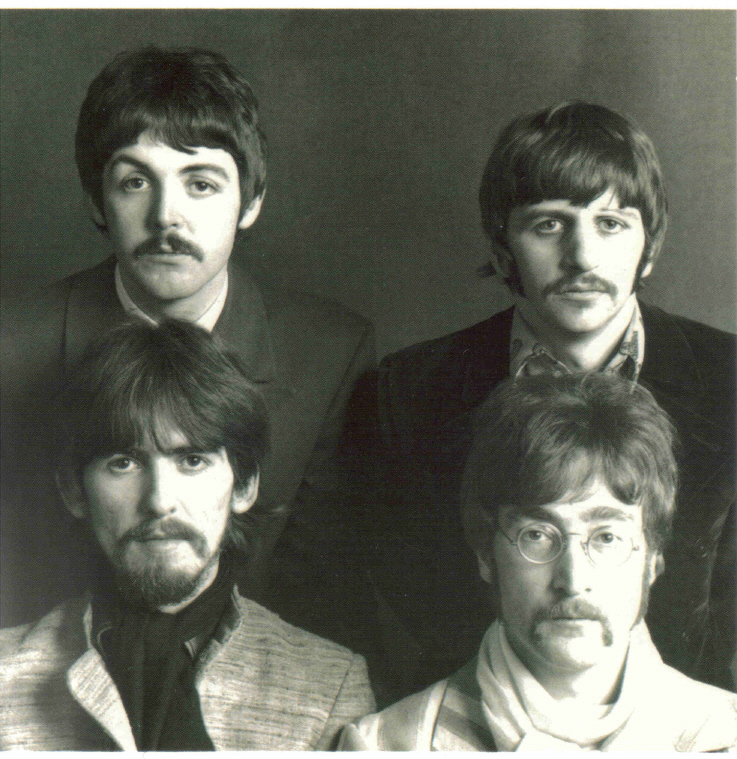
It was maddening to me – and then came Bob Dylan - and the Beatles started to mature and before you could say “subterranean homesick blues” or “sergeant pepper’s lonely hearts club band” the voice of our still speaking God was being heard on car radios and home stereo systems and eventually even Broadway, too.
+ Dylan claimed the mantle of the bewildered Jewish prophet railing against injustice and war; the Beatles were the mystics of popular culture who were looking for God “within you and without you;” while the Byrds gave the words of scripture a back beat on Top 40 radio with “Turn, Turn, Turn” and “Jesus Is Just Alright with Me.” + It was a heady moment: from the joyful gospel proclamation that “all you need is love” to the wailing lament of “while my guitar gently weeps,” a marriage was taking place in Western society as the inner and outward expressions of faith took up residence in popular art, politics and culture.
All of a sudden, you could hear a black gospel choir singing praise to the Lord in Jesus’ name in your car: remember the Edwin Hawkins Singers doing “Oh Happy Day?” Mary Magdalene was sharing love songs to Christ in Superstar, a medieval prayer of centering – the great “Day by Day” from Godspell – became a Top Ten hit record and George Harrison of the Beatles found himself offering alleluias on “My Sweet Lord.” In the blinking of an eye, everything was different. And there was one song that came to symbolize this change in American culture more than any other…
Do you know it? Combining a classic blues riff with the passion of gospel music, Norman Greenbaum’s “Spirit in the Sky” cranked things up to maximum volume and became an anthem for the spiritual revival that was sweeping across the country at the end of the 60s. And for those who loved it back then, it still brings a smile when some golden oldie station sneaks it back into rotation every now and again. Maybe you can sing a little bit of it with me?
Well, my friends, in case you haven’t guessed, today we’re going to be talking about Jesus: specifically I want to consider what the Cross of Jesus Christ has to tell us about God’s love and our humanity in these early hours of the 21st century. Theologian Douglas John Hall writes that: The cross of Jesus Christ represents simultaneously a high estimate of the human creature, a grave realism concerning human alienation, and the compassionate determination of God to bring humankind to the realization of our potential for authenticity.
Did you get all that? In the tongue of popular culture, we’re going to think about three essential insights in the Cross:
+ God’s deep love for us as beings created in the Lord’s image
+ The profound pain we cause through our alienation
+ And the relentless compassion of God’s grace
Are you with me? Love, pain and grace – or as Hall writes – our experience of being created, fallen and lifted: a new/old encounter with the Cross of Jesus Christ for our generation. So let’s see where this conversation might take us, ok?
Western Christians – conservative or progressive – often forget a spiritual insight that our cousins in Judaism regularly celebrate: namely, that as women, men and children created in the image of God we are just “a little lower than the angels” as the Psalmist tells us. We are NOT sinners first – sin is involved in our human experience – but we were never created in God’s image as sinners broken and wounded.
+ How does the old affirmation put it? God don’t make junk!
+ Have you ever seen the sunrise? Or sunset? Have you ever walked in the gentle, cooling rain? Or seen a rainbow? Have you ever kissed a baby? Or been present at a birth – human or animal? Have you felt the warmth of the sun on your face? Or even the embrace of one who forgives you?
That is all a reflection of God’s original blessing – and it applies as much to you and me today as it does to the whole wide world, Adam and Eve or all the rest of creation. God don’t make junk!
Sadly, and I believe incorrectly, most of Christian tradition has focused on our fallen and sinful relationship with God. And God knows that sin is real – any newscast or newspaper is documentation – but we have forgotten that alienation and separation from the Lord is not our primary condition. Rather, “the Hebraic/Jewish origins of our faith teach us to respect the goodness of creation and the promise of human life.” (Hall, p. 94)
Blaise Paschal, the 17th century French physicist and religious philosopher, suggested that loving Christians adopt a dialectic of grandeur and misery to keep us from acting too proud or too stupid. We like to make life seem either black or white he said – we tend to emphasize either optimism or pessimism – when in reality it is always both. At the same time, however, we must remember that the balance between these:
…two polarities is an asymmetrical one. The two sides of the dialectic – the yes and the no – are not equal. The weightier of the two is the first – the grandeur, not because humankind in itself and as such is so grand, but because we are God’s creation, created for a purpose that entails and affects all creation.”
The first insight the Cross of Jesus offers us is that we are the beloved of the Lord – created in God’s image just a little lower than the angels.
+ What do you think about that?
+ Does that surprise – shock – encourage – or offend you?
You see, the reason why it is crucial to reclaim this sense of humanity’s high calling through the Cross of our Lord is because in the post-modern world people no longer think too highly of themselves. Rather, we are obsessed with failure: banks are failing, families are failing, jobs are failing and our social safety net is failing.
The future shock that Alvin Toffler correctly analyzed as part of the present Zeitgeist in the most so-called developed societies is a palpable reality today. And it only takes a passing reference to any of the great instabilities with which we live – terrorism, AIDS, the depletion of the ozone layer, global warming and the worldwide collapse of the economy – to conjure up in the minds of most ordinary people a vast and fearsome darkness that has no place any longer for hope. (Hall, p. 97)
To be the church of Jesus Christ – the body of our Lord alive in the world today – demands that we start with an affirmation of our original blessing because God don’t make junk. “It is imperative for Christians to counter defeatism… in a sane and nuanced way” for we were created by the Source of ALL creativity.
That is the first insight from the Cross – we have been created by the Creator as a little less than the angels – the second is this: sometimes we despise this truth. If the story of the scriptures tells us anything it is that many times we don’t want to be LESS than the Lord: we want to BE the LORD. Douglas John Hall says it best:
The Scriptures of both Testaments demonstrate that humankind from the mythic Adam of the first Garden to the historic Adam of the second Garden, Gethsemane, “cannot stand God.” Even Jesus pleads with God to “remove the cup,” to take away the destiny of his vocation. And in between the two gardens every one of the prophets tries valiantly to resist his or her calling. Israel itself, as the name suggests, “struggles with God,” contends with the Unnamable... because our election is not a privilege but a responsibility. Even in the New Testament, where the central image of the kingdom of God is depicted poetically as a great banquet feast… everyone wants to flee from it. Even St. Paul himself, the most articulate and fervent of all the apostles of the early church, could only be brought into the sphere of Christ’s lordship kicking and screaming! (Hall, p. 101)
Isn’t that right? That the whole testimony of the Bible points to the fact that while God loves us we spend most of our lives running away – not towards – the Lord? If nothing else, the Cross of Christ shows us what it looks like when we keep on running: we wound and destroy the very heart of love itself. The Cross, you see, is not about God’s will, it is about what happens when we choose to flee from the responsibility of love.
To put forward the events of Holy Week and the Cross as a kind of divinely predetermined Oberammergau play whose author and director is none other than Almighty God is to have substituted fatalism for Biblical faith. Because the crucifixion is no more the direct will and plan of God than the fact that a million innocent children were slain in the Holocaust. (Hall, p. 103)
The Cross exposes the consequences of broken relationships – it makes clear for all with eyes to see what life looks like when we run away from our deepest commitments – and it is a sad and ugly picture. No wonder Jesus speaks to us of a vine and its branches: we are all connected. The disciple, John, amplified this when he told us:
If anyone boasts, "I love God," and goes right on hating his brother or sister, thinking nothing of it, he is a liar. If he won't love the person he can see, how can he love the God he can't see? The command we have from Christ is blunt: Loving God includes loving people. You've got to love both. God is love. When we take up permanent residence in a life of love, we live in God and God lives in us. This way, love has the run of the house, becomes at home and mature in us, so that we're free of worry on Judgment Day—our standing in the world is identical with Christ's. There is no room in love for fear. Well-formed love banishes fear. Since fear is crippling, a fearful life—fear of death, fear of judgment—is one not yet fully formed in love. So we are going to love—love and be loved. First we were loved, now we love. He loved us first." (I John 4)
First we are created a little less than the angels. Second we have fallen and run away from the responsibilities of love. And third we are lifted – raised beyond the filth by God’s compassionate grace – that like the old American hymn tells us, “is a love that wilt not let me go.” We may get tired – we may feel lazy or beaten down – but God’s grace endures for ever.
· Let me say that again: God’s grace endures – and searches – and lifts us up over and over again because God’s love endures for… what?
· Forever! Remember what St. Paul told us? Love never dies. Inspired speech will be over some day; praying in tongues will end; understanding will reach its limit. We know only a portion of the truth, and what we say about God is always incomplete. But when the Complete arrives, our incompletes will be canceled. When I was an infant at my mother's breast, I gurgled and cooed like any infant. When I grew up, I left those infant ways for good. We don't yet see things clearly. We're squinting in a fog, peering through a mist. But it won't be long before the weather clears and the sun shines bright! We'll see it all then, see it all as clearly as God sees us, knowing him directly just as he knows us! But for right now, until that completeness, we have three things to do to lead us toward that consummation: Trust steadily in God, hope unswervingly, love extravagantly. And the best of the three is love. (I Corinthians 13)
There is a brokenness in the world, an incomplete aching in our hearts, and the third insight from the Cross is clear: the only way through it is with the grace of God that gives us a strength from the inside out. It cleanses. It heals. It renews us over and over again so that we can be fully human.
+ We’re not called to be God – we were created to be human – fully human – by grace we are humanized.
+ By grace the word becomes flesh and dwells within and among us.
+ By grace, we are made whole.
Not the same as God – that would be arrogant and stupid – but only a little less than the angels, too. One of the best expressions of this truth in popular culture came from the soul singer, Joan Osborne, who put it like this in a song called, “One of Us.”
Martin Luther, the father of our Protestant tradition, told those who had ears to hear in the 16th century: “Christian living does not mean to be good, but to become good; not to be well, but to get well; not being but becoming; not rest, but training. We are not there yet, but we shall be. It has not yet happened, but it is on the way.”
… and that way is love - a love exposed paradoxically and honstely on the Cross. So let those who have ears to hear, hear.
Without a doubt, Pete Seeger has been a HUGE influence on my understanding of music and ministry. I can remember watching him on Mike Douglass back in the 60s teach middle America about work songs. I watched his PBS TV show religiously in the mid-60s and saw Donovan along with the New Lost City Ramblers, Odetta and Sonny Terry and Brownie McGee. And as a young adult in San Francisco I went to every show Pete shared - paid or free - and dragged my young daughters along with me.
When I was in seminary in NYC it became part of our Thanksgiving feasting to join Pete and Arlo at Carnegie Hall - and we loved that event so much that for 27 years I have been holding Thanksgiving Eve concerts/sing-a-longs wherever ministry has taken me - from Michigan to Arizona. Pete taught me the art of group singing - sometimes he can be a pain in the ass doing it - but he has kept the flame burning for the importance of blending different voices in pursuit of beauty and solidarity. And I am so grateful.
Somebody once said that I was a "Pentecostal Zen Buddhist" in love with Jesus - and part of that comes from Pete Seeger. Not that Pete would ever call himself a believer: God forbid! But think of his greatest tunes from "Turn, Turn, Turn" to "If I Had a Hammer" and the work he did on "We Shall Overcome." Not only is he grounded in biblical imagery, but also a real sense of kingdom living. I learned to play spirituals and the blues by first hearing Pete do them. I learned the art of leading group singing from being a full partner in the music at Pete Seeger concerts all over the country. And I found out about Leadbelly and Woody to say nothing of Buffy St. Marie, Joni Mitchell, Mississippi John Hurt and Jean Ritchie from this grand old daddy.
Last night people gathered in NYC to pay tribute to Pete... and my man, Springsteen, closed the show with a reflection and a few tunes. It is pure grace...
American men aren't supposed to like poetry. We are taught it like math or mechanics most of the time - or worse. But one of the poets who saved my life, Robert Bly, notes:
While our European-American tradition questions and argues, and has to teach poetry to sullen students in English classes, other cultures speaking Spanish, Russian, Arabic to say nothing of the many tongues of Africa and the Indian subcontinent, grow up inside poems - drenched through with poetic metaphors and rhythms. As we learn to criticize, to take a poem apart, to get its meaning, they learn to listen and to recite. By drawing this sharp contrast with other cultures, we are pointing to a defect in ours. We live in a poetically underdeveloped nation.
Men blame their own lives for a deficiency in the culture. For without the fanciful delicacy and the powerful truths that poems convey, emotions and imagination flatten out. There's lace of vision. The loss in the heart appears as a loss of heart to take up the great cultural challenges that are a part of every man's citizenship. It is in this sense that we have come to think that working in poetry and myth with men is a therapy of the culture at its psychic roots.
Take the way Bly speaks to the absurdity and sin of the war in Iraq in "Call and Answer."
In under two minutes he not only exposes the tragedy but also the long term implications of such narrow naivety and arrogant stupidity. The poet laureate, Billy Collins, says much the same thing in his poem, "Introduction to Poetry."
I ask them to take a poem and hold it up to the light like a color slide
or press an ear against its hive.
I say drop a mouse into a poem and watch him probe his way out, or walk inside the poem's room and feel the walls for a light switch.
I want them to waterski across the surface of a poem waving at the author's name on the shore.
But all they want to do is tie the poem to a chair with rope and torture a confession out of it.
They begin beating it with a hose to find out what it really means.
Or take the way Bly treats Rumi, the great Sufi love mystic, as he speaks of the danger of settling for the banal...
I believe it was Jung who observed that a man who chooses not to listen to the weeping of his soul by age 50 will grow-up to be either a foolish old codger or an embittered and mean-spirited sot. I've seen both and they are not pretty pictures - and God knows they are miserable to live with!
So today, on the eve of my wedding anniversary, I return thanks to the woman poet who encouraged me back to the poems - and the songs and the dances - in the prayer that I might be more than a cranky old fool. Standing in a book store one cold, rainy night in Cleveland she helped me find a way into something more. That night I read two poems... and everything was different.
There is a voice inside the body.
There is a voice and a music, a throbbing, four-chambered pear that wants to be heard, and sits alone by the river with its mandolin and its torn coat, and sings for whomever will listen a song that no one wants to hear.
But sometimes, lost, on his way to somewhere significant, a man in a long coat, carrying a briefcase, wanders into the forest. He hears the voice and the mandolin, he sees the thrush and the dandelion, and he feels the mist rise over the river. And his life is never the same, for this having been lost - for having strayed from the path of his routine, for no good reason.
So... we got married to the wisdom of this crazy ass tune by the wise wild man of the America's...
One of my favorite U2 songs is Bono's reply to John Lennon called "God: Part II."
John's song on his first solo album is all about what he doesn't believe in after all the hype of the Beatles: it is part of his primal scream therapy that helped him break out of some of his demons - but obviously not all. Bono's reply is about the contradictions of life and what he does believe in - mostly importantly love.
That's what today's worship felt like to me -not the rock and roll bombast of U2's song - but the heart of the congregation which is "I... I... believe in love." Today worship was grounded in a quiet and honest conversation about the biblical texts that help us grow closer to God as adults. Being a child of God has its place, but we are also invited to "put away childish things, too" don't you think?
At any rate, rather than read scripture to the folk, I asked the congregation to share passages that have become meaningful to them - and they did it in spades! It was beautiful and very moving to me:
+ we talked about being salty a la Matthew 5 - you are to help bring out the "God flavors" in one another
+ we spoke of both Genesis 1 and 2 - alienation and creation
+ we discussed the importance of I Corinthians 13 and how we can't teach what we don't live
+ and there was even a reminder of Elijah in the cave: God comes not in the BIG things but... in the still small voice.
I was bone tired this morning - just dragging my ass to church - after time away and all the events surrounding Dianne's mother's death. And my people ministered to me today and I was so moved that I thanked them. "I had prepared a message for you today," I told them, "but you've already shared far more insights than I could ever hope to... and it all bubbled up from your lived faith. So let me put away my sermon notes and just say thank you for helping me this morning - and thank you for sharing with one another how important your lived faith really is: you are a blessing."
Like Elijah in the cave - or Bono ranting like John Lennon with a twist - the love of God often breaks into my life in the unexpected, quiet and still small voices.Today... I am grateful.
NOTE:We are just back in town after being in Western New York after Dianne's mother died. We rejoice in her life, grieve her death and entrust her to God's grace forever. Here are my sermon notes for this week - a few days late - and not fully fleshed out. Still, if you are in town at 10:30 am on Sunday, please stop in. We would be blessed to share Christ's feast with you.
This morning, rather than begin this portion of worship with scripture being read to you, I want to task you what scripture or Bible story informs your understanding of God?
+ I mean that quite seriously: can you think of a passage from the Bible that helps you understand or grow closer to God?
+ In all honesty: what speaks to you about the holy?
For most of my life Psalm 23 has been a favorite – and over the years the Shepherd’s Psalm has matured with me – it was lovely as a child and has continued to resonate with me as an adult. Can you say it out loud with me?
The LORD is my shepherd; I shall not want. He maketh me to lie down in green pastures: he leadeth me beside the still waters. He restoreth my soul: he leadeth me in the paths of righteousness for his name's sake. Yea, though I walk through the valley of the shadow of death, I will fear no evil: for thou art with me; thy rod and thy staff they comfort me. Thou preparest a table before me in the presence of mine enemies: thou anointest my head with oil; my cup runneth over. Surely goodness and mercy shall follow me all the days of my life: And I will dwell in the house of the LORD forever.
Sweet, isn’t it? This psalm tells me that:
+ God is a provider… + God is a comforter… + God is a protector… + And God is a helper… + It also speaks to me of how God brings meaning into my life – takes away my fears – and shares cleansing and refreshment with my soul
Our tradition is clear that scripture is an important place to learn about God and God’s nature. It is not the only place – we value both tradition and experience, too – but scripture is vital. It gives us a common language – poetry and symbols, images and stories – to talk together about something that is mysterious and really beyond words.
+ Has that been true for you: has the Bible been one of the places where you have learned something about God?
+ Where else did your insights about God come from: parents? Family? School? Friends? What? We live in a spirit-saturated culture and throughout our whole lives we are bombarded with spiritual images and ideas. And while it is increasingly true that more and more people claim no single religious identity – secularism and multiculturalism are simply facts of life – that does not mean that people aren’t thinking about God.
+ In fact, in the most recent Pew Research study into the religious habits of Americans, what is most interesting is that while more and more Americans choose NOT to affiliate with any one religious traditions, even those frustrated with organized religion say they are hungry for help in figuring out their real spiritual needs.
+ People want to know what God has to say about their fears and needs – their health and love life – what it means to lose your job or even how to die well. Interesting, yes?
One of my favorite theologians, Douglas John Hall, framed this challenge like this:
If earlier ages of Christendom were particularly fixated on the afterlife and heaven, it was at least in some considerable part because this life was for most people extraordinarily brutish and short. But in a context in which the average life endures well into the late seventies and it is not unusual for people to live to be ninety or a hundred, offering heaven and immortal life as the answer to earth’s sorrows speaks in a direct way only to the infirm and the aged – if even to them! At least in our realm, the astonishing postponement of mortality that has taken place in the 21st century and beyond means that life itself – not death (not, at least, in the same immediate way) – has become our great question.
So the challenge for us in this generation is not figuring out how to reply to the question, “If there life after death?” but rather, “What can we do to enhance life before death?” And here is one of the real problems for me:
+ All too often most of us don’t have the time to evaluate how to best respond to this challenge.
+ Many of us are incredibly busy – even people in retirement, yes? – so we tend to share the spiritual truths we claimed when we were children. They may not fit nearly as well now that we are older, but that’s what happens a lot of the time.
+ Or else we stay quiet and unsure how to reply to the very real spiritual questioning that is taking place all around us. God knows we don’t want to sound like a fundamentalist – but so many times we just don’t know how to talk about God as an adult.
And that’s a problem because there are a whole lot of other people out there filling up the vacuum with noise – and fear – and sometimes even hatred. So what I want to do today is what St. Paul spoke about when he said, “When I was a child, I thought like a child… and I used child-like images when I spoke. But now that I have grown up and matured… I have put childish things away.” In Ephesians Paul put it like this:There can be no prolonged infancies among us, please. We can not tolerate babes in the woods, small children who are an easy mark for impostors. God wants us to grow up, to know the whole truth and tell it in love—like Christ in everything. We take our lead from Christ, who is the source of everything we do. He keeps us in step with each other. His very breath and blood flow through us, nourishing us so that we will grow up healthy in God, robust in love.
St. John put it like this at the end of his gospel: Jesus asked a third time:"Simon, son of John, do you love me?" Peter was upset that he asked for the third time (but he was a slow learner so Jesus had to keep asking, "Do you love me?") And Peter replied, "Master, you know everything there is to know. You've got to know that I love you." Then Jesus said, "Feed my sheep. I'm telling you the very truth now: When you were young you dressed yourself and went wherever you wished, but when you get old you'll have to stretch out your hands while someone else dresses you and takes you where you don't want to go." And then he commanded, "Follow me."
Are you with me? I’m talking about exploring some biblical insights that will empower us to be compassionate disciples who can follow Jesus in the 21st century rather than wander around as confused children. And there are 5 texts I want you to think about with me for just a moment.
Isaiah 55: 6-12:Seek God while he's here to be found, pray to him while he's close at hand. Let the wicked abandon their way of life and the evil their way of thinking. Let them come back to God, who is merciful, come back to our God, who is lavish with forgiveness. "I don't think the way you think. The way you work isn't the way I work." God's Decree. "For as the sky soars high above earth, so the way I work surpasses the way you work, and the way I think is beyond the way you think. Just as rain and snow descend from the skies and don't go back until they've watered the earth, doing their work of making things grow and blossom, producing seed for farmers and food for the hungry, so will the words that come out of my mouth not come back empty-handed. They'll do the work I sent them to do, they'll complete the assignment I gave them. "So you'll go out in joy, you'll be led into a whole and complete life.
What do you hear going on here? What is this telling us about God and our connection? How does this differ from a childlike understand of the holy? Try this one on...
Matthew 7: 6-12:Don't be flip with the sacred. Banter and silliness give no honor to God. Don't reduce holy mysteries to slogans. In trying to be relevant, you're only being cute and inviting sacrilege. Don't bargain with God. Be direct. Ask for what you need. This isn't a cat-and-mouse, hide-and-seek game we're in. If your child asks for bread, do you trick him with sawdust? If he asks for fish, do you scare him with a live snake on his plate? As bad as you are, you wouldn't think of such a thing. You're at least decent to your own children. So don't you think the God who conceived you in love will be even better? Here is a simple, rule-of-thumb guide for behavior: Ask yourself what you want people to do for you, then grab the initiative and do it for them. Add up God's Law and Prophets and this is what you get.
Talk to me about what you hear in this? What is at the heart of it for you? If we had lots of time I would want you to play with:
+ Genesis 1 where we learn that we are created in the image of a Creator so our imagination is one of the ways we commune with God.
+ And Luke 17 where Jesus tells us the kingdom is not far away but within and among us – so we need to be careful about building community and taking time for quiet reflection.
But the last one – which I will play with next week, too – is II Corinthians 12 where Paul tells us: I was given the gift of a wound to keep me in constant touch with my limitations. Satan's angel did his best to get me down; what he in fact did was push me to my knees. No danger then of walking around high and mighty! At first I didn't think of it as a gift, and begged God to remove it. Three times I did that, and then he told me, My grace is enough; it's all you need. My strength comes into its own in your weakness. Once I heard that, I was glad to let it happen. I quit focusing on the wound andbegan appreciating the gift. It was a case of Christ's strength moving in on my weakness.
Most of us tend to see God only in the light and the blessings and the joys of life, but an adult understanding is that God is present in the darkness, too. What’s more, God can use the darkness and our pain and even our wounds to advance the cause of the kingdom if… we are willing to get out of the way.
+ That’s what the story of Jesus tells us: that even death on a cross is not the end of the story.
+ Rufus Jones said: God’s life and our lives are bound together, as a vine with branches, as a body with members. So corporate are we that no one can give a cup of cold water to the least person in the world without giving it to God.
+ And Kenneth Gottman said: The rhythm of life for a kingdom dweller puts chronos in service of kairos – that is we put chronological time in service of God’s sacred time table – the cyclical in service of the directional, the calendar in service of the kingdom… and as we submit our anarchy to a rhythm, in a sort of earthy, mystical way, all of live is lived lucidly, intentionally and the glory of God: every washing becomes a baptism, every eating a communion, every sleeping becomes a dying and every rising a resurrection.
We are adults living with and searching for the God of life – we are pilgrims on a journey – and for now that is enough to say, ok? God’s strength comes to us in our weakness… so let those who have ears to hear, hear.
This week has been full of being with loved ones as they sort out the hurt, shock, loss and love of a mother who two weeks ago was vibrant and today is dead. There are tons of layers to dig through and I am glad to be a part of it all. And in the midst of all the pain there continues to be a trust and grace that God's love is a part of even the loss. Not some sentimental, pastel phony Jesus who is only around for the good times, but the presence of a living God who aches with those who are wounded, laughs when jokes are told, helps carry the other when they are worn out and shares the bewildered silences.
Rather sounds like this new U2 tune to me...
Tomorrow we head back home to be with our faith community - and then back to New York a week later for the memorial service - all as a part of the rhythm of this change.






.jpg)

